
The long running trial of Jamil Mukulu, the commander of the Allied Democratic Forces (ADF), has once again stalled, drawing judicial concern from the International Crimes Division (ICD) of the High Court.
Mukulu has been in and out of court for 11 years without a final verdict to the terrorism case charges he faces.
The panel of judges led by Justice Michael Elubu, and comprising Justices Dr. Andrew Bashaija, Susan Okalany, and Mubiru, who presided over the Mukulu case on Wednesday, 1st October, 2025, openly expressed frustration over the prolonged delays in the trial.
“This matter has lingered on for too long. Focus must now be on its expedition,” the presiding judge, Elubu, said as the hearing resumed under tight security.
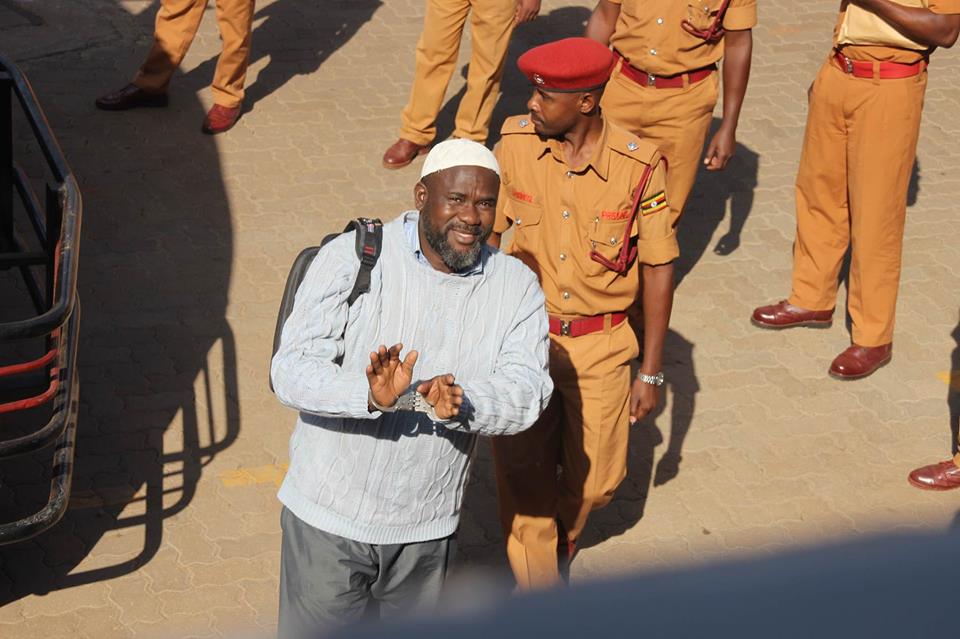
Mukulu, dressed in a casual shirt and Muslim cap, entered the courtroom alongside several co-accused. His legal team, led by Counsel Caleb Alaka, raised fresh allegations of human rights violations, claiming that their client has endured inhumane prison conditions.
They alleged that Mukulu is confined in a dark, airless cell without proper sanitation, is denied visitors and exercise, and has been left vulnerable to malaria due to mosquito bites. Rising canteen prices, they said, had worsened his plight.
The counsel alleged that the Uganda Prisons Service subjected their client to harsh conditions, including confinement in a dark, airless cell with poor sanitation, denial of visitors and exercise, and no interaction with other inmates.
They also alleged that rising canteen prices had worsened his life conditions and that frequent mosquito bites had left him struggling with persistent malaria.
Mukulu’s lawyers also claimed that Mukulu was denied access to food brought in by his relatives.
In response, Uganda Prisons officials rejected the allegations as baseless. ASP Denis Arinaitwe, the Officer in Charge of Prisons, addressed each claim individually and denied them.
About Mukulu being denied food brought in by his relatives, ASP Arinaitwe explained that the decision applies to all inmates, not just Mukulu. The policy was introduced to prevent prohibited items from being smuggled into the prison through food items brought by relatives like it was in the past. As a result, all food items must now be supplied by the prison administration upon request by the inmates.
Regarding claims that Mukulu was confined to a dark, airless cell, the Officer in Charge clarified that he was offered a well-ventilated, self-contained cell but chose to remain in a normal cell.
ASP Arinaitwe also dismissed claims that Mukulu suffers from frequent mosquito bites and persistent malaria, explaining that the cells are fumigated every three months, making it unlikely for inmates to experience constant malaria episodes.
The prisons Officer in Charge also refuted Mukulu’s claim that he is denied exercise and interaction with other inmates, stating that he is allowed supervised access to the courtyard from 7:00 a.m. to 4:00 p.m. for any activity, and that the CCTV cameras footage was available to verify this.
Justice Elubu advised Mukulu’s lawyers to take their complaints to the Uganda Human Rights Commission for independent investigation.
“I advise the counsels for the accused, led by Alaka, to take these allegations to the Uganda Human Rights Commission for a fair and thorough investigation and any necessary action,” Justice Elubu said.
The judicial panel adjourned the trial to Thursday, 2nd October, 2025.
Mukulu and his co-accused face terrorism charges linked to a series of deadly ADF attacks. These include the assassinations of Muslim clerics Sheikh Yunus Abubaker Mandanga and Dr. Abdul Qadir Muwaya, the Bugiri Police Station attack, and the 1998 Kichwamba Technical Institute massacre in which more than 80 students were killed.
The accused were arrested between 2014 and 2015 in Uganda and Tanzania and have remained on remand ever since.
Court’s insistence on due process and proper investigation highlights the careful balance between safeguarding human rights and ensuring accountability for crimes of national concern.