

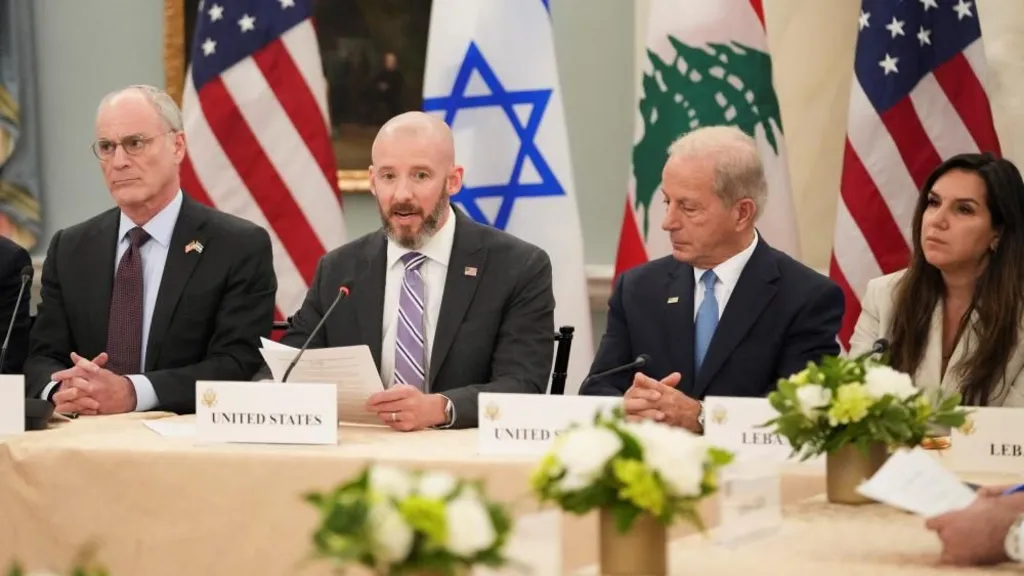
BBC: Israel and Lebanon have agreed to implement a renewed ceasefire arrangement aimed at reducing hostilities along their shared border, following several rounds of negotiations facilitated by the United States.
The agreement, announced in Washington on Wednesday, is conditional upon a complete halt to attacks by Hezbollah and includes plans to establish designated security zones inside southern Lebanon where armed non-state actors will not be permitted to operate.
According to a joint statement issued by the United States, Israel, and Lebanon, the arrangement seeks to reinforce stability in southern Lebanon while ensuring that the Lebanese Armed Forces gradually assume exclusive responsibility for security in specific areas currently affected by conflict.
The deal reportedly requires Hezbollah fighters to withdraw from the area between the Israeli border and the Litani River, a region extending roughly 30 kilometres into Lebanese territory. The United States has also pledged support for the establishment of pilot security zones where only state security institutions would be allowed to operate.
While details regarding the exact locations and implementation of these zones remain unclear, officials described the initiative as a confidence-building measure intended to pave the way for a broader and more comprehensive agreement.
Representatives from both countries are expected to reconvene on June 22 for additional discussions aimed at securing a lasting settlement.
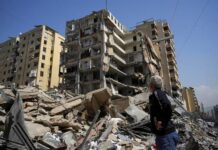
Despite the announcement, fighting continued on the ground. Lebanese media reported fresh Israeli airstrikes across southern Lebanon on Thursday, a day after deadly exchanges between the two sides.
The latest agreement follows an earlier limited truce announced earlier this week, under which Israel was expected to refrain from launching major attacks on Beirut while Hezbollah would suspend attacks targeting Israeli territory.
Hezbollah has not yet formally endorsed the new arrangement. The group said it would issue an official position at a later stage.
Within Israel, the agreement has already generated criticism from some political leaders. National Security Minister Itamar Ben-Gvir publicly opposed the deal, arguing that it could provide Hezbollah with an opportunity to rebuild its military capabilities.
The current conflict escalated on March 2 after Hezbollah launched rockets into northern Israel following an Israeli strike that reportedly killed Iran’s Supreme Leader. Israel responded with a large-scale military campaign involving airstrikes across Lebanon and ground operations in the south.
Efforts to end the violence have faced repeated setbacks. A previous ceasefire brokered by the United States in April failed to halt hostilities, and recent weeks have seen renewed clashes, including drone attacks, rocket fire, and intensified Israeli military operations.
Lebanese authorities say more than 3,500 people have been killed since the outbreak of the conflict, although official figures do not distinguish between civilians and combatants. The United Nations estimates that over one million people have been displaced, with evacuation orders affecting large sections of the country.
Israeli authorities, meanwhile, report that 26 soldiers and four civilians have been killed during the conflict.
On Wednesday, Lebanon’s Health Ministry reported several fatalities following Israeli strikes in southern regions of the country. Among those killed were Syrian and Palestinian nationals, while two paramedics died after an ambulance linked to the Amal movement was struck.
Lebanese officials accused Israel of violating international humanitarian law by targeting medical personnel and facilities. The ministry stated that more than 120 healthcare workers and emergency responders have lost their lives during the conflict over the past three months.
The Israeli military had not immediately commented on the allegations. In previous incidents, Israeli authorities have claimed that some ambulances and medical facilities were being used for military purposes.
The Lebanese army also reported the death of one of its soldiers in an Israeli drone strike near Nabatieh and said two other soldiers were wounded in a separate attack on a military vehicle. Military officials condemned what they described as repeated targeting of Lebanese army personnel and infrastructure.
Additional strikes were reported near the coastal highway south of Beirut, marking one of the closest attacks to the capital since the limited ceasefire was announced earlier in the week.
Meanwhile, the Israeli military said it intercepted aerial threats and projectiles crossing from Lebanon into northern Israel. Hezbollah later claimed responsibility for a rocket barrage, describing it as retaliation for what it called Israeli violations of the ceasefire understandings.
The group’s political leadership has expressed skepticism toward the Washington negotiations. Senior Hezbollah official Mahmoud Qamati stated that the movement does not consider itself bound by decisions emerging from the talks and maintains that the discussions do not represent its position.
The United States has been actively involved in efforts to prevent further escalation, amid concerns that continued fighting in Lebanon could complicate broader diplomatic efforts related to the regional conflict involving Israel and Iran.
Whether the newly announced arrangement succeeds where previous ceasefire efforts failed will largely depend on the willingness of both sides to observe the agreed conditions and reduce military activity along one of the Middle East’s most volatile frontiers.