
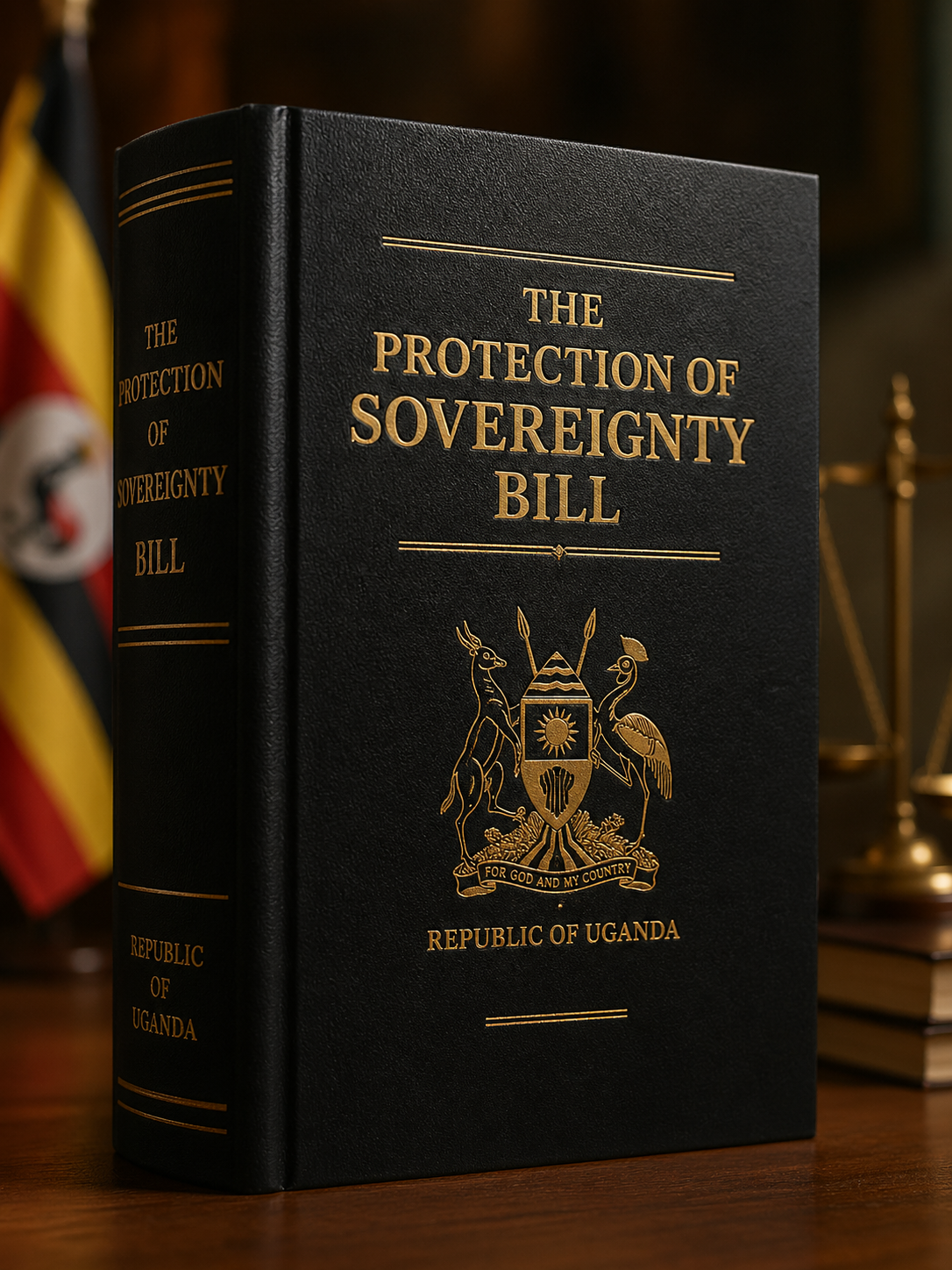
Government has introduced fresh amendments to the Protection of Sovereignty Bill, significantly reshaping its most contested provisions in what appears to be a response to mounting criticism from lawmakers, civil society, and other stakeholders.
The revised proposals, now before Parliament’s Legal and Defence Committee, narrow the definition of a “foreign agent,” clarify the scope of regulated activities, and introduce exemptions for key sectors, marking a notable shift from earlier drafts of the bill.
At the center of the changes is a reworked definition of a foreign agent. Under the new proposals, Ugandan citizens will no longer be broadly categorized as foreign agents. Instead, the term now applies specifically to individuals acting on behalf of foreign entities whether as representatives, employees, or agents operating under their direction and receiving financial support or other benefits.
The amendments also refine the types of activities that could attract scrutiny. These now include actions considered to advance foreign interests in ways that may conflict with Uganda’s national priorities, as well as certain forms of political engagement linked to external influence.
However, government has moved to ease concerns around legitimate operations by introducing exemptions for several categories of institutions. Financial institutions, professional bodies such as the Uganda Law Society, media organizations, and other regulated entities will not fall under the restrictive provisions of the bill.
Similarly, health facilities, academic and research institutions, and faith-based organizations are exempted, provided that any external funding received is used strictly for authorized purposes such as service delivery, education, research, or religious activities.
In a further clarification aimed at calming investor fears, the amendments specify that lawful financial flows including foreign direct investment, diaspora remittances, grants, trade financing, and humanitarian support will not be restricted unless linked to prohibited activities.
Another key change introduces the requirement to prove intent. The revised clauses now stipulate that prosecution can only proceed where it is demonstrated that an individual deliberately acted to promote foreign interests against Uganda’s national interest. This replaces earlier language that critics argued was too broad and open to abuse.
The Attorney General has also adjusted the wording of the bill to limit liability specifically to “agents of a foreigner,” rather than the broader reference to “a person,” further tightening the scope of enforcement.
Additionally, the responsible minister will have powers to expand the list of exempted entities through regulations, providing flexibility as implementation evolves.
The amendments come after the committee concluded consultations with stakeholders, many of whom had raised concerns about potential threats to civil liberties, political participation, and the flow of international funding.
With the revised bill now under scrutiny, Parliament’s Legal and Defence Committee is expected to review the changes before tabling its final report to the House, setting the stage for what is likely to remain a closely watched legislative process.