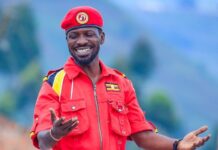


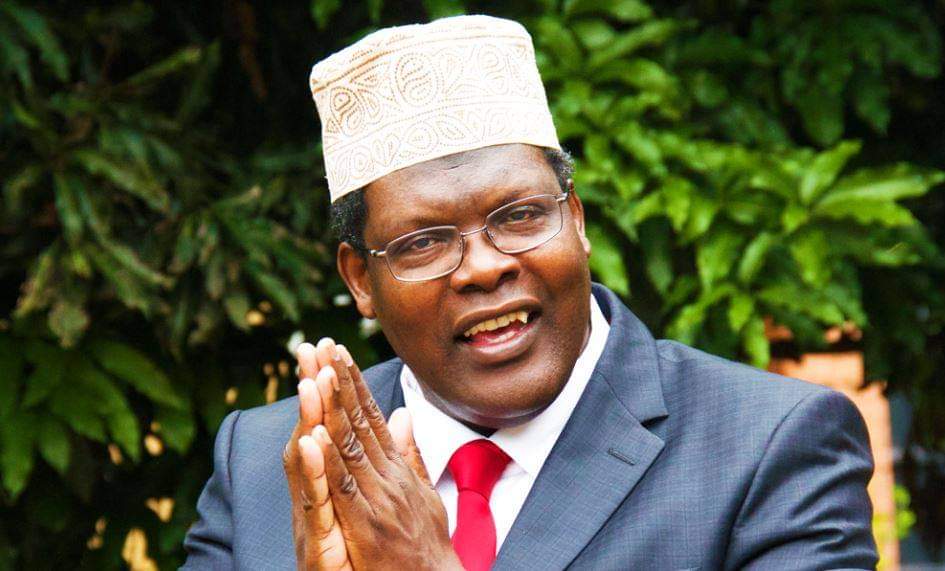
Prominent Kenyan political activist Dr. Miguna Miguna has strongly condemned Robert Kyagulanyi Ssentamu, aka Bobi Wine, the National Unity Platform (NUP) party President for celebrating his visit to Capitol Hill in Washington, D.C., describing it as a misguided engagement that aligns him with imperialism and human rights violations.
According to Miguna Miguna, Bobi Wine’s alleged meeting with US officials at Capitol Hill casts him as a conduit of imperialism, human rights violations, and war crimes.
In a statement he released today, 19th March 2026 on his Twitter page, the Kenyan political activist argued that the said area above represents a hub of global power historically tied to imperialism, genocide, and slavery, and that no legitimate Pan-African leader or freedom fighter should celebrate engagement with such a center.
“The wrong place to start and pose for images. Washington, D.C., is the headquarters of imperialism, genocide, war crimes, and human rights violations. No legitimate Pan-African or freedom fighter takes pride in that citadel of slavery and savagery,” Miguna Miguna stated.
His comments followed a tweet by Bobi Wine on 18th March, 2026, in which the opposition leader posted a photo of himself at Capitol Hill, describing the visit as his first international engagement concerning Uganda’s political situation.
Ugandan diaspora human rights activist Dr. Stella Nyanzi also voiced support for Miguna Miguna’s criticism.
“I thought I would give my brother Bobi Wine a break, but Miguna’s comments reminded me of a crucial question: how can Donald Trump protect human rights in Uganda when he is violating human rights worldwide?” Nyanzi questioned.
Bobi Wine’s tweet has elicited mixed reactions. Some supporters view his Washington engagement as a bold diplomatic move aimed at advancing Uganda’s political struggle.
However, most prominent politicians and activists in Uganda and the diaspora have criticized the move, arguing that it exposes what they see as Bobi Wine’s alignment with imperialist interests, posing a potential threat to Africa’s sovereignty.
The controversy highlights ongoing debates within Uganda and the diaspora over the role of international engagement in domestic political struggles and the fine line between seeking diplomatic support and appearing to align with historically oppressive powers.