

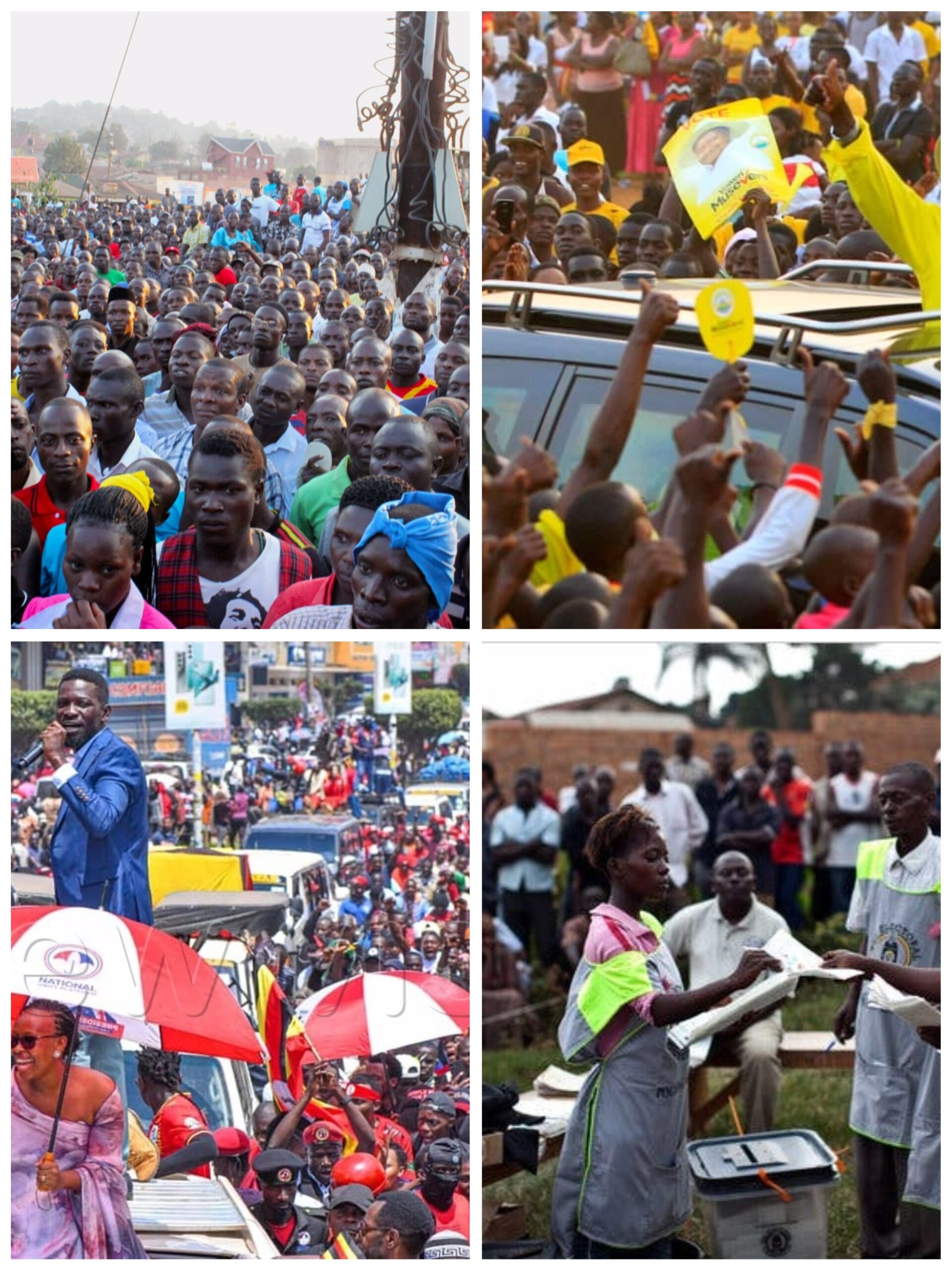
As Uganda’s 2026 elections edge towards deciding who the country’s president will be, walls across the country are dressed and decorated with different political candidates’ posters and banners stretched across streets while eight presidential hopefuls have been seen traversing several parts of the country, visiting churches, attending burials, graduation parties and wedding ceremonies, among others, all in the name of gathering votes and vying for who will enter State House and lead Uganda till 2031.
Following the trends on various media houses, social media platforms especially X, the conversation and talk is rotating around elections. Political aspirants have been seen posting images and videos of their supporters that have attended their rallies and fields filled to the brim while streets covered with a trail of cars and supporters that onlookers don’t have where to step. However, the question lingering in the air and which has haunted many electoral cycles is, do the numbers of supporters at rallies predict the number of votes a candidate will receive?
Drawing examples from the previous elections, we have seen candidates having crowds but ballots tell a different story. Could it be that these political aspirants ferry supporters from other areas or people just come to see how these contenders look like without picking the message or even understanding it since many spend more time on mud-smearing their opponents and perceived as lairs whose hands seem less tied to the daily needs of the people but instead intend to occupy seats and offices to earn not serve Ugandans?
I feel like the candidates should concentrate more on delivering the rightful message to their supporters and when they occupy offices, deliver as they promise than keeping shifting blame, abusing, lying and involving themselves in corruption since strength on a stage isn’t always strength at the ballot box. Voters always come for the message, not just the show. So, the message matters and it must reach the people beyond the loudspeakers andl glittering stages. Therefore, numbers don’t always mean votes. It’s performance that draws crowds, generates momentum, and frames the narrative. The promises, however, must endure beyond the spectacle.
Making flashbacks, some political leaders disappeared from their villages, districts, constituencies and the map of service delivery as soon as the last camera flashed and only to go back when campaigns approach. So, I’m wondering how they are able to deliver services to the people when they are visitors or know voters’ issues when not interacting with them but spend much of their time on planes and vacations abroad! The questions hanging there are; is service delivery a function of campaign time or continuous governance? Has service delivery turned to be done virtually and consultations done on zoom?
It’s high time politicians walk the talk by actually planning for the citizens to improve their livelihoods in terms of job creation, access to healthcare, reliable electricity, clean water, secure land tenure, fair education, and the right to participate in decisions that affect their daily lives thus driving the country towards socio-economic transformation other than consuming even the little that’s meant for their people, spending more time on social media, vacations, throwing parties, mobilizing demonstrations, closed door meetings to lobby for their salary increment, allowances, new cars, and Air Conditioned rooms then later come back to the grassroots treating voters as gods and goddesses during the election period.
Additionally, in many cases, policy proposals sound grand when announced in stadiums but often dissolved into bureaucratic fog when confronted with budget constraints. The real measure of a leader would be how many of her patients received timely care, how many roads didn’t flood during the rains, and how many communities had the power to grow their own wealth while maintaining dignity.
It’s errors done by politicians that make voters lose interest in voting for certain candidatures and later those that have lost the elections due to desperacy, failing to realize their mistakes and correct them, start accusing their opponents of rigging elections and the Independent Electoral Commission of sidelining with certain candidates thus failing to conduct free and fair elections.
The question of whether supporters’ numbers at rallies reflect votes is not a single yes-or-no answer. It is a fusion. It should be well understood that voter sentiment is shaped by track records, not only slogans. Past service delivery, perceived integrity, and the ability to listen to communities influence voting behavior more deeply than a single rally’s energy.
The closing thought, which is a hope rather than a prophecy is that let dialogue between leaders and citizens be continuous, not episodic.
The road to 2026 and beyond lies in more than just the volume of supporters at a rally. It lies in the fidelity of action, that is how leaders translate messages into measurable improvements, how they remain answerable to the people, and how communities sustain engagement long after the banners come down. Diplomas of rhetoric must mature into deeds that uplift every Ugandan, in villages and cities, with transparency, fairness, and unwavering commitment to the common good.
In other-words, let rallies be moments that enlighten, not just entertain, let campaigns convert momentum into measurable governance, and let the ballots reflect the convergence of voice, trust, and accountable action. As a result, if there’s moral in the crowd, perhaps it’s in a democracy, the power of numbers is strongest when paired with integrity, clarity, and a steady track record of service. Only then can the applause endure past election day and become the ongoing work of governance.