
The Uganda People’s Congress (UPC) has marked 66 years since its founding with renewed calls for electoral reforms, warning that Uganda’s democratic space is increasingly constrained by money-driven politics and the growing securitization of elections.
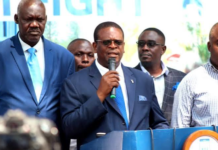
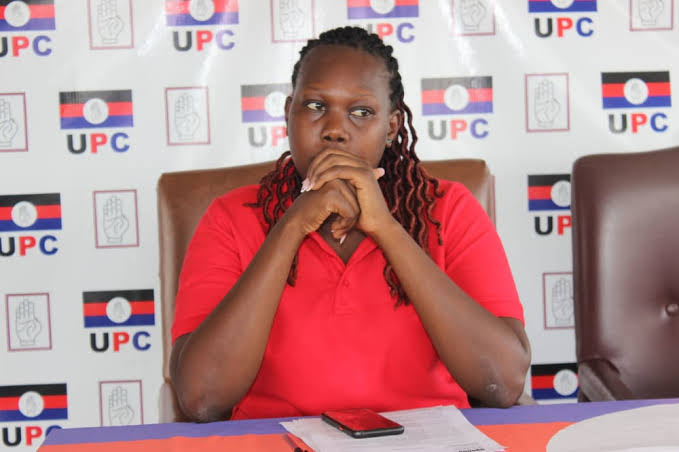
Speaking during a press conference at Uganda House on Wednesday, March 11th, 2026 in Kampala, party spokesperson Sharon Arach Oyat said the anniversary offers an opportunity for reflection on Uganda’s democratic journey and the political choices shaping the country’s future.
She noted that UPC’s legacy is closely tied to Uganda’s struggle for independence and the broader quest for political equality.
Oyat traced the party’s origins to the Uganda National Congress (UNC), founded in 1952 by nationalist leader Ignatius Kangave Musazi.
The UNC later merged with the Uganda Peoples Union to form UPC, which became a major political force during the independence movement under the slogan “One Man, One Vote and Self Government Now.”
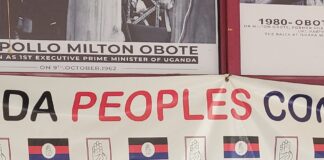
She highlighted the early post-independence period under former president Apollo Milton Obote as a defining era of state-led development.
According to the party, the years between 1962 and 1971 saw major infrastructure and social investments, including expansion of tarmacked highways, extension of railway lines to Pakwach, and the establishment of 22 district hospitals aimed at improving access to healthcare.
However, UPC’s political history has also been shaped by instability. Its rule was disrupted by the 1971 Ugandan coup d’état led by Idi Amin, followed by years of political upheaval and the 1986 takeover by the National Resistance Army.
With Local Council and Women Council elections approaching, UPC urged authorities and political actors to ensure transparent, free, and fair electoral processes while encouraging its supporters to intensify grassroots mobilization.