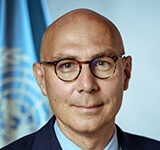

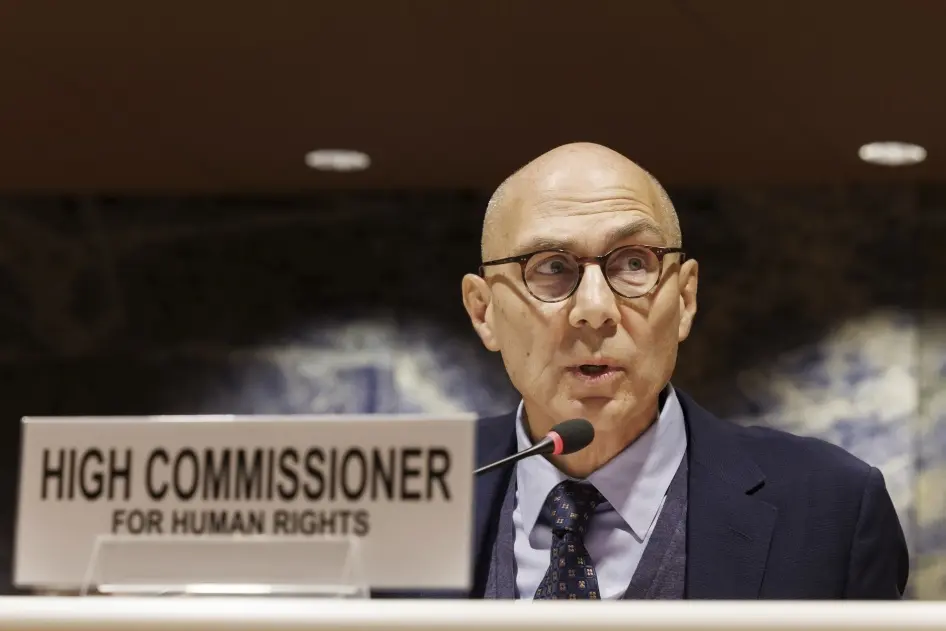
U.N. Human Rights Chief Volker Turk has appealed for $400 million to address mounting human rights needs in countries such as Sudan, Myanmar, and DRC after donor funding cuts drastically reduced the work of his office and left it in survival mode.
Turk made the appeal on 5th February 2026, in Geneva, warning that funding cuts have severely constrained the High Commissioner’s operations.
He said that the U.N. office is appealing for $100 million less than last year, after a significant scale back of its work in some areas due to a fall in contributions from countries including the U.S. and Europe.
The U.N Human Rights Chief also revealed that missions to monitor human rights violations dropped by more than half in 2025 compared with 2024, and the office scaled back its presence in 17 countries.
Additionally, a $90 million funding shortfall in 2024 also forced the elimination of 300 jobs, directly weakening field operations.
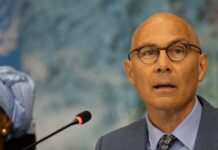
“We are in survival mode, operating under extreme strain. These funding cuts have real consequences. With crises mounting, we cannot afford a human rights system that is itself in crisis,” Turk told delegates in Geneva.
Turk highlighted the impact of funding cuts, noting that in Myanmar, programmes were slashed by more than 60%, severely limiting evidence collection, while a UN investigation into alleged war crimes in the Democratic Republic of Congo is struggling to become fully operational due to insufficient resources.
He also revealed that Sudan’s humanitarian situation is deteriorating sharply.
According to the latest assessment by the Integrated Food Security Phase Classification, the localities of Um Baru and Kernoi in North Darfur are now classified as being in famine. More than 21 million people are facing acute food insecurity nationwide.
He also revealed that Sudan’s humanitarian situation is worsening rapidly.
According to the latest assessment by the Integrated Food Security Phase Classification, the areas of Um Baru and Kernoi in North Darfur are now classified as experiencing famine, while more than 21 million people across the country face acute food insecurity.
In parts of Darfur and Kordofan, global acute malnutrition rates exceed 30%, creating famine-like conditions for children and pregnant women.
Years of conflict have destroyed livelihoods, disrupted food systems, and driven up prices, while the collapse of essential services such as health care, water, and sanitation has left communities even more vulnerable, particularly in in isolated areas or locations with restricted humanitarian access.
Richard Data, Sudan country director for the International Rescue Committee (IRC), said that behind the statistics are mothers, fathers, and children whose lives are hanging by a thread.
“Without immediate, scaled-up humanitarian assistance, including cash, food, nutrition support, lifesaving health care, we risk seeing more communities fall into famine,’’ Sudan’s IRC country director stated.
The international community must step up now with funding, negotiations with conflict parties and humanitarian support before even more lives are lost,” he added.
The $400 million appeal aims to prevent a lasting erosion of the international human rights protection system at a time when crises are multiplying in Africa and elsewhere.
Without urgent re-engagement from donors, investigative, preventive, and humanitarian capacities will keep shrinking, while Sudan already demonstrates the direct connection between prolonged conflict, human rights abuses, and famine.
The appeal highlights the urgent need for the international community to act decisively.
Without immediate and sustained support, both humanitarian relief and human rights monitoring risk collapse, leaving millions of vulnerable people at greater risk of famine, conflict, and abuse.
Turk and aid leaders are calling for swift funding, coordinated action, and diplomatic engagement to prevent further human suffering and to safeguard the global human rights system at a critical moment.