
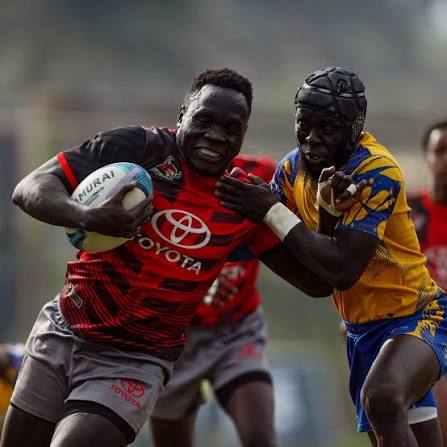
The Uganda Rugby Union (URU) has announced a major reorganization of its national sevens series and the women’s domestic XVs competition. The changes aim to create clear pathways for player development while also increasing the commercial value and quality of the top league.
The new structure for men’s and women’s sevens was announced by URU Chief Executive Officer Isaac Lutwama on Tuesday, 3 February 2026. Under the new two-tier system, the Uganda Sevens Series will be the top division. It will feature 12 core men’s teams and eight core women’s teams competing in six national tournaments. These top-tier events will be required to meet premium standards in areas such as broadcasting and sponsorship to attract more fans and partners.
Below the top division, a Tier 2 Regional Pathway Series will be introduced to allow more teams to take part and grow. Promotion playoffs will also be held every season, allowing two teams to move between the top tier and the regional pathway tier. This system is meant to reward strong performance and keep competition lively and fair.
URU will also roll out changes to the women’s XVs competition in phases. During the transition period starting in 2026, the national women’s league will operate with seven teams. From 2027, a full two-tier system will be introduced. This will include an eight-team Women’s Premiership as the top division and a Regional Pathway Series as the second tier.
To link the two divisions, a new four-team Promotion League will be created. Each season, one team will be promoted to the Premiership and one team will be relegated to the lower tier. This structure is designed to encourage competition, improve standards, and give more teams a clear route to the top level.
According to URU, the changes are meant to improve the rugby calendar so that top teams get enough high-quality matches, while lower-tier teams gain the experience they need to compete at higher levels. The goal is to deliver more rugby, support the growth of women’s rugby, and give regional clubs a chance to develop and expand.
Overall, the restructure shows URU’s plan to professionalize top-level rugby while also growing the sport at grassroots level and building strong, sustainable competitions for players across the country.