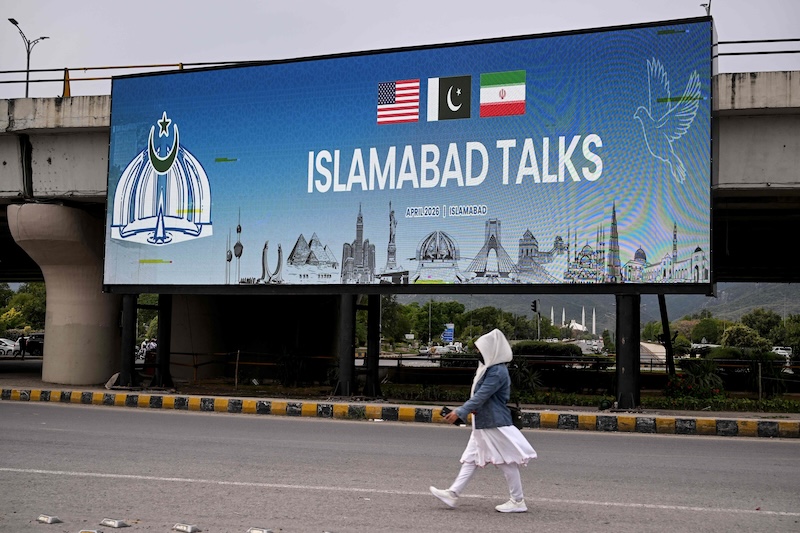
Source HelsinKi Times| The United States and Iran are holding direct ceasefire talks in Pakistan for the first time since 1979, as both sides seek to bring an end to the illegal US-Israeli war of aggression against Iran that has disrupted global energy flows.
Officials from Washington and Tehran met face to face in Islamabad on Saturday, in a shift from earlier plans for indirect negotiations.
Pakistani mediators took part in the discussions, which lasted about two hours and are set to continue.
The talks mark the highest level of direct contact between the two countries since the Iranian revolution.
Pakistan’s Prime Minister Shehbaz Sharif held separate meetings with both delegations before the negotiations began.
The United States delegation is led by JD Vance, alongside envoys Steve Witkoff and Jared Kushner. Iran’s team includes Parliament Speaker Mohammad Bagher Ghalibaf and Foreign Minister Abbas Araghchi.
Both sides arrived after weeks of conflict that have raised oil prices and disrupted shipping through the Strait of Hormuz.
A Pakistani official told the Associated Press that the talks had started and were “progressing well”, though it was not confirmed whether all participants remained in the same room throughout.
Al Jazeera reported that the initial session took place in what sources described as a positive atmosphere. Delegations are expected to resume discussions over dinner and continue at a technical level in the coming days.
The negotiations follow a two-week ceasefire agreed earlier this week, though violence has continued across several fronts.
Israeli forces have carried out strikes in southern Lebanon, while Hezbollah has launched rockets towards northern Israel.
Lebanon’s health authorities reported casualties from recent attacks, and Israel’s military said it had struck more than 200 targets in 24 hours.
Disputes over Lebanon form a central issue in the talks. Iran has insisted that any ceasefire must include Israeli operations in Lebanon, while the United States and Israel have treated the theater as separate.
Another key issue concerns Iranian assets held abroad. Iranian officials have called for the release of funds frozen for decades under sanctions.
Control of the Strait of Hormuz remains a further point of dispute. The waterway, which carries about a fifth of global oil and gas shipments, has seen traffic fall since Iran restricted access during the conflict.
US officials have said mines placed in the strait have slowed shipping, while Iranian media has denied that US vessels have entered the area.
President Donald Trump said in a post on social media that the United States had begun clearing mines in the strait.
He wrote that the operation was carried out “as a favor to countries all over the world”.
Iranian officials rejected claims that US ships had crossed the waterway, according to state media cited by international outlets.
The talks in Islamabad have drawn attention from global leaders. French President Emmanuel Macron said he had discussed the negotiations with Saudi Crown Prince Mohammed bin Salman and called for the ceasefire to be extended and applied to Lebanon.
Indonesia’s foreign ministry described the talks as an initial step towards a broader settlement.
Pakistan has taken a central role in organizing the negotiations. Officials in Islamabad said the country aims to build momentum towards a wider agreement that would stabilize the region and restore trade routes.
Despite the diplomatic push, tensions remain high. Statements from both sides have reflected deep mistrust.
Iranian officials have questioned US intentions, while Trump has continued to post messages criticizing Iran’s position in the conflict.
On the ground, fighting has not stopped. Israeli strikes and Hezbollah attacks have continued alongside the negotiations, and regional actors have taken steps to prepare for a possible escalation if talks fail.