
Uganda’s micro, small, and medium enterprises (MSMEs) the backbone of the country’s economy are set to receive a major financial boost following the signing of two facility agreements worth USD 150 million (approximately UGX 537.5 billion) between the Government of Uganda and the Arab Bank for Economic Development in Africa (BADEA).
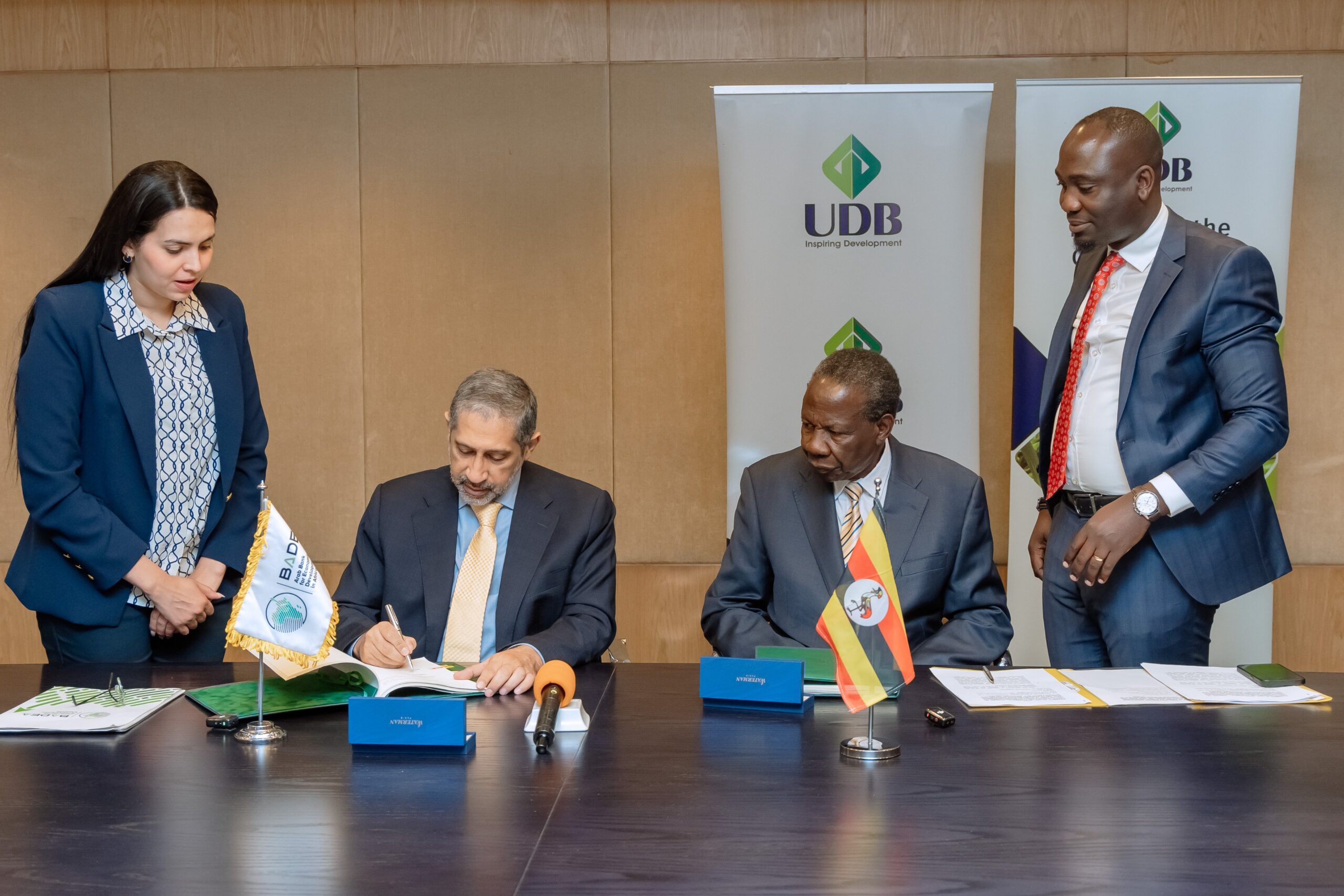
The agreements, signed by Finance Minister Matia Kasaija and BADEA President Abdullah Almusabeeh, were concluded on the sidelines of the 41st Board of Governors meeting of the Trade and Development Bank Group (TDB Group) held in Kigali, Rwanda.
Of the total funding, USD 50 million has been secured under BADEA’s Public Sector Window to specifically target Uganda’s MSMEs operating in key sectors such as agriculture, agro-processing, health, education, infrastructure, and industry.
“These funds are a lifeline to Uganda’s entrepreneurs, especially at the grassroots,” Dr. Patricia Adongo Ojangole, Managing Director of Uganda Development Bank (UDB) said.
“By supporting MSMEs, we are empowering local innovation and expanding opportunities for employment and income generation,” she added.
MSMEs account for over 90% of private sector activity in Uganda, contributing close to 80% of the country’s manufacturing output and employing millions, particularly in rural and urban areas. However, access to affordable financing has long remained a major obstacle to their growth and formalization.
The new financing arrangement aims to address this gap. It aligns with BADEA 2030, the bank’s strategic framework that emphasizes inclusive development by strengthening SMEs and building local value chains.
The remaining USD 100 million will be channeled through UDB under BADEA’s Private Sector Window to support larger enterprises in similarly strategic sectors. This dual approach is designed to promote broad-based industrial growth while accelerating small-scale enterprise development.
Finance Minister Matia Kasaija praised the new financing as a timely response to Uganda’s evolving development priorities.
“BADEA has been a longstanding partner in public sector infrastructure. This new financing demonstrates their commitment to private sector-led growth and trade, especially where it matters most at the micro and small enterprise level,” he said.
BADEA President Almusabeeh called the agreement an outstanding example of how countries can utilize the bank’s instruments to empower the private sector and foster economic resilience.
“Today’s partnership is about unlocking the full potential of Uganda’s entrepreneurs from informal village enterprises to emerging growth-stage businesses,” he added.

Since its inception, BADEA and its Arab coordination partners have committed over USD 2.5 billion to Uganda’s development, with notable investments in agriculture, energy, water, transport, and education.
This latest agreement reflects a shift toward more inclusive, bottom-up development and reaffirms Uganda’s vision for a more inclusive and sustainable economic future, which aims at unlocking the full potential of Uganda’s entrepreneurial spirit from informal village enterprises to formalized growth-stage businesses.