

The Government of Uganda has officially rolled out the Balanced Scorecard (BSC) as its national performance management framework, with full automation set to begin on 1st July 2025.
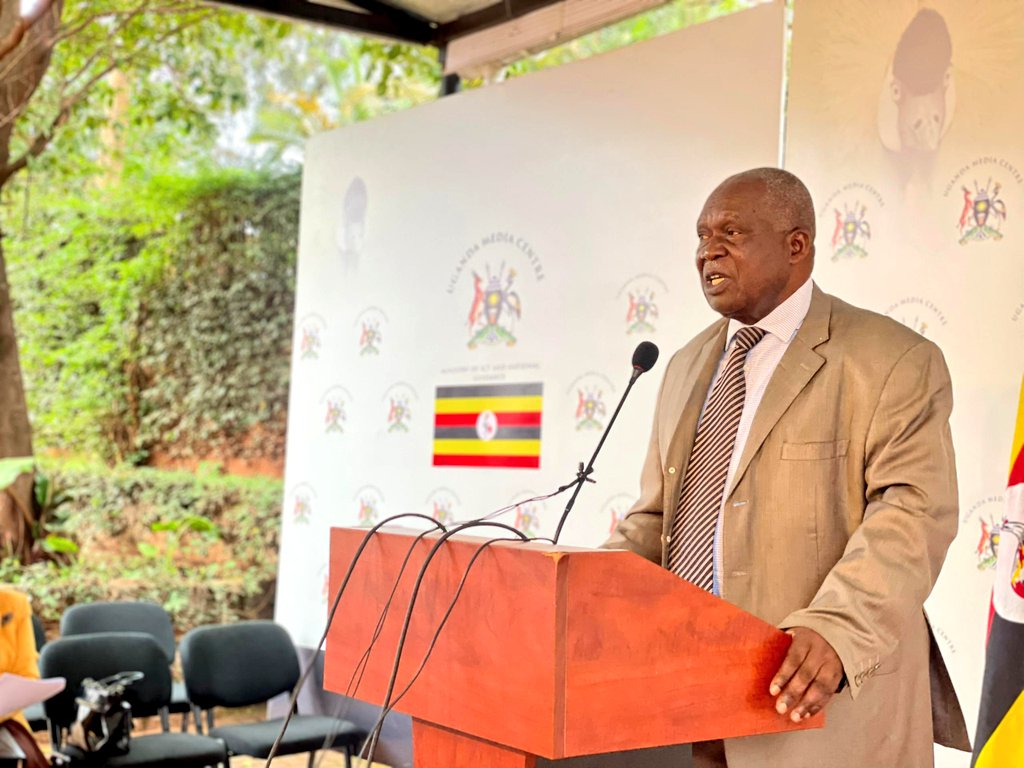
The announcement was made by the Minister of Public Service, Hon. Wilson Muruli Mukasa during a press briefing on the Circular Standing Instructions for the Financial Year 2025/2026.
Hon. Muruli confirmed that the BSC system, effective from 1st July 2024, will be used across all Ministries, Departments and Agencies (MDAs) to strengthen results-based performance tracking. The rollout will be integrated into the Human Capital Management (HCM) system starting next financial year.
“Performance management using the Balanced Scorecard will enhance results-based tracking, I urge all Responsible Officers to plan for both staff and managerial capacity building to support this transition.” Hon. Muruli said.
The Balanced Scorecard is a strategic tool designed to improve the way institutions manage, monitor, and deliver on their goals. Unlike traditional systems that focus solely on finances, the BSC allows government entities to evaluate performance across multiple areas, service delivery, internal operations, and staff development, ensuring alignment with national objectives.
In addition to the BSC announcement, Hon. Muruli also disclosed that the government has allocated UGX 8.55 trillion wage bill for FY 2025/2026, reflecting an increase of over UGX 724 billion from the previous financial year.
“The government has invested over UGX 2.4 trillion in salary enhancement over the last six years since FY 2018/2019,” he noted.
The pension and gratuity budget has also been increased to UGX 1.48 trillion, up from UGX 1.19 trillion in FY 2024/2025. Muruli attributed this growth to the increasing number of retiring public officers and the recent payroll cleanup exercise led by the Office of the Auditor General.
The minister further revealed that UGX 195 billion was committed in FY 2024/2025 towards recruitment, enabling the creation of over 20,000 new jobs across central and local government institutions. For FY 2025/2026, additional resources have been allocated to support recruitment, particularly in Primary Health Care and Secondary Education sectors.
“We have set aside UGX 55.5 billion to staff newly constructed health facilities, upgraded hospitals, and new Seed Secondary Schools,” he said.
Hon. Muruli concluded by citing the success of the 2018 pension reform, which reduced the retirement process from 28 steps to just 4, thus supporting government’s drive toward efficiency, transparency, and performance.
The BSC is expected to play a critical role in transforming public service delivery by making it easier to link staff output to national goals and enabling institutions to monitor real-time progress using a unified system.