
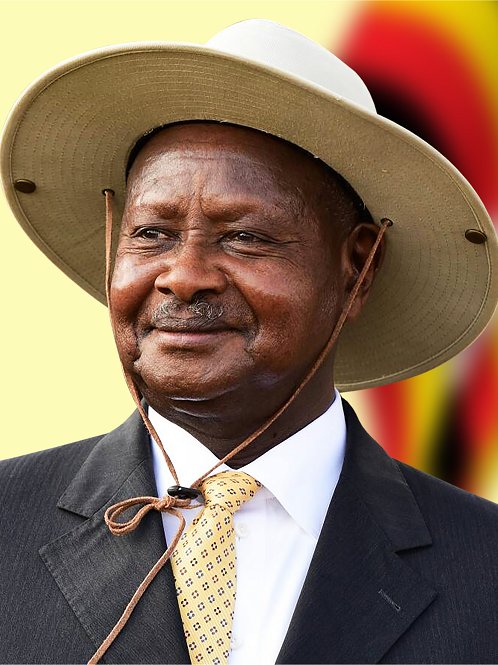
President Yoweri Museveni secured a seventh term in office, extending his 40-year rule with a commanding 71.65% of the vote, according to official results from the Electoral Commission.
This victory, marked by Museveni’s tally of 7,946,772 votes against challenger Robert Kyagulanyi’s (Bobi Wine) 2,741,238 (24.72%), reflects a notable shift in voter sentiment since the 2021 polls.
Despite a surge in registered voters rising from 18 million to over 21 million, an increase of more than 3 million the opposition’s performance waned, even as overall turnout appeared robust in key National Resistance Movement (NRM) strongholds.
The results paint a picture of Museveni’s gains across districts and regions, including traditional opposition bastions like Buganda, where the NRM had previously faltered. Preliminary analyses from pre-election polls suggested Museveni capturing 60% in Buganda against Bobi Wine’s 38%, a reversal from 2021 when Wine dominated urban centers like Kampala and Wakiso.
Even in Northern Uganda historically skeptical of the NRM due to past conflicts Museveni improved, polling around 60-67% in Acholi and Lango sub-regions, up from narrower margins in 2021.
In Luwero, Museveni’s support hovered at 55%, signaling incremental gains in areas where Bobi Wine had previously won.
This uptick in Museveni’s performance, even in districts where he lost overall, underscores a narrative of “guaranteed stability.”
Voters in regions like Lango, Acholi, and Rwenzori, scarred by decades of insurgency under previous regimes, appear to have prioritized Museveni’s track record of peace building and infrastructure investments such as roads, electrification, and agricultural programs over calls for radical change.
As one analyst noted, Museveni’s slogan of “protecting the gains” resonated amid global uncertainties, positioning him as a steady hand in turbulent times.
Conversely, Bobi Wine’s vote share plummeted from 35.08% (3.6 million votes) in 2021 to under 25%, despite the expanded electorate.
Bobi Wine alleged “massive ballot-stuffing” and fraud, claims echoed by his party but dismissed by the Electoral commission
Beyond these, voter fatigue with opposition disunity played a role; Bobi Wine’s National Unity Platform (NUP) faced internal rifts, and his urban, youth-focused message struggled to penetrate rural areas where NRM’s patronage networks remain strong.
In Northern Uganda, Bobi Wine’s support eroded further, with voters gravitating toward established parties like the Democratic Party (DP) rather than his “people power” movement. Historical ties to DP rooted in Catholic communities and regional leadership combined with perceptions of Wine as Buganda centric, limited his appeal.
Museveni’s post-LRA reconstruction efforts, including disarmament and economic programs, have gradually rebuilt trust, flipping districts that once backed opposition figures.
This shift signals that Northern voters, weary of instability, now view the NRM as a bulwark against regression, not just an opposition foil.
The election’s most intriguing dynamic was Generation Z’s involvement, amplified by social media a stark evolution from 2021. With over 3.5 million new young voters, Gen Z comprised a quarter of the electorate.
Platforms like TikTok, X, and Instagram buzzed with campaigns, but the pre-election internet shutdown curtailed opposition outreach.
NRM cleverly harnessed this space through initiatives like “Unstoppable UG,” featuring podcasts, coffee hubs, and celebrity endorsements from artists like Bebe Cool and Alien Skin.
Museveni engaged directly, hosting Gen Z discussions on jobs and innovation, appealing to a demographic split between aspirations for change and fears of upheaval. While many youths rallied for Bobi Wine’s anti-corruption stance, others backed NRM for perceived economic opportunities via programs like Parish Development Model (PDM) and youth livelihoods.
Amid economic pressures, youth unemployment (hovering at 43%), and regional inequalities, Ugandan citizens opted for incremental progress over disruption. Museveni’s narrative of safeguarding four decades of peace trumped Wine’s vision of a “new Uganda.”
Yet, with Bobi Wine rejecting the results and protests simmering,the post-election period could test this fragile mandate.
As Museveni prepared to begin his seventh term, does this renewed mandate offer a chance to consolidate peace into inclusive prosperity?
With voters reaffirming stability over disruption, the strategic question is whether Museveni can now decisively address youth unemployment, corruption, and regional inequality to transform electoral confidence into lasting national cohesion thereby ensuring that continuity does not merely preserve past gains.