
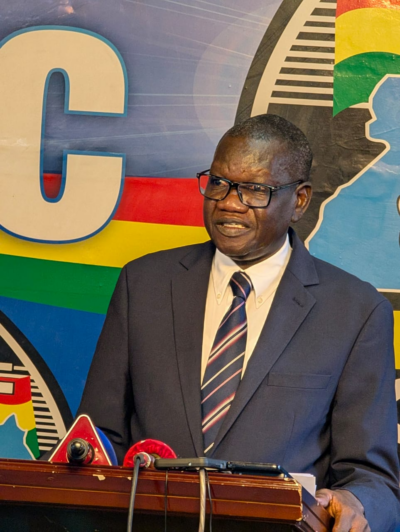
The Forum for Democratic Change (FDC) party is considering equipping its newly elected leaders with the necessary tools and knowledge to represent the party in all political positions in parliament and at the local council level.
According to Patrick Oboi Amuriat, the FDC party president, the party is also set to develop and publish the party’s legislative policy framework, a document that will define the party’s positions on key parliamentary issues such as bills and budgets, among others.
“Under the FDC Leadership Academy, we will roll out a nationwide training program for all elected FDC local government leaders, covering governance and service delivery, legal rights and obligations of elected officials, budget oversight and accountability, community mobilization, and representation of marginalized groups, including women, youth, and persons with disabilities,” Amuriat said.
While addressing the press at the FDC party headquarters in Najjanankumbi on Monday, April 27th, 2026, Amuriat revealed that the party is further seeking political unity with change-seeking political formations to advance the struggle against the ruling government.
“We are initiating formal outreach to Uganda’s opposition and democratic forces, including the People’s Front for Freedom (PFF), Alliance for National Transformation (ANT), Uganda Federal Alliance (UFA), Uganda People’s Congress (UPC), Democratic Party (DP), Justice Forum (JEEMA), National Unity Platform (NUP), and other parties and movements committed to democratic change,” he said.
However, political analysts have since argued that FDC should instead focus on rebuilding itself as a party rather than pursuing political unity, which they say is nearly impossible in the current political atmosphere in Uganda.
According to analysts, FDC is seeking to recover from the recent political setback in the just-concluded presidential and parliamentary elections.
This follows a period of silence after the elections and the exit of its prominent deputy president in charge of Buganda, Yusufu Nsibambi, who defected to the ruling National Resistance Movement (NRM), a move described by political commentators as a significant blow to the party.
However, Amuriat said the party will continue to push the struggle against alleged bad governance in the country, adding that it was not built only to sail in calm waters but also through storms and floods.
Meanwhile, the FDC has been politically weakened by a combination of internal leadership fractures, the emergence of new opposition forces, and alleged external interference. Historically the most formidable challenger to the ruling NRM, the party has recently faced one of its most difficult political periods.