
Ah, the endless dance of African unity, full of promise and passion, yet often stumbling over its own steps.
From Kampala’s perspective, the unfolding drama in the Democratic Republic of Congo (DRC) feels especially close. The two countries share borders, trade routes, and the burdens of regional instability.
The latest twist came when the International Conference on the Great Lakes Region (ICGLR) issued a unified condemnation of Rwanda’s alleged support for the M23 rebels.
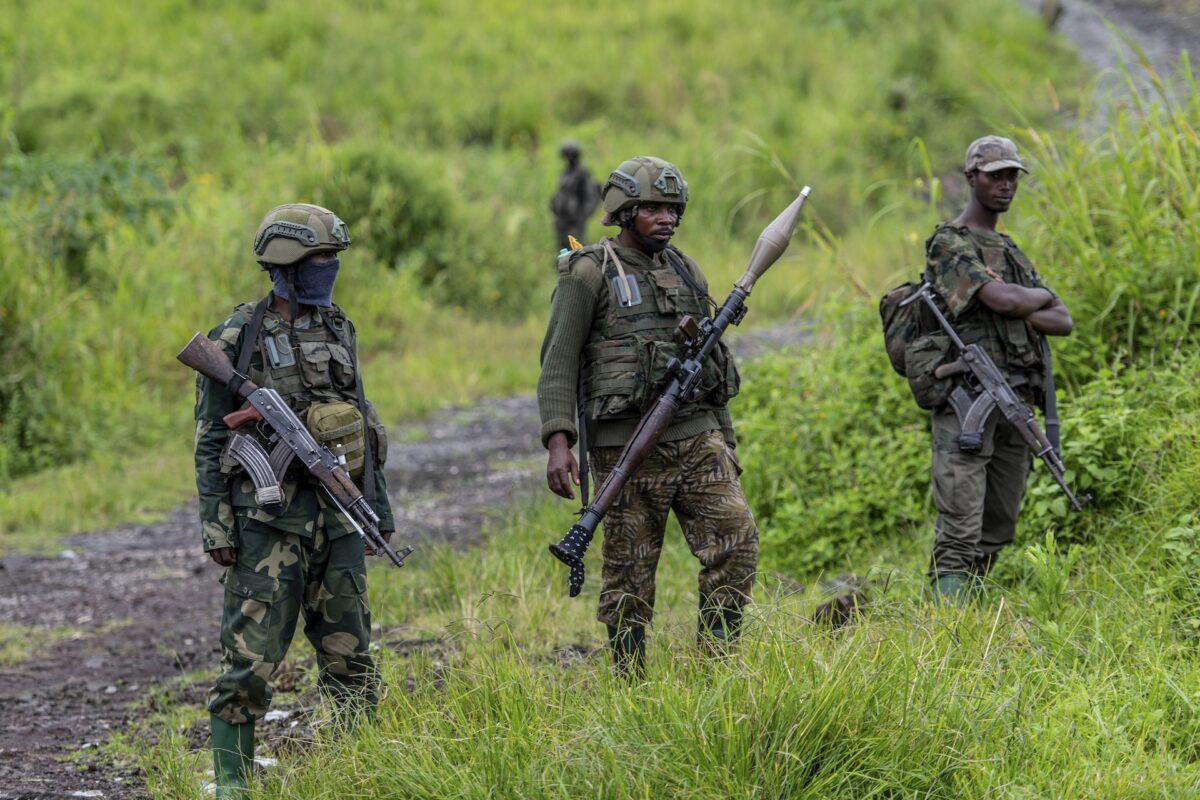
These rebels have carved out pockets of control in eastern DRC, establishing makeshift administrations in captured towns. It almost seems as though M23 decided governing territory might be easier than constantly fighting for it.
Beneath the headlines, however, lies a deeper concern: has the vision of pan-African cooperation faded, leaving the continent to depend once again on Western powers?
At the center of this crisis are the Washington Accords, a 2025 agreement brokered by the United States between Rwanda and the DRC.
Signed with great fanfare in December under the Trump administration, the deal committed both sides to ceasefires, troop withdrawals, and cooperation over critical minerals such as coltan and gold. These minerals power modern technology but have also fueled decades of violence in eastern Congo.
The accords are legally binding, yet their implementation has been weak. By March 2026, reports suggested that only about 23 percent of the commitments had been fulfilled.
Although M23 withdrew from Uvira in January after international pressure, fighting has continued in North and South Kivu. Rwanda’s ambassador even acknowledged security coordination with M23 during testimony before a U.S. congressional committee, triggering renewed calls for sanctions.
Meanwhile, Congolese forces equipped with drones supplied by unnamed partners have carried out counter-attacks, turning the conflict into a strange mix of high-tech warfare in a largely low-tech battlefield.
Tensions escalated further when U.S. Secretary of State Marco Rubio announced visa restrictions on senior Rwandan officials on March 6, 2026.
“Rwanda’s actions in eastern DRC are a clear violation of the Washington Accords signed by President Trump, and the United States will take action to ensure promises made to the President are kept,” Rubio said.
He urged the DRC to neutralize the FDLR militia while demanding that Rwanda immediately withdraw its troops from Congolese territory.
Read Also:President Museveni Meets AU–EAC–SADC Panel to Support DRC Peace Efforts
Rubio had made similar appeals earlier, including during a January 28, 2025 call with President Paul Kagame, where he emphasized the need for a ceasefire and respect for territorial integrity.
Washington did not stop at diplomatic pressure. On March 2, 2026, the U.S. Treasury Department imposed sanctions on the Rwanda Defence Force (RDF) and four senior officers, including army chief Vincent Nyakarundi.
The sanctions accused the RDF of actively supporting, training, and fighting alongside M23 fighters, enabling the capture of key areas such as Goma, Bukavu, and several strategic mining sites. Treasury Secretary Scott Bessent called for the immediate withdrawal of Rwandan troops, weapons, and equipment from the DRC. Rwanda rejected the sanctions as unfair and one-sided, but the move reflected growing American frustration with the failure of African-led peace efforts.
This pattern echoes earlier chapters in the region’s history. U.S. involvement in the Congo dates back to the Cold War, when Washington supported the rule of Mobutu Sese Seko as a bulwark against communism.
In those days the support came through covert funding and military assistance.
Today the approach is more formal, diplomatic accords and economic partnerships tied to mineral resources.
Under President Félix Tshisekedi, these arrangements have become more open and structured. In many ways, his administration has simply formalized what previous governments handled quietly.
But why the turn toward Western mediation? The answer lies partly in the shortcomings of regional institutions.
The East African Community deployed a peacekeeping force in eastern Congo in 2022, but the mission struggled to contain the violence and withdrew by 2024. That withdrawal left a security vacuum that M23 quickly exploited.
The African Union has also attempted mediation, including recent talks in Lomé led by Togo and supported by facilitators from the EAC and the Southern African Development Community.
Yet these efforts have often produced fragmented initiatives rather than coordinated action.
Even the Lomé communiqué in January calling for greater coordination was followed a month later by United Nations appeals for tougher measures against M23 and Rwanda.
For Uganda, the consequences are immediate and tangible. Waves of refugees continue to cross the border.
Trade routes such as the Kampala–Goma corridor face repeated disruption, while smuggling networks linked to the conflict undermine legitimate mineral exports.
Uganda has often played the role of quiet mediator. Kampala hosted talks between the DRC and M23 in 2012–2013 and has remained engaged in African Union frameworks for the Great Lakes region.
Operation Shujaa, launched with the Congolese government in 2021 to combat the Allied Democratic Forces in Ituri and North Kivu, reflects shared security interests.
Yet Uganda’s position is complex. Maintaining relationships with both Rwanda and the DRC, while navigating long-standing tensions between Presidents Museveni and Kagame has led to accusations that Kampala sometimes plays both sides.
In reality, much of this diplomacy reflects a pragmatic effort to protect regional stability and economic interests, particularly roads, trade corridors, and mineral flows that affect Uganda’s own economy.
The broader problem is that African cooperation often struggles with execution.
The principle of “African solutions to African problems” remains widely supported, but implementation frequently falters. Consider the case of ECOWAS and the 2023 coup in Niger.
Initial threats of military intervention eventually gave way to sanctions that hurt ordinary citizens more than the coup leaders themselves.
Read Also: Rwanda Issues Formal Rebuttal, Accusing DRC and Burundi of Washington Accords Violation
In Sudan, the African Union’s 2023 peace roadmap for the conflict between generals Abdel Fattah al-Burhan and Mohamed Hamdan Dagalo largely stalled as outside actors including Russia and the United Arab Emirates pursued their own interests.
There have been successes, such as the AU’s role in facilitating the 2022 ceasefire in Ethiopia’s Tigray region, but these successes remain exceptions rather than the rule.
The irony is difficult to ignore. African leaders frequently champion continental solutions at international summits, yet when conflicts intensify when drones buzz overhead or disasters strike, like the deadly landslide at the Rubaya mining site under M23 control attention often turns to Washington, Brussels, or other external capitals.
So, is the dream of African cooperation truly dead? Probably not. But it is certainly fragile.
The Washington Accords illustrate how external powers step in when regional mechanisms fail to deliver results.
At the same time, there are still signs of hope. African Union mediator Faure Gnassingbé of Togo has recently convened representatives from Rwanda and the DRC alongside partners such as Qatar, building on earlier mediation efforts in Doha.
Qatar has played an increasingly active role since hosting direct talks between Presidents Tshisekedi and Kagame in March 2025, which eventually contributed to a framework agreement with M23 later that year.
Uganda has continued to offer itself as a venue for dialogue, reminding all sides that regional relationships often carry more weight than agreements negotiated thousands of miles away.
For the sake of the DRC and for the stability of the entire Great Lakes region, the goal must be to revive the spirit of cooperation. That means stronger coordination within the African Union, better enforcement of peace agreements, and a commitment to collective action before external actors fill the vacuum.
The dream of African unity may be bruised, but it is not beyond repair. If the continent can align its institutions, enforce its commitments, and prioritize shared interests over rivalry, that dream might yet recover.
Otherwise, Africa’s quest for cooperation risks becoming little more than a recurring subplot in someone else’s geopolitical story.