
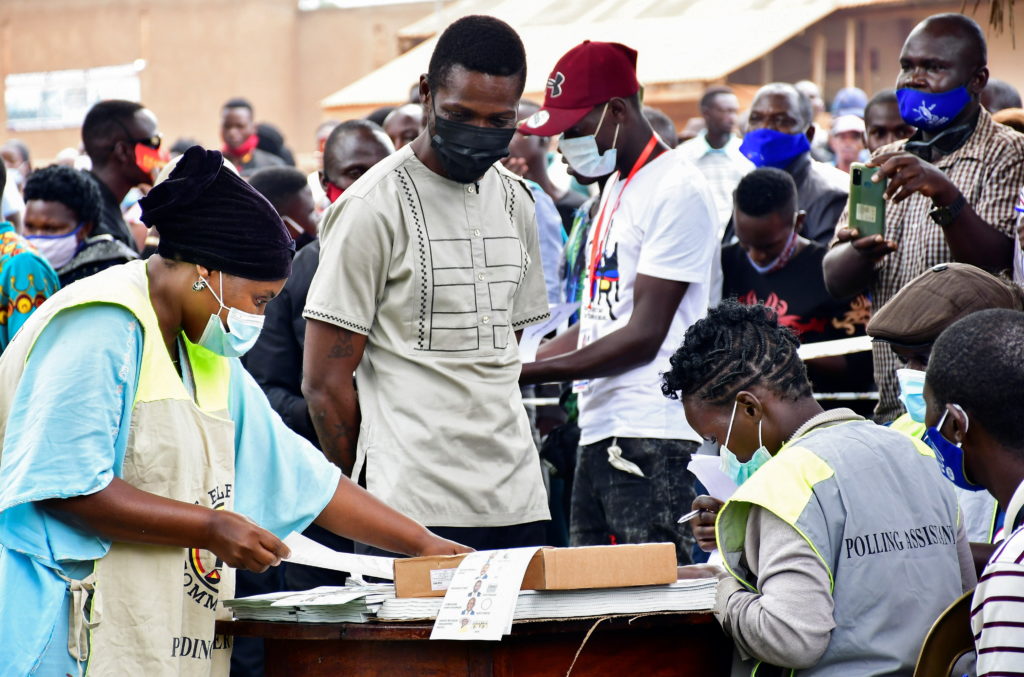
Uganda’s opposition is facing intensified scrutiny after the 2026 general elections, with political analysts questioning whether opposition parties are evolving into a credible alternative or merely reacting to the ruling National Resistance Movement (NRM).
During a televised discussion on Tuesday on March 10th, 2026, political analyst and newly elected MP Patrick Wakida for Kabweri County, Kibuku District argued that the concept of opposition in Uganda has been largely misunderstood.
“Most people equate opposition with criticizing the government. In reality, opposition should present a distinct ideology, coherent policy proposals, and alternative governance strategies. The Opposition is competing with a state that can spend as much as it wishes,” Wakida said.
Wakida highlighted structural weaknesses that hamper opposition growth citing fragmentation, financial limitations, and overreliance on populist dissatisfaction rather than ideology.
Uganda has over 20 registered political parties, but many struggle to maintain cohesion or mount sustained campaigns against the NRM, which benefits from state resources and institutional reach.
Historically, opposition presidential candidates, from Paul Ssemogerere in 1996 to recent elections, have struggled to break past vote share ceilings of around 26%.
He argued that opposition parties function as alternative governments, offering concrete policy proposals rather than merely criticizing those in power.
“In developed countries, they have alternative governments that make proposals to the government, and the government absorbs them. That’s Opposition,” Wakida noted.
Wakida further highlighted that Uganda’s opposition struggles partly because many groups are driven by dissatisfaction rather than ideology.
“In Uganda, many of the Opposition are disgruntled groups. That’s not what it should be,” he stated.
Michael Lulume Bayiga, of the People’s Front for Freedom, emphasized that opposition parties are reorganizing and exploring innovative strategies.
“We are inventing a new template and building stronger structures. The Opposition is growing even within the NRM,” he said, dismissing claims of decline.
Analysts argue that Uganda’s opposition will need more than rhetoric to remain relevant. Ideological clarity, coalition-building, and structured engagement with the electorate are essential if parties hope to challenge entrenched power and expand influence in future electoral cycles. Without these reforms, opposition movements risk remaining reactive forces rather than proactive shapers of Uganda’s political future.