

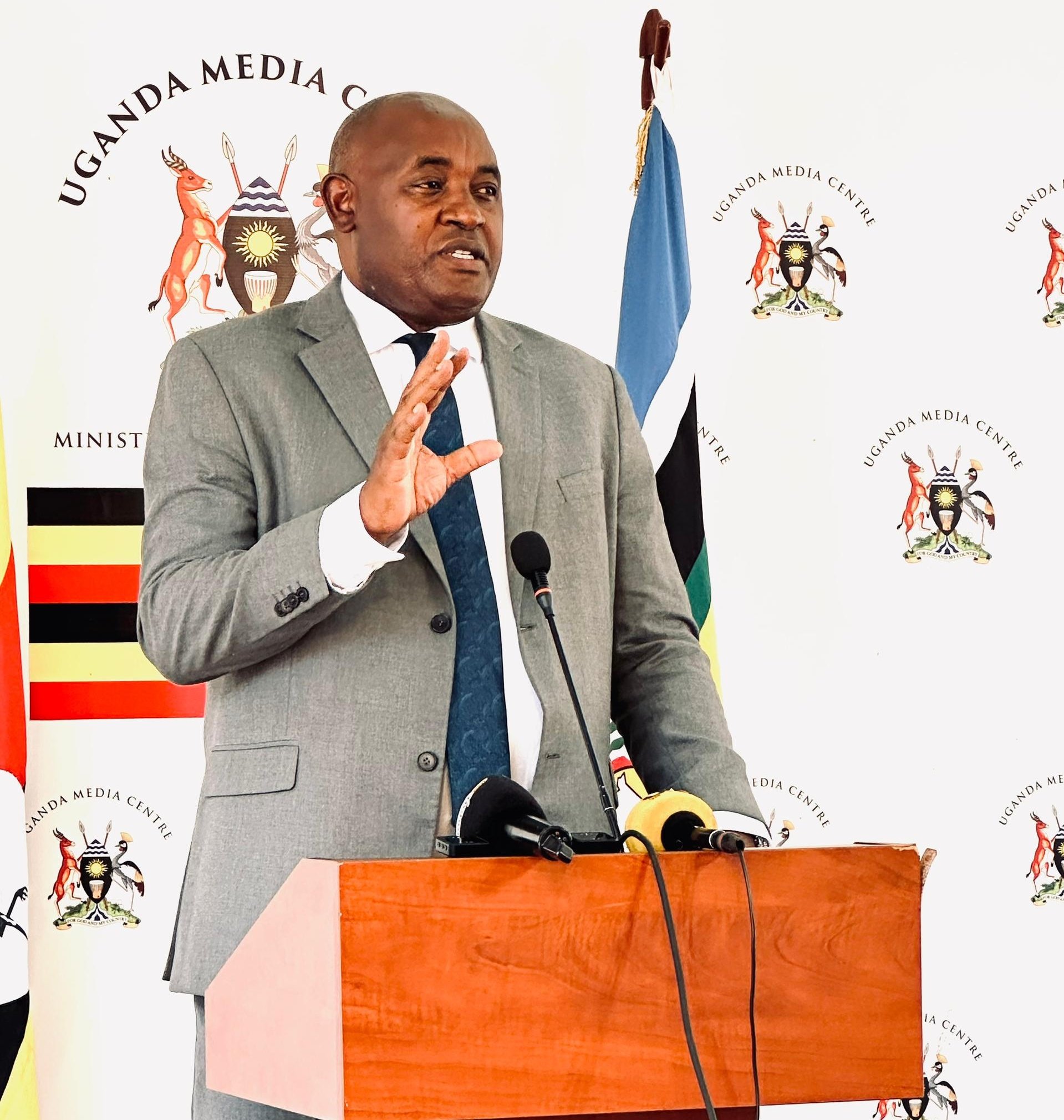
The Minister of Information, Communications Technology and National Guidance, Dr Chris Baryomunsi, has outlined key resolutions from a recent Cabinet meeting, focusing on support for households affected by post-election events and other national priorities.
Speaking to journalists at the Uganda Media Centre on February 11, 2026, Dr Baryomunsi detailed the government’s plan to provide financial support to eligible households, using data from the national census to ensure fair and transparent distribution.
The minister said the government, under a presidential directive, will support households in Acholi, Lango, and Teso regions that were affected by the Lord’s Resistance Army (LRA). Each household will receive five heifers to help restock Northern Uganda and improve livelihoods.
“Funds will be allocated over several financial years,” he said, adding that the programme aims to provide fair and equal support to all eligible households, regardless of individual losses reported in the past.
According to the minister, each heifer is valued at 1 million Uganda shillings, bringing the total support to 5 million shillings per household. The programme will be implemented directly, without using lawyers or intermediaries, to ensure households receive support quickly and efficiently.
Dr Baryomunsi emphasized that the heifer restocking programme is a presidential directive aimed at helping war-affected households rebuild their livelihoods, strengthen communities, and support long-term recovery.
He also urged journalists to report responsibly, promote lawful ways of resolving election disputes, and avoid spreading tension or misinformation.
The minister said the approach will prevent unfair distribution and will focus on verified needs across the country. The announcement comes at a time when discussions continue about national stability following the January 2026 general elections, in which President Yoweri Kaguta Museveni was re-elected and the National Resistance Movement secured a majority in Parliament.
Although some isolated incidents of unrest were reported, government officials have described the post-election period as largely peaceful.
Dr Baryomunsi also reaffirmed the government’s commitment to digital transformation. He said efforts are ongoing to introduce intelligent technologies across different sectors and noted that the future is digital. He added that these initiatives are already having a positive impact and are helping position Uganda as a growing player in regional digital development.
He highlighted recent ministry activities, including staff training programmes and the launch of updated client charters to improve public access to digital services. He said these steps support national goals of inclusive growth and efficient governance.
When asked about timelines and oversight of the compensation programme, Dr Baryomunsi said technical teams are finalizing the guidelines, and payments will start in phases.
He concluded by calling for unity and cooperation as Uganda continues to pursue its development goals.