The United States has introduced a significant change to its international healthcare assistance, replacing Non-Governmental Organizations funding with direct bilateral partnerships with national governments across Africa.
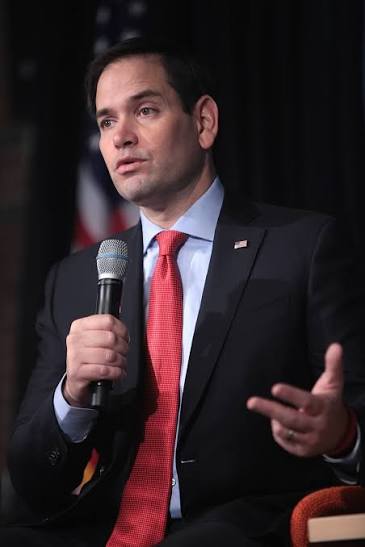
The new policy, dubbed the ‘America First Global Health Strategy,’ was announced by U.S. Secretary of State Marco Rubio, who declared an end to what he described as an ‘era of writing checks to NGOs.’
Under the new strategy, Washington will channel health financing directly to partner governments, linking support to accountability, measurable performance, and long-term sustainability.
According to the U.S. Department of State, the approach aims to strengthen oversight, promote national ownership, and reduce reliance on U.S. taxpayers over time.
In a statement and accompanying fact sheet released by the U.S. Department of State on Monday, 22nd December, 2025, the United States has, since 4th December, signed Memoranda of Understanding (MOUs) with nine African countries namely; Kenya, Rwanda, Liberia, Uganda, Lesotho, Eswatini, Mozambique, Cameroon, and Nigeria.
Under the agreements, the United States will provide more than $8 billion in direct financial assistance, complemented by over $5 billion in co-investment commitments from the partner countries themselves.
The funding is aimed at fighting major infectious diseases, including HIV/AIDS, tuberculosis, and malaria, while strengthening national health systems.
Secretary Rubio described the new model as one anchored in ownership and accountability, emphasizing that it is designed to build the capacity of partner countries to independently prepare for, detect, and respond to health threats.
“This is only the beginning, more bilateral agreements with other countries are in the pipeline,” Rubio said.
He added that the approach would ultimately reduce long-term reliance on U.S. taxpayers while producing more durable health outcomes.
The MOUs are tailored to country-specific priorities and capacity gaps.
Uganda, for instance, has secured a $2.3 billion agreement focused on fighting infectious diseases alongside major investments in health digitization and systems strengthening.
In Rwanda, a $228 million deal is aimed at transitioning the national HIV/AIDS response to full domestic ownership within four years.
A central pillar across all agreements is the gradual transfer of responsibility including the procurement of medical commodities and the financing of health workers from the U.S. government to partner governments.
This transition will be guided by clearly defined performance targets and benchmarks tied to domestic health expenditure.
U.S. officials say the strategy represents a fundamental rethinking of global health assistance; one that prioritizes self-reliance, sustainability, and measurable results over perpetual aid dependency.