
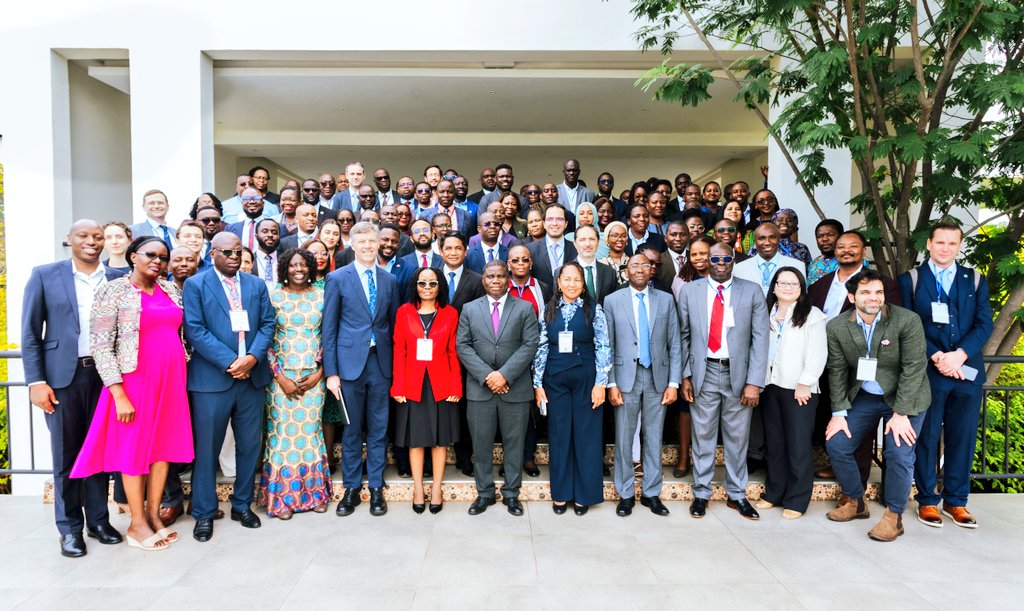
Africa’s finance ministers have converged in Lusaka, Zambia, for the second African Regional Meeting of the Global Coalition of Finance Ministers for Climate Action, reaffirming the continent’s resolve to place climate-responsive policies at the center of national economic planning.
Held from 16th – 18th December 2025, the high-level conference brought together finance leaders, policy experts, and development partners to advance strategies that integrate climate-related risks and green growth opportunities into national budgets and fiscal frameworks.
Uganda’s Minister of Finance, Planning and Economic Development, Matia Kasaija, who also serves as Chair of the Global Coalition welcomed the strong African participation, describing climate action as a powerful driver of inclusive growth.
“We see climate action as a catalyst for economic transformation, job creation, and improved food security,” Kasaija said.
He highlighted the central role of finance ministries in shaping Africa’s response to climate change, noting that fiscal policy is a critical tool for resilience and development.
“This meeting is both timely and urgent. Ministries of finance must use their fiscal power to shape macroeconomic, fiscal, and financial strategies that enable Africa to thrive,” he emphasized.
Minister Kasaija also noted that the Pan-African Finance Ministers Forum as a vital platform for peer learning and collective advocacy, anchored in Africa’s unique economic and climate realities.
As host nation, Zambia showcased its leadership through progressive climate policies, including the Green Economy and Climate Change Act of 2024.
Representing Zambia’s finance minister, Accountant General Nsandi Manza outlined the mounting economic toll of climate change on the continent.
“For Africa, droughts, floods, cyclones, and food insecurity are no longer distant threats. They are present and costly realities undermining GDP growth and development gains,” she stated.
Discussions at the forum focused on practical tools available to finance ministers, such as climate budget tagging, issuance of green bonds, and innovative approaches to mobilizing climate finance.
Dr. Sam Mugume Koojo of the Coalition’s Secretariat noted that several African countries are already making significant strides.
“A number of countries on the continent are far ahead in adopting green budgeting practices and establishing dedicated climate finance units,” he said.
The Lusaka meeting reaffirmed Africa’s position that, despite contributing minimally to global greenhouse gas emissions, the continent remains central to the global climate solution.
Finance leaders pledged to use Africa’s vast natural and human resource potential to build resilient, bankable, and climate-smart economies that support long-term sustainable development.
By aligning fiscal policy with climate priorities, the continent is positioning itself to turn vulnerability into opportunity, strengthening resilience, attracting green investment, and laying the foundation for sustainable, inclusive growth across Africa.