
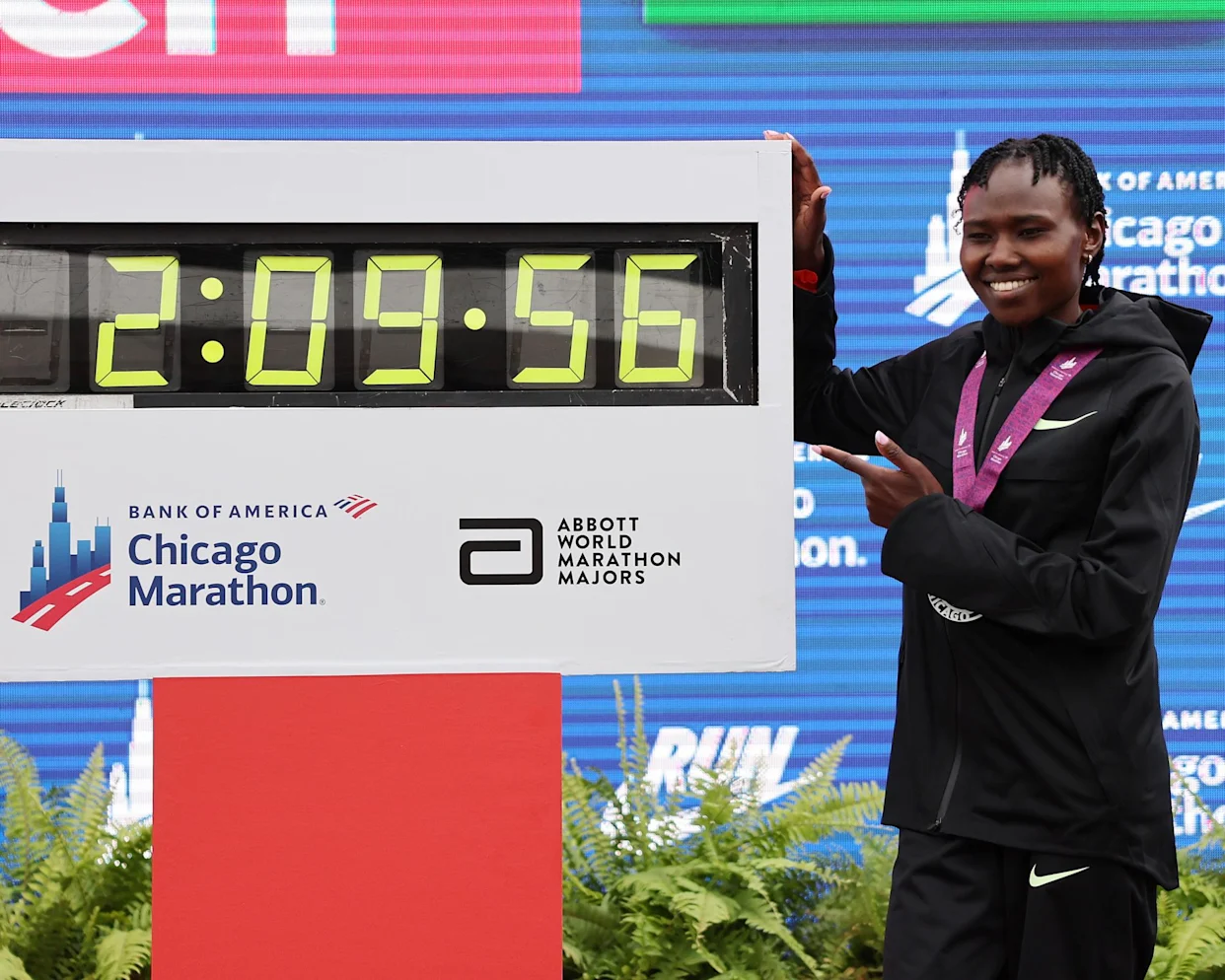
Ruth Chepng’etich, Kenya’s celebrated marathon star and former world record holder, has been handed a three-year ban by the Athletics Integrity Unit (AIU) following a positive test for the prohibited diuretic Hydrochlorothiazide (HCTZ).
The 31-year-old, a former World Marathon Champion and three-time Chicago Marathon winner, tested positive from a sample collected on 14 March 2025. The AIU confirmed the concentration of HCTZ in her urine was 3,800ng/mL, far exceeding the World Anti-Doping Agency’s (WADA) reporting threshold of 20ng/mL.
Initially denying any wrongdoing, Chepng’etich later claimed she had accidentally taken medication belonging to her housemaid two days before the test. The AIU dismissed this explanation as an indirect intent under the Anti-Doping Rules.
“Cases like this send a clear message that no athlete, regardless of their status or success, is above the rules,” AIU Chair David Howman said.
While her previous titles and records prior to 14th March 2025 remain intact, her suspension adds to a growing list of high-profile doping cases among Kenyan athletes. Other notable cases include:
Michael Njenga Kunyuga, banned for eight years for norandrosterone use and tampering with anti-doping procedures.
Diana Kipyokei, 2021 Boston Marathon winner, banned for six years for Triamcinolone Acetonide use and tampering.
Brimin Kipkorir, provisionally suspended for EPO and Furosemide in November 2024.
Joyline Chepngeno, banned for two years in September 2025 for using a prohibited injection to treat knee pain.
These cases reflect a broader challenge in Kenyan athletics, where substances such as EPO, Triamcinolone Acetonide, and Norandrosterone have repeatedly been detected.
As investigations continue, Kenya is yet to respond to this latest setback.