

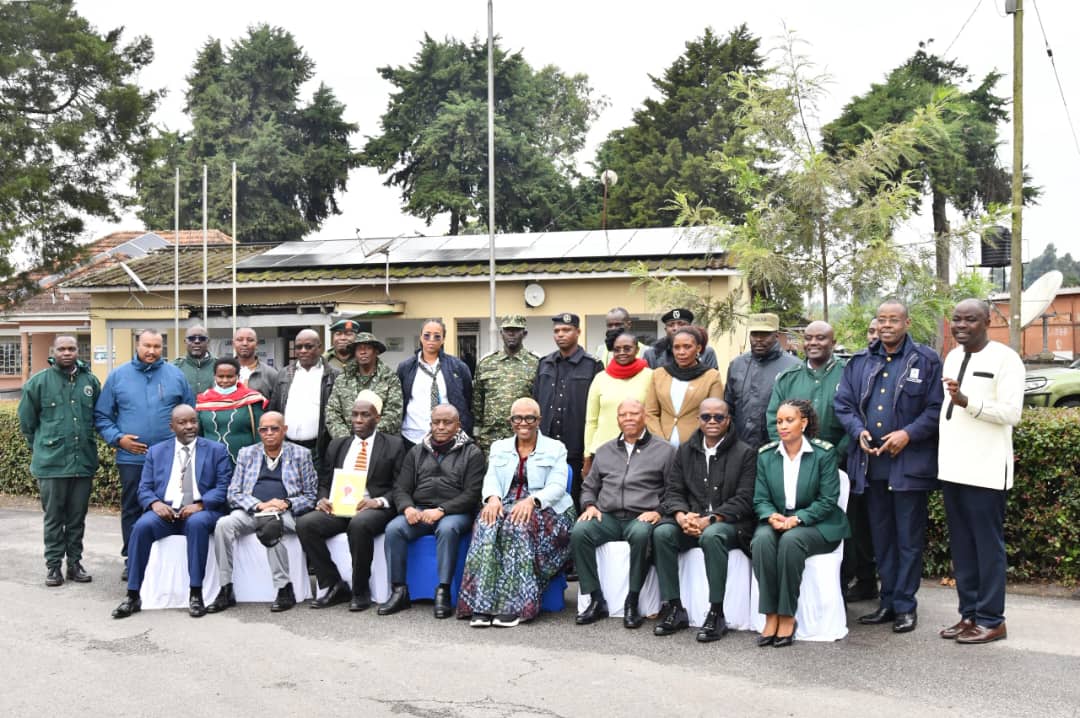
The Government of Uganda, through the Ministry of Internal Affairs in partnership with the United Nations Development Programme (UNDP), has commissioned a new solar power system at Kyanika Border Post in Kisoro District aimed at boosting service delivery at the strategic crossing point between Uganda and Rwanda.
The solar installation, valued at over Shs190 million (approximately $52,121), was officially launched on Thursday, July 10, 2025, in a ceremony presided over by Lt Gen Joseph Musanyufu, the Permanent Secretary at the Ministry of Internal Affairs.
The system is expected to provide a reliable power source to immigration offices and other government departments operating at the border, where inconsistent power supply has previously affected operations.
“This project is a significant step in strengthening service delivery and operational efficiency at Kyanika Border Post,” said Gen Musanyufu.
“With stable and clean energy now in place, staff will work more effectively and the public will receive better services.”
He commended the UNDP for its continued support to government programs, noting that similar solar systems have already been installed at six other border points across the country.
“This partnership with UNDP is crucial in our efforts to modernize and equip key government installations, especially in remote areas,” Musanyufu added.
The Permanent Secretary also appealed to district leaders and local communities to take full responsibility in protecting the solar infrastructure against vandalism or theft, emphasizing its role in public service provision.
Local leaders present at the function welcomed the initiative, saying it will greatly enhance border operations and community development.
The project is part of a broader effort by the Government and development partners to integrate sustainable energy solutions in public infrastructure, in line with Uganda’s commitment to clean energy and efficient public service delivery.
Kyanika Border Post serves as a critical trade and transit route between Uganda and Rwanda, handling large volumes of passenger and cargo traffic daily.