
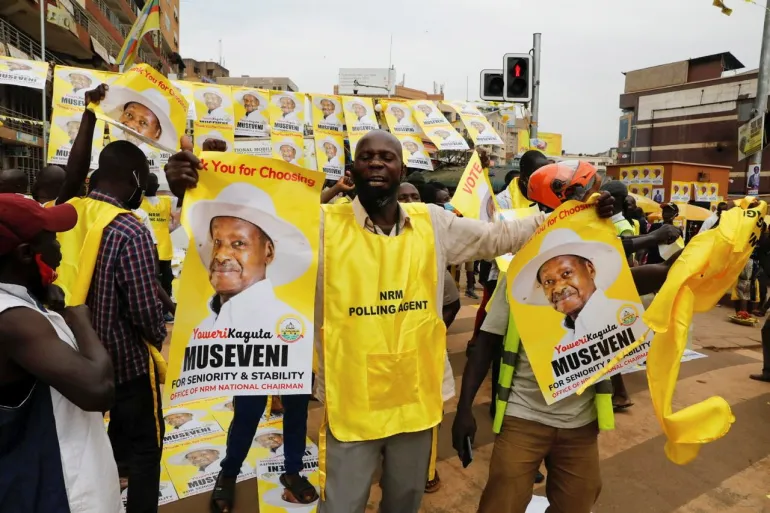
As the country gears up for the forthcoming general elections, a lot of emphasis has been focused on who could be able to tap the largest percentage of the youthful voters who happen to be the largest figure in the population data with over 70 percent.
Seemingly, some analysts believe that the longevity of the NRM party with nearly 40 years in power will create generational concerns in the voting patterns, given the youthful leadership of the country’s leading opposition party NUP and youthful challenges like unemployment, desire to see change, poor working conditions among others. Could the NUP be in control of youthful electorates?
These have however been criticized upon their grounds citing the several NRM achievements towards the youth agenda including among others youthful participation in the internal process of the party administration, manipulation, youths skilling programs by government, economic empowerment programs like PDM, and inconsistencies in the country’s opposition politics where actors are seen as opportunists which has lowered the morale for political change struggles. Does the NRM still dominate youthful politics in the country?
He, who has the youths, has political power in Uganda, that’s what I could say. This leaves a debate about who will control the youthful suffrage in the country’s political terrain?
Last week on June 19, 2025, the electoral commission conducted youth’s elections alongside other special interest groups. However, the elections were characterized by widespread violence, election malpractice, delays, complaints about voter registers among others.
Despite the wide spread irregularities, voting went ahead as planned all over the country. The results show NRM winning the majority of the contested positions in the elections in every district in Uganda. The experience also includes the Kampala metropolitan area where the NUP party is deemed to be a strong holder of the electoral area. This has doubts amidst thoughts that the NUP could emerge to preside over youths dormination in the country’s political space.
For example in areas of Nakawa where the Leader of Opposition in Parliament hails from, the NRM visibly won key youth positions in the area which all despise the NUP mobilization schemes and manifesto towards the targeted youth voters. Is the “Kunga” mobilization scheme a failure?
While reading or analyzing the election outcomes, it is very hard to account for the billions of money invested under the “Kunga” scheme. Either the scheme, or Chairman Nyanzi (as he is always known by) has failed in relation to its targets. Recently, silent voices emerged in the NUP questioning the ability of Chairman Nyanzi in the party’s mobilization. Some argued that Nyazi acquired the position because of his relationship being a biological brother to Robert Kyagulanyi (Bobi Wine) despite his lack of capacity and knowledge about politics.
Favoritism and the degenerating quality of leadership has always been causing intrigue in the NUP with members claiming lack of capabilities amongst some party leaders with chairman Nyanzi among others being targets, with other incomings like the Kampala comedian popularly known by his stage name “Kapere.” This has been as a result of transparent internal democratic processes like the absence of party primaries in the NUP which has made selection as the only to get leaders which has made loyalty and favoritism inevitable.
On 20th June 20, 2025 after the youth elections, the NUP Party president on his X account (Bobi Wine) came out to castigate the electoral commission as being partisan and also claiming loss of all legitimacy by President Museveni’s region. He questioned the levels of violence that involved beating of candidates by the military, and tampering with election registers.
Critics have emphasized that this was a blame game to evade shame and questions about the un-popularity of his youths agenda, a generation whose ideas he and his party purports to represent, but also accountability concerns on billions of donor funds claimed to have been invested in mobilizing the youths. What next for the NUP Youth agenda?
However, there were legitimate concerns raised in his argument which calls for serious concerns about legitimacy of the military involvement in electoral processes. Law enforcement in the country is a mandate of the Uganda police and there are questions about the source of the military mandate in the election process. More often, the army has in most cases been the source or the escalators of electoral and political violence as these have often been seen on various occasions beating electorates, blocking candidates, suppressing rallies among others. Will the military ever get out of electoral processes in the country?
Despite all these above concerns, the results show that NRM won all parts of the country in youth elections which implies that the party is still visibly popular among the young generation. Could this be an indication of an early lead by the NRM party and president Museveni in the forthcoming general elections?
Who dominates the youthful political space in the Country? Is it the end of the beginning or the beginning of the end?