Uganda is set to benefit from a fresh $2 billion financing package from the World Bank over the next three financial years, aimed at accelerating development in key sectors including infrastructure, energy, education, and agriculture.
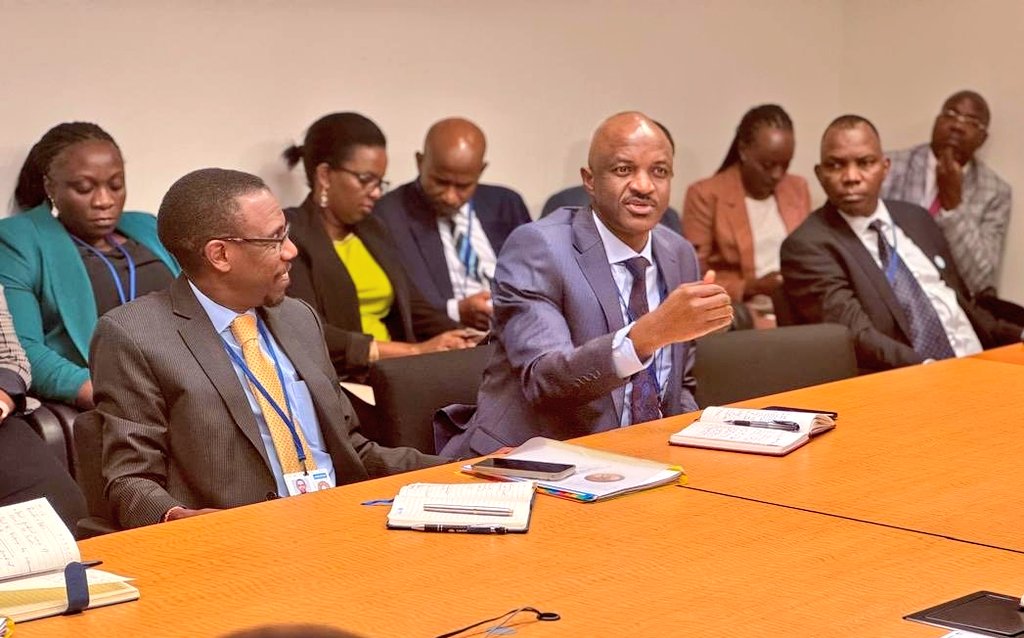
The announcement follows the conclusion of the 2025 International Monetary Fund (IMF) and World Bank Annual Meetings held in Washington D.C., according to a statement released by the Permanent Secretary and Secretary to the Treasury, Ramathan Ggoobi.
Ggoobi said the World Bank’s renewed commitment marks the return of concessional financing to Uganda, with the Bank now prioritizing projects that unlock private sector potential and create jobs.
“In the next three financial years the World Bank will disburse over $2 billion of new money to finance our development. The current total investment is $4.9 billion,” he stated.
He explained that the funds will be directed towards roads and bridges, electricity transmission and last-mile distribution, regional city infrastructure, schools, IT, agriculture, water and irrigation, an export guarantee scheme, skilling, and social protection.
“The World Bank is now focused more on unlocking the power of the private sector to create jobs,” Ggoobi noted.
At the same time, the International Finance Corporation (IFC) the private sector arm of the World Bank Group is set to provide patient capital to investors in Uganda’s minerals, renewable energy, agro-industrialization, and innovation sectors.
“The IFC will co-invest with government in State-Owned Enterprises (SoEs),” Ggoobi revealed.
Uganda also continued negotiations with the IMF for a new Extended Credit Facility (ECF) program after the 2026 elections, focusing on key reforms such as increasing domestic revenue collection, improving budgeting, and strengthening the financial sector.
Ggoobi said the World Bank has committed to support Uganda’s tenfold growth strategy, while the IMF remains dedicated to maintaining macroeconomic stability.
“The Fund has continued to rank Uganda among the fastest growing economies in Africa, and by extension in the world. Our macroeconomy is stable,” he emphasized.
The 2025 IMF and World Bank Annual Meetings, held in Washington D.C. from October 13 to 18, brought together finance ministers, central bank governors, and development partners from across the globe to discuss issues of global concern, including economic recovery, debt management, sustainable development, and the transition to clean energy.
The meetings also featured regional briefings, policy dialogues, and seminars aimed at strengthening international cooperation to promote inclusive and resilient global growth.