For people who witnessed the land in the late nineties dating back, little or less development was heard or spoken about the districts of Obongi and Madi-Okollo in Uganda’s West Nile region.
The areas grappled with many hardships mainly due to the military conflicts endured during the periods of Idi Amin’s dictatorship (1971–1979) and the subsequent government of Milton Obote (1980–1985).
Considering their nearness with the war-torn South Sudan and the Democratic Republic of Congo (DRC), the roads and other infrastructure were neglected and deteriorated over time making transport and agriculture mainly cash crop growing nearly impossible.
This time of decades of conflict and marginalization meant that by 1986, the region was one of Uganda’s least developed areas, with little economic opportunity.
Today, Obongi and Madi-Okollo districts have undergone a remarkable transformation over the past 35 years. These regions stand as symbols of progress, stability, and opportunity, a journey that began under the National Resistance Movement (NRM) government.
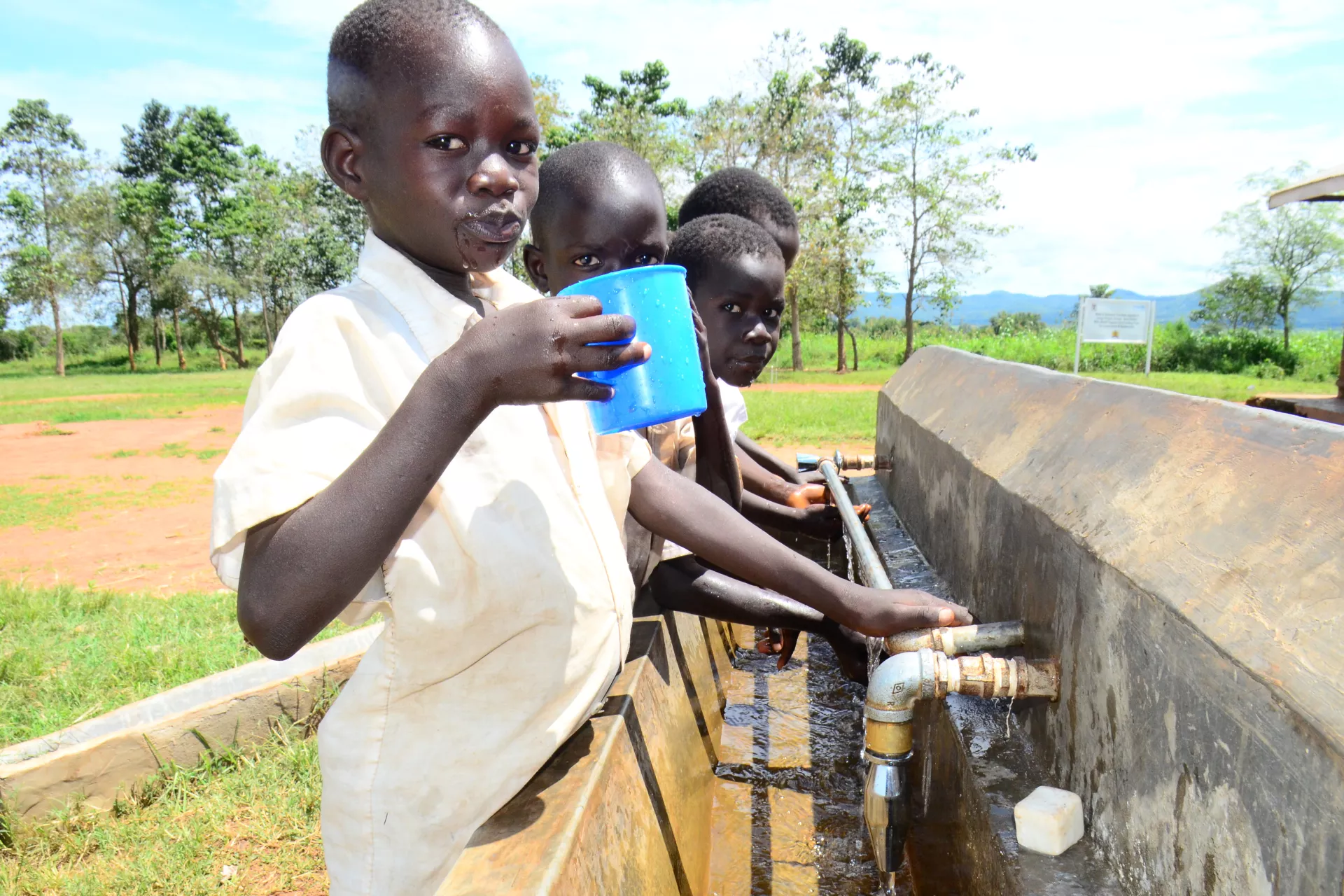
The health sector has undergone a remarkable transformation. Facilities such as Obongi Health Centre IV, Okollo Health Centre IV, Itula Health Centre III, and Yumbe–Obongi Community Hospital have been equipped with maternity wards, staff quarters, and ambulance services.
Residents access essential services without traveling long distances as witnessed by health officials at the center like nurse Miriam Adiru at Obongi Health Centre IV.
“The availability of drugs and trained medical staff has greatly improved maternal and child health. Women no longer have to travel to Arua or Moyo for delivery,” Nurse Adiru says.
The education sector has also undergone transformation from grass thatched classrooms to modern learning spaces. George Ayiba Butele the Madi-Okollo District Education notes that the two districts have benefitted from deliberate interventions under national programmes such as the Parish Development Model (PDM), Universal Primary Education (UPE), Operation Wealth Creation (OWC), and the Northern Uganda Social Action Fund (NUSAF).
“In the 1980s, accessing a health centre or school was almost impossible. Today, every sub-county has a functional government aided school. That’s real progress,”Ayiba states.
The Uganda National Roads Authority (UNRA) has prioritized key projects such as the Arua–Okollo–Pakwach Road, connecting Madi-Okollo to the main trade corridor, and the Obongi–Moyo–Adjumani Road, which links Obongi to major towns and facilitates cross-border trade with South Sudan. This has opened markets and connectivity enhancing trade in the area.
The Itula–Gbuluku Road and Okollo–Inde Town Road have been constructed under the community Access Roads Programme(CARP), improving access to markets, health centres, and schools. Farmers can now transport produce without delay, something that was impossible on the muddy roads of the 1980s.
In the 1980s, insecurity crippled development across the region. Today, Obongi and Madi-Okollo enjoy stability, thanks to the establishment of police posts in Obongi Town, Itula, and Okollo, alongside UPDF detachments at Inde and Ewanga.
Livelihood and economic empowerment have been boosted by programmes such as the Parish Development Model (PDM), Operation Wealth Creation (OWC), and the Youth Livelihood Programme (YLP).
Farmers now produce cassava, maize, sim sim, and groundnuts at a commercial scale, supported by extension services and improved seeds. The Women Entrepreneurship Programme (WEP) has also enabled over 300 women groups to start small enterprises.
“Government programmes have empowered many households to become self-reliant,” Ms Roseline Akello, the Madi-Okollo District Commercial Officer says.
The transformation achieved in the last 35 years is significant. The region’s progress in schools, healthcare, and peace highlights the impact of sustained government focus on rural development.
Samuel Mpimbaza Hashaka, the Resident District Commissioner (RDC) of Obongi praised the achievements, saying the progress reflects the government’s deliberate effort to extend services to all Ugandans.
“The transformation of Obongi and Madi-Okollo is a product of stability and visionary leadership. The NRM government has ensured that even the most remote communities benefit from national programmes,” Hashaka notes.
From the dusty, disconnected villages of the 1980s to the bustling trading centres of today, the story of Obongi and Madi-Okollo stands as a powerful reminder of how stability, investment, and inclusive governance can redefine the destiny of an entire region.