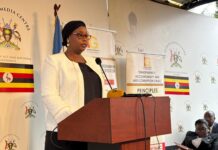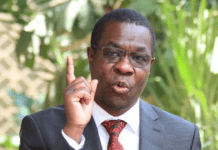
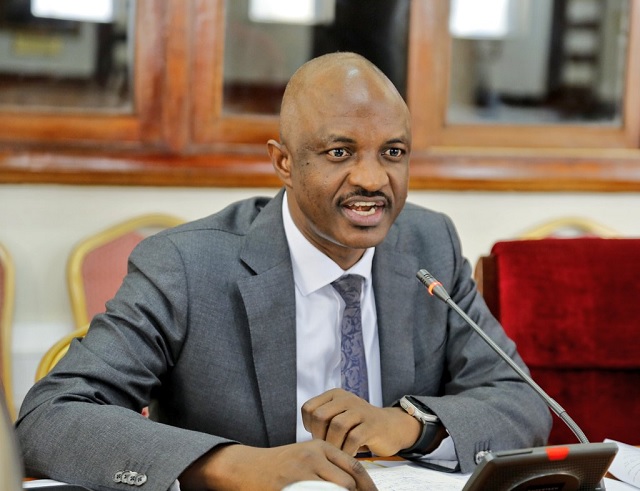
The Permanent Secretary and Secretary to the Treasury (PSST) at the Ministry of Finance, Dr Ramathan Ggoobi, has said that Uganda’s economy has remained stable through the 2026 election period, defying fears of political-cycle disruptions.
Ggoobi made the remarks while discussing the state of the economy and the road to the 2027 financial year during a local broadcast on Thursday, February 5th, 2026.
According to Ggoobi, early concerns that election-related spending and uncertainty would weaken the economy had not materialized.
“Contrary to what many people thought, we’ve had a very comfortable election year in terms of economic fundamentals,” he said.
He noted that core indicators such as inflation, the exchange rate, and investor activity remained positive.
“Inflation has remained stable, the shilling has strengthened, and investors have continued to pour money into the economy,” Ggoobi noted.
The PSST added that Uganda’s external sector also performed strongly with a surplus Balance of Payment (BOP) in the election year the highest in the last 15 years.
Ggoobi further highlighted that the long-term export-oriented policies have continued to shape the country’s growth path.
“As Uganda, we made a decision many years ago not to tax exports to incentivize exports,” PSST stated.
Looking ahead, Ggoobi pointed to oil production and institutional reforms as major economic drivers.
“In 2026, Uganda is getting its first oil. We are set to become an oil producer this year,” he highlighted.
Uganda often faces economic uncertainty during election cycles, making the reported stability a key benchmark as the country plans for the next fiscal period towards 2027.