
As Uganda enters the final weeks of campaigning ahead of the 2026 general elections, political analysts and electoral officials are warning of a potentially tense political climate, driven largely by a close contest between the ruling National Resistance Movement (NRM) and the opposition National Unity Platform (NUP).
Political analyst Godber Tumushabe, the Executive Director of the Great Lakes Institute for Strategic Studies, speaking during a live broadcast on Monday, January 5th, 2026, acknowledged that though the race has multiple candidates, the main competition shaping the presidential race and public attention is focused on two key figures.
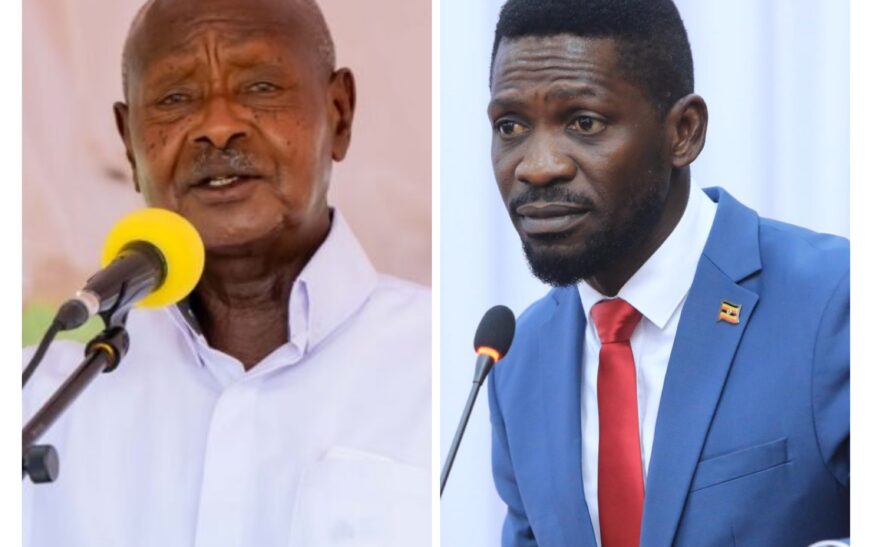
“Right now, it’s a two-horse race between Bobi Wine and Museveni,” Tumushabe said.
He pointed to several factors affecting some candidates’ performance on the campaign trail including reports of harassment and disruptions. He, however, said that the situation is less severe than in past elections.
“Given what we have seen in previous elections, you can see that what we have this time is reasonable regardless of the harassment some politicians have faced. Basically, it could have been worse,” he said.
Tumushabe, on the other hand, criticized government communication, saying mixed signals from government officials point to deeper challenges.
“The uncoordinated messaging gives me the impression of a lack of a coherent strategy from the government,” he noted.
He also questioned electoral credibility as a key concern.
“If the EC were to tell us that this election is different, they would tell us how vices like rigging and violence have been eliminated from this election.”
Incumbent President Yoweri Kaguta Museveni of the NRM, in power since 1986, is seeking a seventh term, while opposition leader Robert Kyagulanyi Ssentamu, popularly known as Bobi Wine of the NUP, is mobilizing support among urban and youth voters. Both candidates were cleared by the Electoral Commission (EC).
The comments come amid continued public debate over campaign freedoms, security operations, and the ability of candidates to mobilize without disruption.
Electoral Commission spokesperson Julius Mucunguzi said the Commission is ready.
“All the materials needed for the elections are in place. Basins and transparent ballot boxes are being packaged for dispatch,” he noted.
Additionally, he noted the introduction of mandatory biometric verification.
“There is no doubt in anyone’s mind that the EC is in charge of this electoral process. However, a free, fair, and credible election is a responsibility of all stakeholders,” Mucunguzi stressed.
Mucunguzi further said that the election environment remains calm and urged all actors to maintain peace.
“The general picture we are seeing is that the process is peaceful, and the Commission is committed to ensuring that all electoral activities are conducted in accordance with the law,” he said.
As polling approaches on January 15th with over 21 million registered as eligible voters, analysts say the election will test not only political strength but also public confidence in a fair and credible process.