Uganda has registered a major milestone in its HIV response, reducing national HIV prevalence from 18 percent in the 1980s to 4.9 percent today. This is according to studies made by the Uganda AIDS Commission (UAC).
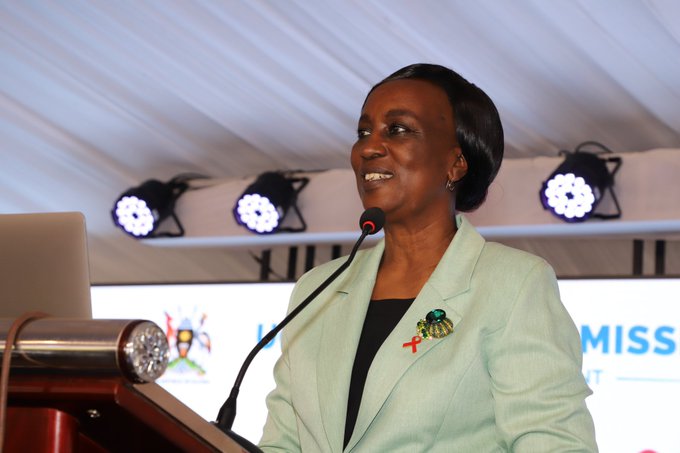
UAC Chairperson, Canon Dr. Ruth Senyonyi, revealed these statistics during the opening of the National HIV & AIDS Symposium 2025 at Mbarara University of Science and Technology (MUST) on November 26, 2025.
Addressing researchers, policy makers, political leaders, development partners and community representatives, Dr. Senyonyi noted that Uganda’s gains over the last four decades demonstrate the impact of strong community engagement, strengthened health systems and evidence-based interventions.
She however warned that with less than five years to the 2030 global target of ending AIDS as a public health threat, the country must intensify proven strategies and safeguard the progress made.
“With less than 5 years to 2030, we need to ensure we protect the gains that we have made over the 40 years and accelerate implementation of those interventions that we know will give us a huge return on investment,” Dr. Ruth Senyonyi.
Latest national data presented at the symposium shows positive behavioral trends amongst adults aged 15–49 years. The proportion of males reporting more than one sexual partner in the previous 12 months declined from 45.4 percent to 23 percent, while the rate among females dropped from 28.8 percent to 3.5 percent.
Despite these improvements, Dr. Senyonyi highlighted that early sexual debut remains a persistent challenge. Among males, 16.4 percent reported initiating sexual activity before age 15, alongside 11.9 percent of females, both figures exceeding the National Strategic Plan targets of 11 percent and 5 percent respectively.
The Director of Planning & Strategic Information – UAC, Dr. Vincent Bagambe, presented the 2025 Joint Annual AIDS Review (JAR) Report & Progress on JAR 2024 Undertakings, to stakeholders at the Symposium 2025.
The three-day symposium, held under the theme: “Building a Sustainable HIV Response to End AIDS as a Public Health Threat in Uganda by 2030,” will address financing, prevention, treatment, the Joint Annual Review report and preparations for the Philly Lutaaya Day commemoration.