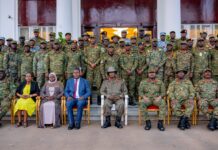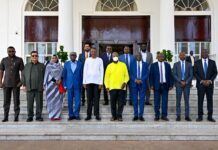
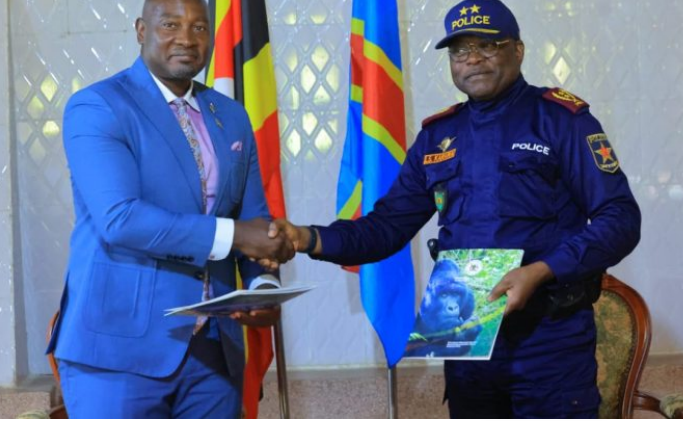
Uganda and the Democratic Republic of Congo (DRC) have taken major steps to enhance security, trade, and cooperation along their shared border following a three-day high-level Cross-Border Joint Meeting held at the Mpondwe/Kasindi One Stop Border Post from 18th – 20th February 2026.
The summit brought together top officials from both nations, who concluded the talks on Friday with a series of agreements aimed at improving cross-border trade, harmonizing immigration policies, and strengthening security coordination.
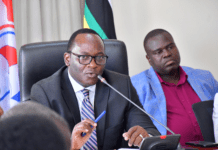
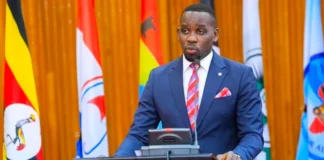
Led by Uganda’s Ambassador to the DRC, Farid Kaliisa, and Divisional Commissioner Karawa de Ngamo Louis Segond, Vice Governor of North Kivu Province, the delegations pointed out a shared commitment to regional stability and equitable management of shared resources, including the waters of Lake Edward and Lake Albert.
The meeting highlighted the growing economic interdependence between the two neighbors.
Ambassador Kaliisa noted that the DRC has emerged as Uganda’s premier African export destination, with over $962.2 million in export revenue recorded in the 2024–25 fiscal year, including both formal and informal trade.
He emphasized the importance of cross-border security in supporting trade and regional stability.
“Safe and secure borders are the foundation for sustainable trade and socio-economic integration between our countries. By strengthening joint operations, we not only protect our communities but also promote shared prosperity,’’ Ambassador Kaliisa said.
Karawa, the North Kivu Province Vice Governor, emphasized that Uganda remains a vital link for eastern Congo, supplying essential household goods, construction materials, and agricultural produce, while also serving as the primary transit corridor for the DRC’s international imports and exports.
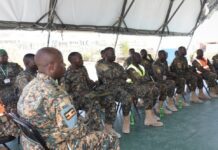
Security was a key focus of the discussions, with the North Kivu Province Vice Governor praising the collaborative efforts between the Uganda Peoples’ Defence Forces (UPDF) and the Armed Forces of the DRC, noting that joint operations have significantly stabilized border regions and surrounding areas.
“Our collaboration with the UPDF is keeping our borders secure and our people safe,” Karawa stated.
To further strengthen cooperation, officials tasked technical teams with operationalizing the Joint Border Operations Committee. The committee will integrate customs systems and conduct regular joint patrols, with its inaugural meeting scheduled in Uganda by May 2026.
On immigration, the Ugandan representatives urged the DRC to implement reciprocal visa waivers for Ugandan nationals. Uganda removed visa requirements for Congolese citizens in January 2024, and officials stressed that a similar move by the DRC is necessary to facilitate seamless movement of people and labor.
The delegations also adopted a roadmap from the Lakes Edward and Albert Fisheries and Aquatic Organization, which includes joint sensitization workshops and the acquisition of modern surveillance equipment to monitor shared aquatic resources effectively.
The summit follows the DRC’s 2022 admission into the East African Community (EAC), which has spurred a 29% year-on-year increase in formal trade. Bank of Uganda data shows that formal imports from Uganda totaled $542.74 million in the last fiscal year, dominated by manufactured goods such as sugar, steel, iron, and plastics.
Held under the theme “Borders as bridges: Harmonizing socio-economic activities for shared prosperity and regional security,” the summit demonstrates the growing commitment of Uganda and the DRC to turn shared borders into avenues for trade, security, and cooperation.
By addressing economic interdependence, joint security, and resource management, the two nations aim to promote regional stability, enhance prosperity, and strengthen integration within the East African Community.