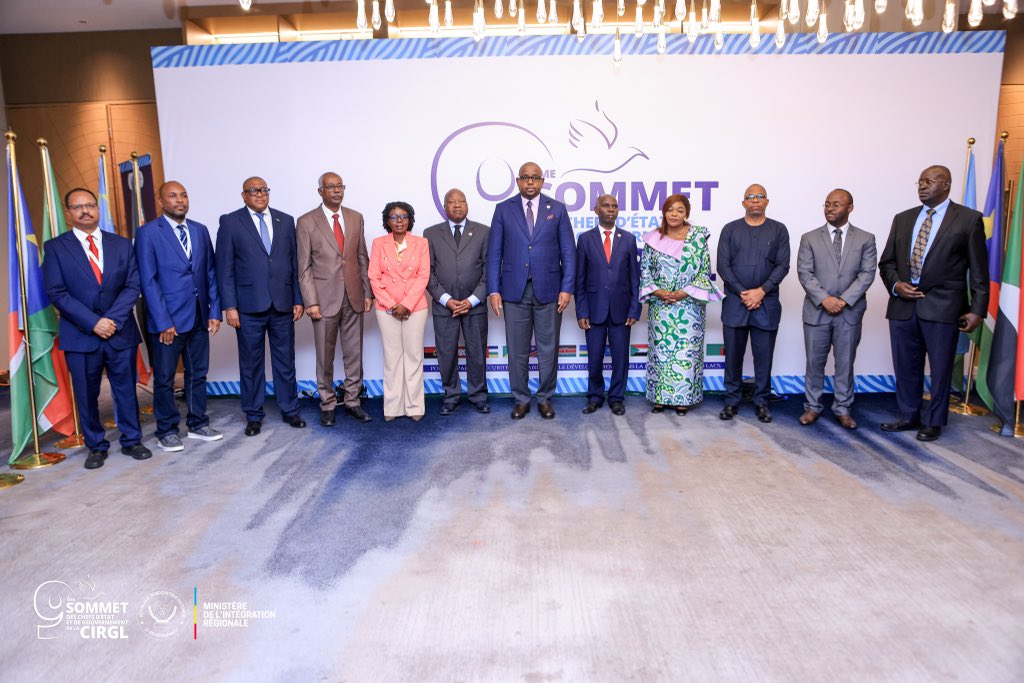
Over 250 leaders and investors from across the Great Lakes region are expected to gather in Kinshasa on Friday, November 14, for a high-level summit aimed at deepening interstate trade, regional connectivity, and lasting peace.
The Executive Secretary of the International Conference on the Great Lakes Region (ICGLR), Ambassador Joao Samuel Caholo noted that the meeting will be hosted by DR Congo’s President H.E. Félix Antoine Tshisekedi Tshilombo under the theme: “The Great Lakes in Action: Economic Integration for Lasting Peace – Success Stories.”
“The summit will bring together heads of state, government officials, business leaders, financial institutions, and regional organizations for a full day of discussions focused on advancing the region’s economic transformation,’’ Caholo said.
According to the Ministry of Regional Integration and the Public-Private Partnership Council and Coordination Unit (UC-PPP), the conference will spotlight strategic cross-border infrastructure projects, including the Lobito Corridor linking DR Congo, Zambia, and Angola to the Atlantic Ocean; the DRC–Uganda Road Corridor aimed at boosting cross-border trade; and the Tanzania–Burundi–DRC Railway Project, supported by the African Development Bank.
In addition, a new regional digital platform will be unveiled on the sidelines of the summit to facilitate real-time tracking of integration projects and highlight tangible progress across member states.
The ICGLR, established under the auspices of the United Nations and the African Union, brings together twelve member states: Angola, Burundi, Central African Republic, Republic of Congo, Democratic Republic of Congo, Kenya, Uganda, Rwanda, South Sudan, Sudan, Tanzania, and Zambia.
Its formation in 2000 followed a UN Security Council call for a regional framework to address the intertwined issues of conflict, security, and development that have historically affected the Great Lakes region — from the 1994 Rwandan genocide to the ongoing political instability in parts of the DRC.
Representatives from major international and regional bodies including the African Union (AU), European Union (EU), East African Community (EAC), African Development Bank (AfDB), and the Agence Française de Développement (AFD) — are expected to attend, underscoring the global significance of the summit’s agenda.