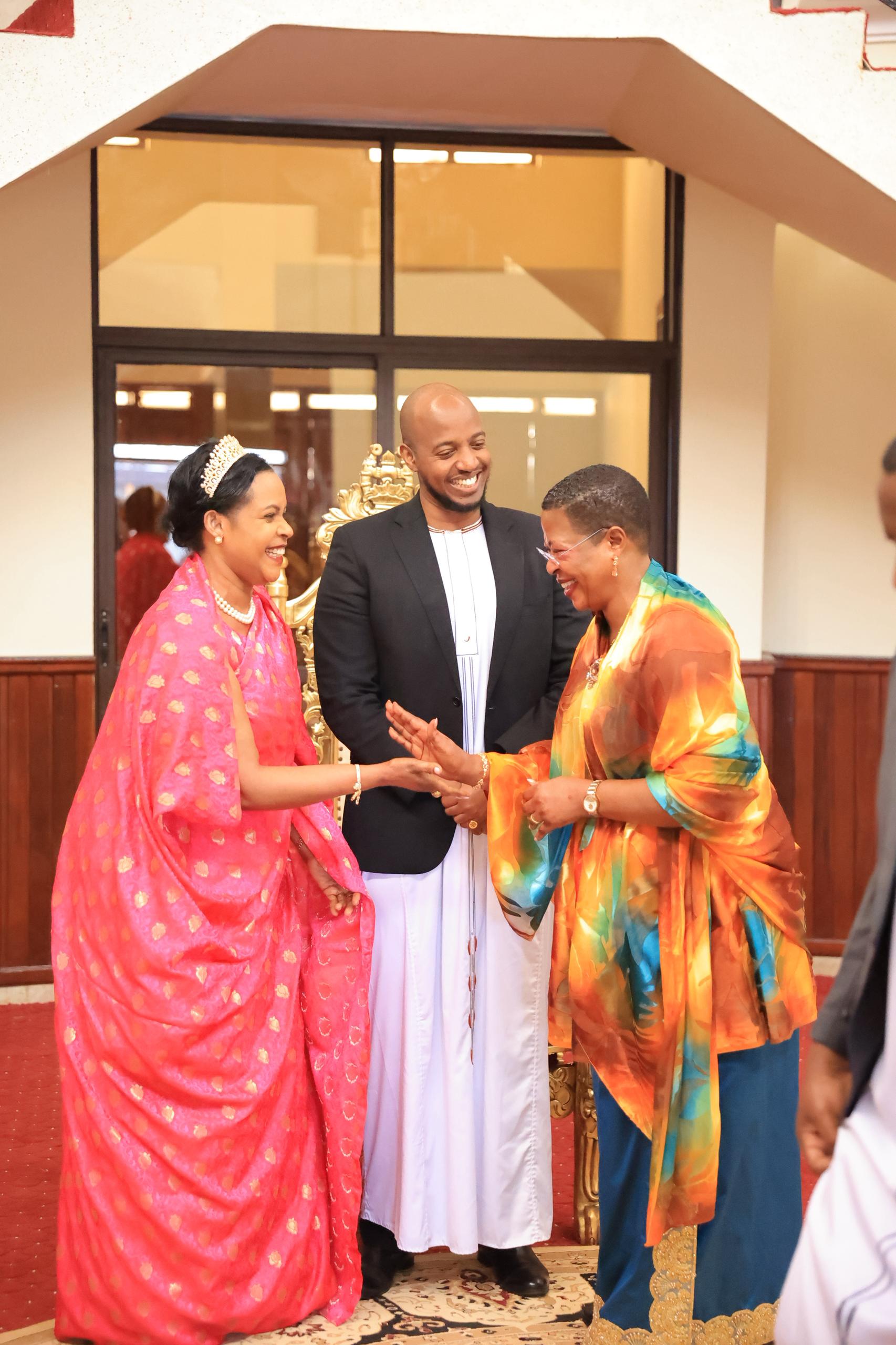
President Yoweri Kaguta Museveni has lauded the King of Tooro, His Majesty Oyo Nyimba Kabamba Iguru Rukidi IV, for his steadfast role in preserving cultural heritage and fostering unity among his people.
The President’s message was delivered by Speaker of Parliament Anita Among during the vibrant celebrations of the King’s 30th Empango coronation anniversary at Karuziika Palace, in Fort Portal Tourism City on Friday, 12th September 2025.
Museveni praised King Oyo for uniting his subjects around shared values of culture, language, and development, noting that his reign has kept Tooro peaceful and united.
“I congratulate the King for uniting the people of Tooro around a shared culture, language, history, and their legitimate interests such as development, creation of wealth, and jobs,” the President said.
Highlighting the wider significance of the occasion, Museveni emphasized the importance of cultural institutions in nation-building, recalling that their abolition in 1966 was a setback to Uganda’s identity and way of life.
“The NRM made a decision to restore monarchies because it is not possible to promote culture without involving the kingdoms,” he added.
On behalf of government, Speaker Among assured that Parliament will continue supporting cultural institutions through progressive legislation and resource allocation.
She also directed the Ministry of Finance to release funds within two weeks for the rehabilitation of the 200km Mityana–Mubende–Kyegegwa–Kyenjojo road, a key route linking the Tooro sub-region to other parts of the country.
In his remarks, King Oyo appealed to government to prioritize the same road, describing it as vital for trade and cross-border connectivity.
He also expressed gratitude to the people of Tooro, his mother Queen Best Kemigisa, and President Museveni for their support throughout his reign.
“Since I took the throne, none of this would have been possible without the grace of God,” King Oyo said.
“I made history both in Uganda and internationally by becoming king at such a young age. I am grateful to my mother for raising and guiding me, and I also thank President Museveni for his support throughout my reign,” he added.
The King emphasized that strong leadership remains central to Tooro’s progress.
“Good leadership is the backbone of peace and prosperity,” he said, urging aspiring leaders to act with purpose so that citizens can choose the right candidates.
King Oyo also pledged to boost tourism, highlighting initiatives such as Ekyoto Ha Mpango, launched to showcase Tooro’s rich cultural heritage and natural beauty.
He thanked the Ministry of Tourism, Uganda Tourism Board (UTB), and Uganda Wildlife Authority (UWA) for their support in promoting tourism across the region.
The anniversary celebrations attracted dignitaries from across Uganda and beyond, including Bunyoro-Kitara Kingdom Prime Minister Owek Andrew Byakutaga Ateenyi, corporate leaders from MTN Uganda and Airtel Uganda, and thousands of Tooro subjects. MTN Uganda CEO Sylvia Mulinge and Airtel Group CEO Sunil Taldar congratulated King Oyo and pledged continued support for development initiatives in the kingdom.
The festivities concluded with traditional dances, cultural exhibitions, and prayers for lasting peace and prosperity in Tooro.
The 30th Empango anniversary not only celebrated three decades of King Oyo’s leadership but also highlighted the vital role of cultural institutions in advancing unity, development, and peace.
With the government pledging continued support and Tooro Kingdom preserving its cultural heritage, the anniversary stood as a symbol of unity, progress, and the lasting partnership between cultural institutions and the state in shaping Uganda’s future.