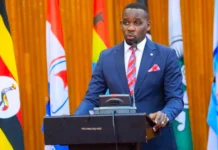

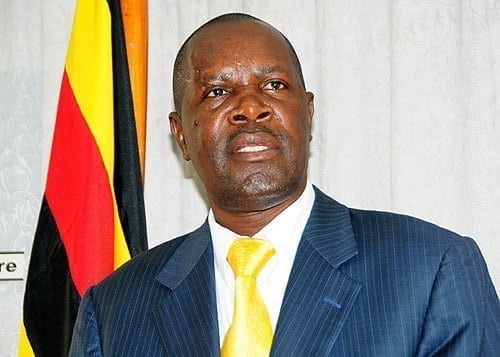
Government spokesperson and long-serving political analyst, Ofwono Opondo, has warned that the National Resistance Movement’s (NRM) tolerance of “independent” candidates is eroding party cohesion and undermining Uganda’s multiparty democracy.
In a commentary published on Monday, 15th September 2025, Opondo argued that since the return to multiparty politics in 2005, the NRM has repeatedly accommodated disgruntled party members who contest elections as independents after losing party primaries.
He described such members as “fair-weather opportunists” and “political indisciplinados,” saying their presence is fixed on selfish ambition rather than strengthening the party.
“The NRM has gained very little from these stitch-ups with independents except inefficiency and convenience for individuals,” Opondo wrote.
His remarks come shortly after the conclusion of NRM primaries, which produced official flag bearers from village to parliamentary level ahead of the 2026 elections.
As in previous cycles, some unsuccessful candidates have indicated they will run as independents.
Opondo cited examples from other ruling parties in Tanzania and South Africa, as well as established democracies like the UK, US, India, and Japan, where members who violate party discipline are deselected or dismissed.
He noted that in contrast, the NRM often refrains from sanctioning rebel members, some of whom allegedly receive covert support from senior leaders.
“…even the National Unity Platform (NUP), loosely cobbled, has been able to show its former vice president in charge of Buganda, its only base, and Leader of Opposition in Parliament (LoP) Mathias Mpuuga, the exist without much political qualms,” Opondo remarked.
As Uganda gears up for what could be one of its most contentious elections, many political parties are faced with internal conflicts driven mainly by the party’s leadership style.
For NRM, the ruling party, which has long been a dominant force in Uganda’s political scene, many question the party’s commitment to integrity and external pressure ahead of the 2026 general elections.