
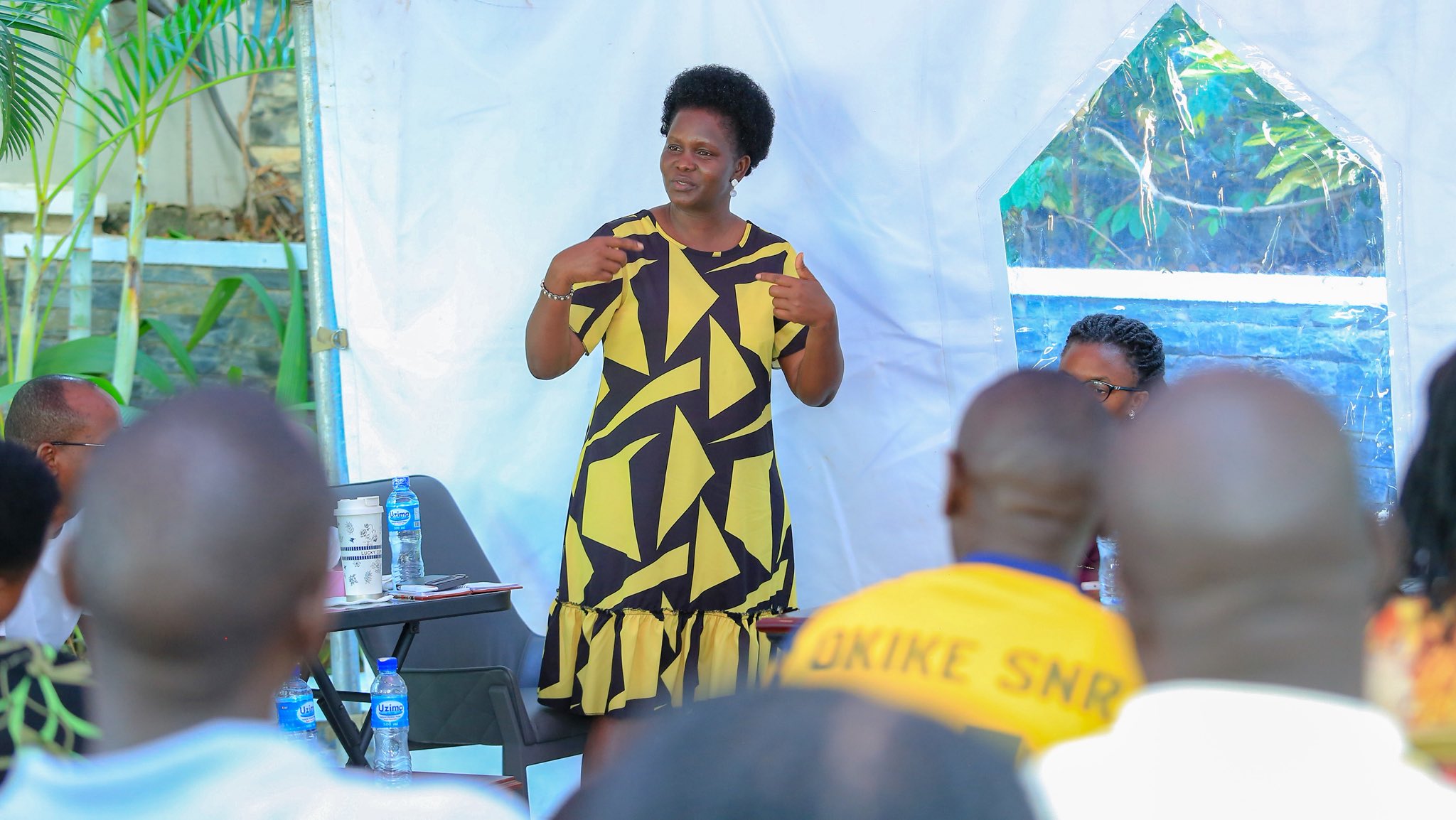
The National Secretariat for Patriotism Corps (NSPC), under State House, has launched a series of mental health awareness lessons aimed at promoting well-being among its staff and addressing the growing mental health challenges facing Ugandan youth.
Speaking during the inaugural session today, 14th March 2026 in Muyenga, Kampala, the Commissioner of NSPC, Hellen Seku, urged families to abandon the belief that children’s struggles are caused by witchcraft and instead treat mental health as a serious issue requiring attention and support.
“Families should stop thinking that when their children face challenges, it is because they have been bewitched. Many of our youth are affected by mental health conditions, and as a nation, we must address this issue seriously,” Seku emphasized.
She also commended NSPC staff for actively participating in the session, highlighting the importance of creating supportive workplaces.
“I thank my staff for participating in this activity today. Let this serve as an example to other organizations to encourage their teams to engage in mental health discussions. Understanding the wellbeing of those we lead is very important,” she added.
Mental health experts note that this initiative comes at a time when disorders among youth are increasingly common.
Psychiatric Clinical and Public Health Officer Florence Namyaalo, from the Transcultural Psychosocial Organization Uganda, explained that globally, 15–20% of young people experience mental health challenges.
“In Uganda, the situation is particularly concerning,” Namyaalo said.
A recent Ministry of Health report indicates that approximately 191,000 youth in the Buganda sub-region are living with mental health conditions, with urban areas such as Kampala recording higher rates compared to other parts of the country.
Experts attribute the rise in mental health issues to unemployment, family conflicts, relationship challenges, and other stressors. Many young people resort to alcohol, marijuana, cigarettes, and khat as coping mechanisms.
“Everyone is at risk, and it is okay not to be okay, therefore the youth should seek support and avoid harmful habits,’’ Namyaalo added.
Experts advise protecting mental wellbeing through enough sleep, a balanced diet, regular exercise, and seeking support from family, friends, or community groups.
She further encouraged communities, institutions, and organizations to identify individuals struggling with mental health challenges and help them prioritize their wellbeing.
“When the people around us are healthy and supported, we all live better lives,” she concluded.
The NSPC initiative signals a growing recognition of mental health as a national priority, emphasizing early intervention and community involvement as key steps in safeguarding the wellbeing of Uganda’s youth.
By combining awareness, early intervention, and community support, the program aims to break stigma, equip families and institutions with the knowledge to act, and empower young people to seek help when needed.
With continued engagement and collaboration, Uganda can nurture a generation that is not only mentally resilient but also supported to thrive in all aspects of life.