

Members of Parliament from the National Resistance Movement (NRM) parliamentary caucus have endorsed a proposal to split Tororo District into three new districts and elevate it to city status, while also approving the creation of Bughendera District from Bundibugyo.
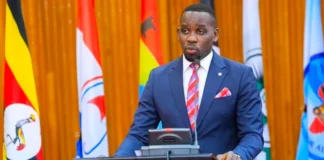
The announcement was made by Government Chief Whip, Hamson Denis Obua, on Friday, 12th September, 2025, during a briefing at Parliament, following the NRM caucus meeting earlier held at State House, Entebbe.
The NRM Parliamentary Caucus, after reviewing the Minister of Local Government’s report, endorsed the creation of Mukuju, Mulanda, and Kisoko districts, as well as Tororo City, in the 2025/2026 financial year, pending legal approval.
They also approved the establishment of Bughendera District from Bundibugyo in the same financial year and will consider other proposed districts, cities, and municipalities during 2026–2031.
“Our goal is to bring services closer to the people and strengthen local governance,” Obua said.
“By creating these districts and upgrading Tororo to city status, we aim to improve administration, boost development, and ensure that communities benefit directly from government programs,” he added.
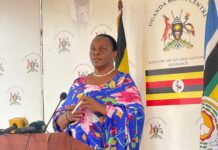
The Local Government Minister Raphael Magyezi defended the decision against claims of political motivation, emphasizing that the move is aimed at improving service delivery rather than influencing electoral outcomes.
He pointed to past instances, such as the split of Nakawa Constituency, where opposition candidates won, as evidence that the government’s focus is on administrative efficiency, peace, and security.
“We are doing this for service delivery. When people express their will through council resolutions, the Constitution obliges us to act,” Magyezi said.
The minister revealed that setting up the new administrative units will cost taxpayers approximately UGX 26 billion. However, he urged Ugandans to view the expenditure as an investment in bringing services closer to communities amid rapid population growth and urbanisation.
“Yes, there is a cost, but there are also advantages. Our population is growing fast, and citizens demand services nearer to them,” Magyezi explained.
“Once council resolutions are passed and technical studies confirm viability, the proposals move to Cabinet and then Parliament. This is all within the law,” he added.
He further explained that the Attorney General and the Electoral Commission will determine the election schedule for the new constituencies, in line with the Local Government Act and the Electoral Commission Act.
Magyezi added that districts created after a general election take effect six months before the next election.
The creation of Tororo City, three new districts in Tororo, and Bughendera District in Bundibugyo will expand parliamentary representation, providing each new administrative unit with woman MPs and additional constituency legislators.
Establishment of these new administrative units marks a major step in Uganda’s efforts to enhance local governance, improve service delivery, and bring government closer to the people.
Residents can now look forward to better access to public services, increased political representation, and opportunities for socio-economic growth in the coming years.