

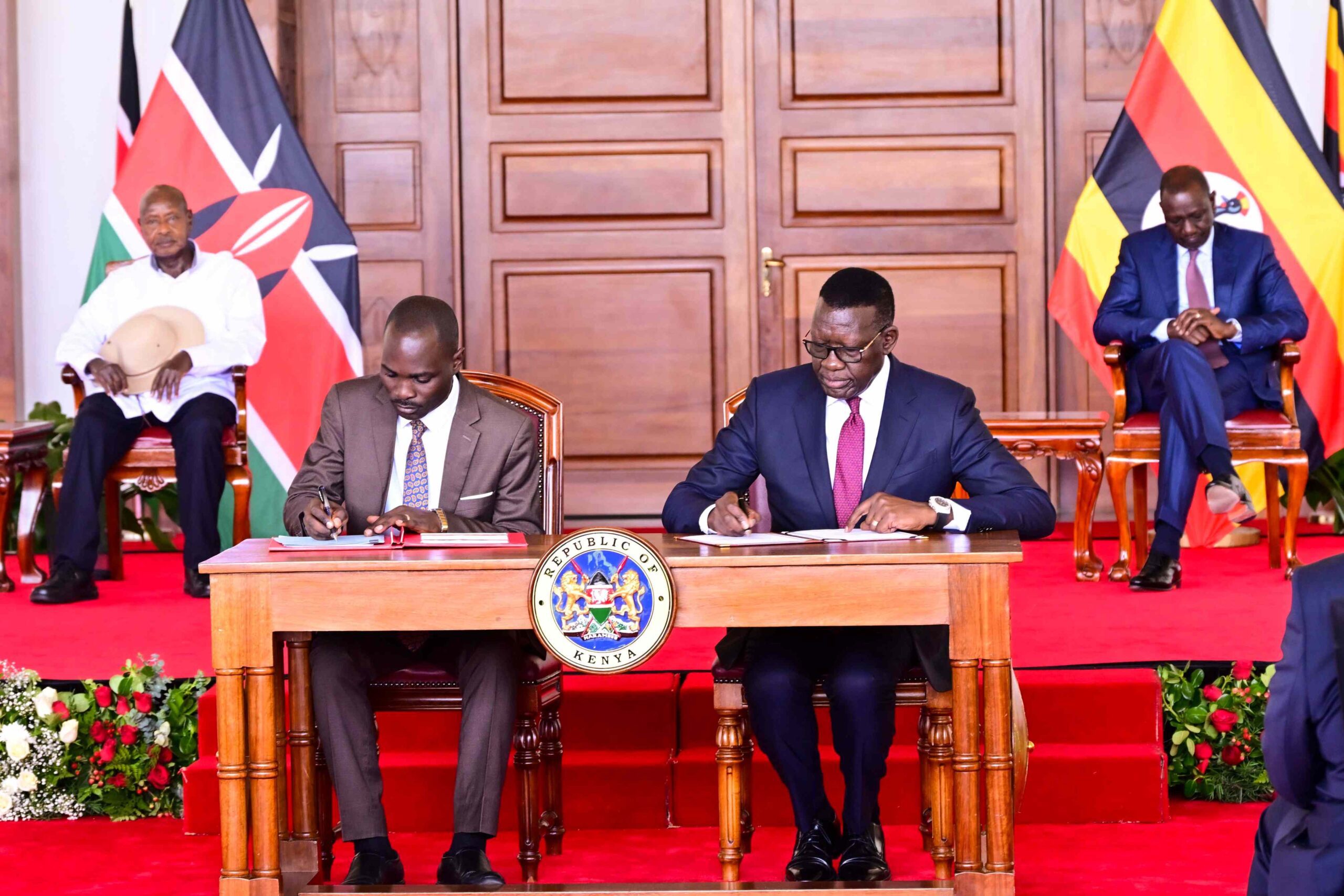
Uganda and Kenya’s renewed diplomatic embrace, marked by the signing of seven bilateral agreements on July 30, 2025 signals a strategic reset in East Africa’s political economy and a shared urgency to confront longstanding structural and trade-related tensions that have historically strained relations between the two neighbors.
Presidents Yoweri Kaguta Museveni and William Ruto, in their second face-to-face meeting within a year, extended their countries’ portfolio of cooperation agreements to 25, covering crucial sectors including transport, tourism, investment promotion, fisheries, agriculture, and regulatory standards.
While bilateral agreements between Uganda and Kenya are not new, the breadth and symbolism of this latest engagement suggests a deliberate attempt to restore mutual confidence and build policy alignment amid shifting regional dynamics.
What stands out in this diplomatic overture is not just the number of agreements, but the subtext of urgency rooted in growing economic competition, regional fragmentation, and internal political pressures in both Nairobi and Kampala.
The transport and standards cooperation agreements, for instance, directly respond to persistent non-tariff barriers (NTBs) that have plagued Uganda-Kenya trade.
From milk bans to fuel pipeline disputes, trade friction between the two countries has often played out publicly and politically. Analysts see these new frameworks as efforts to de-escalate commercial hostilities and streamline cross-border trade.
The agreement on property rights focusing on informal women and youth traders in the Busia corridor also reflects a recognition of the political economy of border communities, which are often caught in the crossfire of trade disputes but rarely benefit from high-level diplomatic summits.
This is a sign that both governments are starting to see grassroots cross-border trade not as a threat to customs revenue, but as a stabilizing force in regional commerce.
The Uganda-Kenya rapprochement also comes at a time when both nations are re-calibrating their roles within the East African Community (EAC), where shifting allegiances and new entrants most notably the Democratic Republic of Congo and Somalia are altering the bloc’s internal power dynamics.
Museveni, a veteran of the integration project, used his Nairobi podium to call for deeper economic rationalization and a rethinking of Africa’s industrial potential. His rhetoric, laden with biblical metaphors, highlighted frustrations with a continent still reliant on raw exports and external markets.
Lamenting Africa’s underutilized productive capacity and insufficient intra-regional trade, Museveni said; “They left undone what they ought to have done.”
President Ruto, for his part, emphasized a renewed commitment to regionalism, stating that his discussions with Museveni touched on “continental priorities,” suggesting that both leaders are increasingly concerned about Africa’s bargaining position in global value chains.
Diplomatically, the cordiality between Ruto and Museveni may also represent a strategic hedging by both leaders.
For Museveni, cultivating favor with Kenya’s administration helps consolidate Uganda’s access to Mombasa port and regional markets amid increasing reliance on the Central Corridor through Tanzania.
For Ruto, maintaining stable ties with Uganda remains crucial as he juggles domestic political contestation and regional leadership ambitions.
Notably, the timing of the Nairobi meeting just weeks after Kenya and Uganda reportedly resolved a standoff over petroleum supply logistics demonstrates how economics continues to shape statecraft.
Yet, the challenge remains implementation. The EAC is littered with agreements that never materialized due to political inertia, regulatory divergence, and bureaucratic sabotage. Without robust enforcement mechanisms, the 25 agreements signed may become mere diplomatic memorabilia.
Still, if fully implemented, these new MoUs particularly in agriculture, aquaculture, and investment could serve as a template for deeper bilateralism within East Africa, bypassing stalled multilateral frameworks and placing emphasis on country-to-country pragmatism.
As the region inches toward the 2026 general elections in Uganda and heightened political activity in Kenya, analysts warn that economic cooperation may again fall victim to electoral politics, nationalism, and populist trade protectionism.