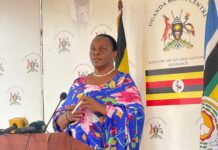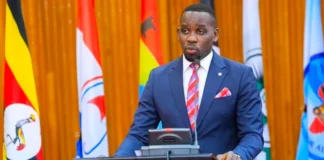

Hon Lt Col (Rtd) Bright Rwamirama Kanyantore, Minister of State for Animal Industry, has called for bold, coordinated investments in value addition, climate-smart agriculture, agro-industrialization, and inclusive financing to unlock Uganda’s full agricultural potential.
Speaking at the official opening of the Uganda Agri-Food Systems Investment and Financing Conference 2025, held on June 24 2025 at the Uganda Industrial Research Institute (UIRI) in Namanve, Rwamirama emphasized the urgent need to transition agriculture from subsistence to a wealth-generating engine.
“Agriculture must go beyond merely feeding our people,” he said. “It must become a driver of our economy and household incomes, a foundation for wealth creation, and a strategic pillar positioning Uganda as a regional food basket.”
Rwamirama highlighted key government initiatives like Operation Wealth Creation (OWC) and the Parish Development Model (PDM) that are aimed at transitioning households from subsistence farming to commercial agriculture, with the goal of boosting incomes and reducing poverty.
“This transformation cannot be achieved by government alone,” Rwamirama noted. “We must align our efforts, pool resources, and build a strong, collaborative ecosystem involving ministries, the private sector, development partners, and civil society. Only then can Uganda fully unlock its agricultural potential.”
Despite Uganda’s fertile soils and favorable climate, food insecurity remains a major challenge, affecting over 12 million Ugandans. Rwamirama warned against contentment and called for a shift toward science-driven, climate-resilient agriculture.
“We cannot keep celebrating our fertile soils and good rainfall while millions remain food insecure. Uganda’s agri-food system must be driven by science, investment, and resilience against climate shocks,” he stressed.
Rwamirama praised Uganda’s advancements in dairy, cocoa, coffee, and tropical fruits but stressed that truly transforming the country’s food systems will demand coordinated, strategic investments from both the public and private sectors, aligned with the goals of National Development Plan IV (NDP IV).
However, he highlighted that Uganda’s agri-food sector currently contributes 24% of GDP, accounts for 33% of export earnings, and employs 70% of the population, making it a cornerstone of the country’s economy and a critical lever for inclusive development.
Additionally, Yergalem Beraki, the FAO Country Representative in Uganda, urgently called for the alignment of food systems with the nation’s development priorities outlined in the Fourth National Development Plan (NDP IV).
He emphasized that food systems are a key catalyst for Uganda’s socioeconomic transformation, driving higher household incomes, promoting full monetization of the economy, and generating employment opportunities.
The 2025 conference marks a pivotal moment for Uganda’s agri-food sector, as stakeholders unite to address food insecurity, promote inclusive growth, and transform agriculture into a foundation for national prosperity.