Opposition leaders in Uganda have called for tangible reforms and release of political detainees as key components of national reconciliation ahead of Uganda’s 2026 elections.
While speaking at the Inter-Party Organization for Dialogue (IPOD) Summit held on September 18, 2025, most leaders cautioned that meaningful engagement must go beyond mere discussions and result in real changes to Uganda’s political landscape.
Patrick Oboi Amuriat, President of the Forum for Democratic Change (FDC) emphasized that dialogue must produce real solutions to the country’s political divisions.
“Uganda is fractured along tribal, religious, and political lines. Reconciliation must be at the center of any meaningful dialogue,” Amuriat said.
He further pointed out that clemency for political prisoners would be a powerful gesture of goodwill and healing, particularly in a nation where political dissent has often led to detention and repression.
Amuriat’s remarks resonated with the broader concerns of the opposition, which has long criticized the government for its treatment of political detainees.
“Dialogue must lead to tangible reforms. We cannot afford to ignore the suffering of those who have been detained for political reasons. Their freedom would signal Uganda’s readiness to embrace true peace,” Amuriat added.
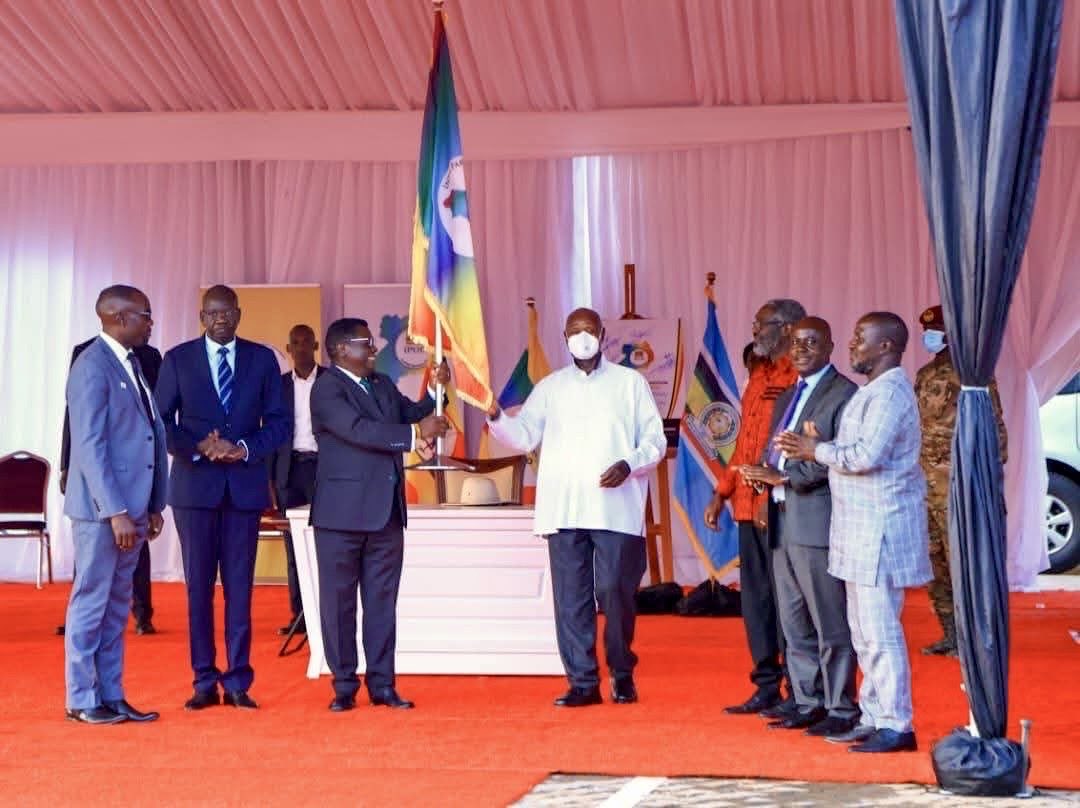
Norbert Mao, who succeeded Museveni as IPOD Chairman pledged to foster consensus-building and work towards a peaceful election process.
“IPOD is about finding common ground because unity is paramount,” Mao said.
UPC President Jimmy Akena reiterated his party’s commitment to dialogue, even if they disagree on specific policies. “We may not agree on every issue, but for the greater good, UPC will always choose dialogue over confrontation,” Akena said.
Similarly, JEEMA’s Asuman Basalirwa and PPP President Saddam Gayira both emphasized the importance of non-confrontational politics, with Gayira noting that his party’s peaceful approach has allowed them to operate freely without any political arrests for the past 30 years.
President Yoweri Kaguta Museveni, in his keynote address as outgoing IPOD Chair, urged leaders to embrace peaceful politics, warning that violent confrontation only fuels instability.
“Politics must be like medicine. A political leader should be like a doctor able to correctly diagnose the problems of society. Even if one has a wrong understanding, as long as they are not violent, the country will remain stable and mistakes can be corrected,” he said.
Museveni emphasized the NRM’s four principles, patriotism, Pan-Africanism, socio-economic transformation, and democracy as anchors of Uganda’s future.
He pointed to the progress achieved during his 40 years in power, while acknowledging that challenges remain.
“That is how chaos arises in many African countries. When you combine wrong ideas with violence, you get a total breakdown,” he noted.
In his closing remarks, Museveni urged political leaders to prioritize stability over confrontation, calling for the adoption of peaceful methods in tackling Uganda’s political challenges.
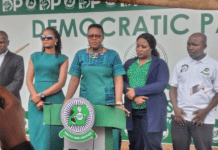
The summit, held at the Kololo Ceremonial Grounds under the theme, “Together for a Peaceful and Sustainable Uganda,” brought together leaders from six political parties: National Resistance Movement (NRM), Democratic Party (DP), Uganda People’s Congress (UPC), Forum for Democratic Change (FDC), Justice Forum (JEEMA), and People’s Progressive Party (PPP). The event focused on the role of dialogue in ensuring a peaceful electoral process in 2026.