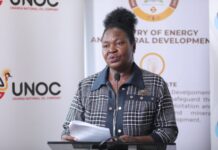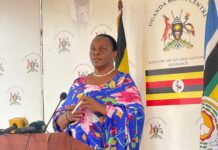
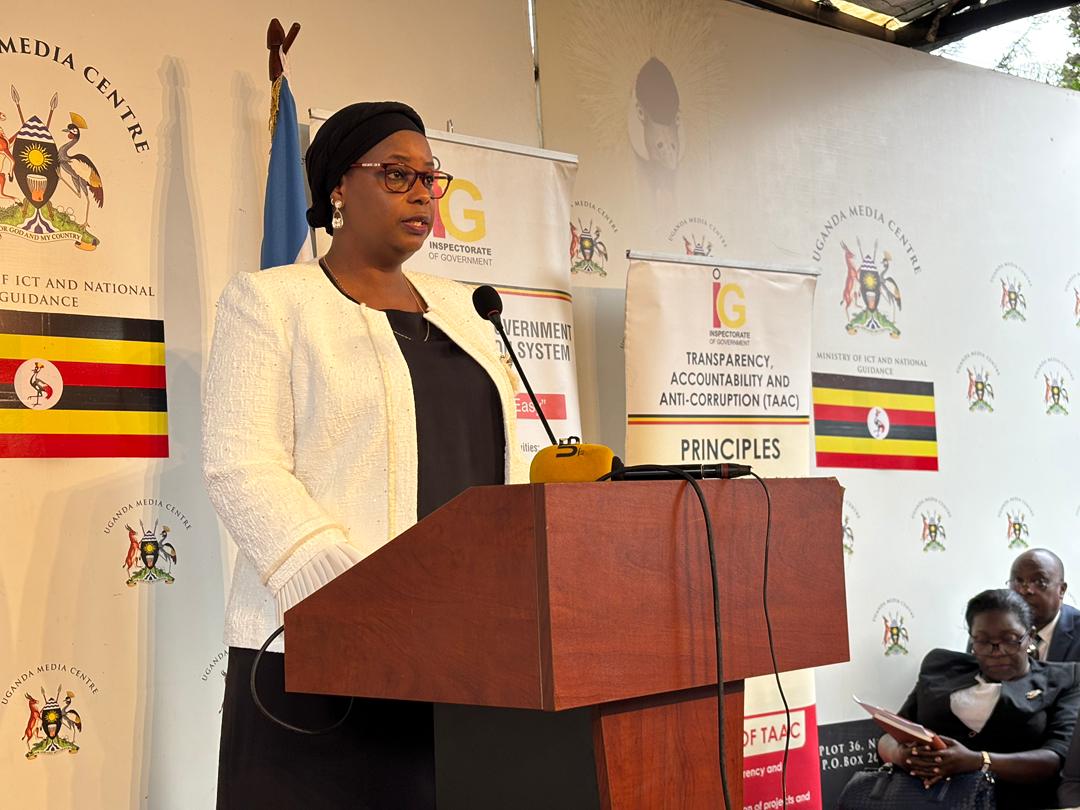
Lady Justice Naluzze Aisha Batala, the Inspector General of Government (IGG), has unveiled a results-driven anti-corruption strategy aimed at speeding investigations, increasing prosecutions, and strengthening institutional enforcement across Uganda’s public sector.
Speaking at her inaugural press conference at the Uganda Media Centre on Thursday March 5, 2026, Batala, who recently marked 100 days in office, emphasized that public officials implicated in corruption should expect tougher action under her leadership.
Her plan aligns with the IGG’s strategic vision for 2025/2026–2029/2030, targeting efficiency, transparency, and wider public access to complaint mechanisms.
“The Inspectorate must be effective, responsive, and results-driven. Public officials implicated in corruption should expect tougher action,” Batala stated.
She set an ambitious target to raise prosecution rates to at least 70 percent by the end of the 2025/2026 financial year.
Between July and December 2025, the IGG registered 1,516 complaints, sanctioned 1,151 cases (75 percent), concluded 308 corruption investigations, and recovered over UGX 2.02 billion in misappropriated funds.
Enforcement actions in early 2026 resulted in the dismissal of 12 public officers, interdiction of four others, and recoveries of mismanaged development funds, a government motorcycle, and unspent project money.
Batala highlighted that corruption is evolving from petty schemes to sophisticated, sometimes cross-border networks, often normalized or even glorified.
Operational challenges remain, including limited staffing, skill shortages, inadequate funding, and aging investigative vehicles.
Looking ahead, the Inspectorate plans to intensify prosecution-led investigations targeting high-profile cases and collaborate closely with the Uganda Police Force, the Directorate of Public Prosecutions, and the Anti-Corruption Court.
Batala also stressed the need for systemic reforms, urging ministries, local governments, and public officials to integrate anti-corruption measures into planning, budgeting, and asset declaration frameworks.
“Our goal is not only to enforce the law but also to strengthen systems so that corruption is prevented before it occurs,” she said.