
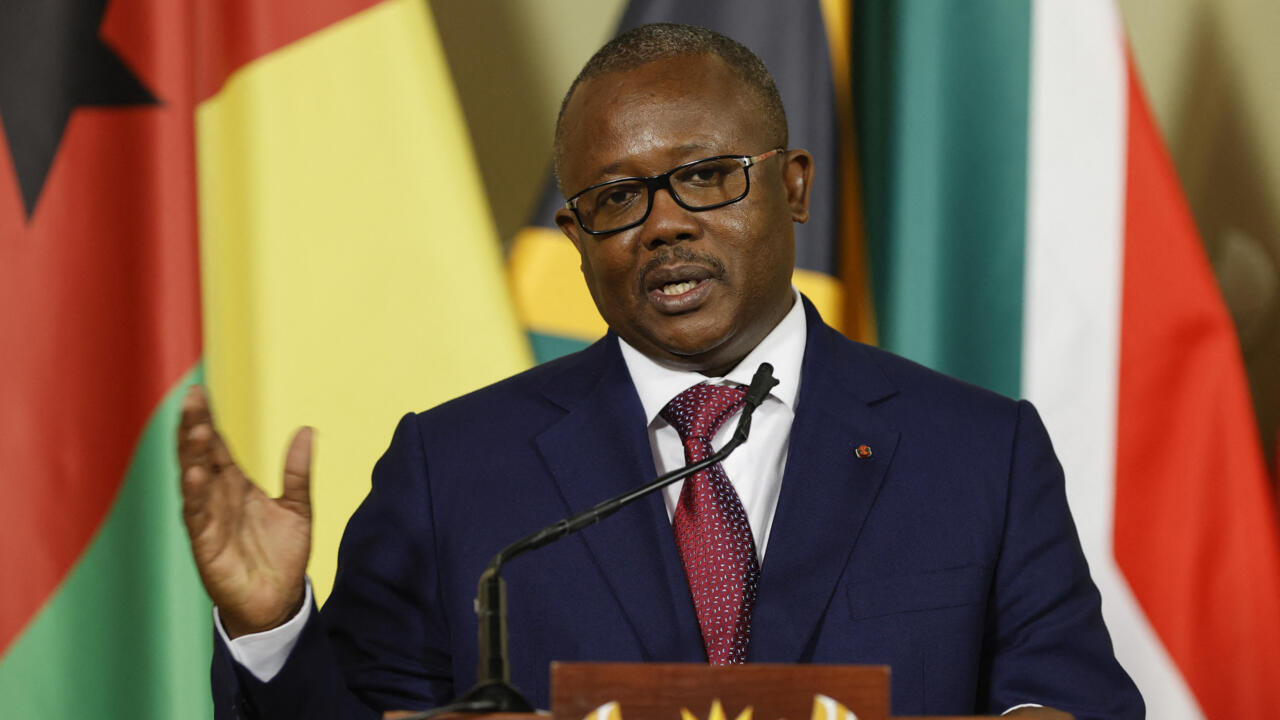
Guinea-Bissau was thrown into a new wave of political turmoil on Wednesday, 26th November, 2025, after President Umaro Sissoco Embaló announced that the military had removed him from power in a dramatic takeover.
The president said soldiers stormed the presidential palace in Bissau, informing him that they had assumed ‘full control’ of the state in what he described as a coup led by the army chief.
“I was told they had taken over the institutions of the republic. They made it clear that they were now in charge, and that this was a complete military takeover,” President Embalo’ said.
While speaking to international journalists, Embaló said he was not harmed during the confrontation but confirmed that several senior officials including top commanders and the interior minister had been detained by the rebellious officers.
Earlier in the day, reports of heavy gunfire around the palace triggered widespread panic and renewed fears of instability in the coup-prone West African nation.
The situation escalated further when state media broadcasts were abruptly cut off and replaced with an announcement from the military.
The officers declared the suspension of all government institutions, calling the move temporary as they worked to ‘clarify the national situation’ before restoring constitutional order.
“This decision is necessary as we clarify the national situation and restore order,” the statement said. “Our intention is not to destroy the constitution but to protect the nation.”
This takeover comes just three days after hotly disputed presidential and legislative elections, in which both leading candidates claimed victory, a dead end analysts had warned could ignite political confrontation.
The contested results appear to have compounded long-standing tensions within Guinea-Bissau’s military and political elite.
With this latest turmoil, Guinea-Bissau joins a growing list of West African countries grappling with military interventions.
Mali, Niger, and Burkina Faso have all experienced coups in recent years, with juntas citing corruption, insecurity, or failed leadership as justification.
The developments in Bissau now deepen concerns about democratic backsliding across the Sahel and coastal West Africa, where political transitions have become increasingly fragile.
As Guinea-Bissau navigates this unfolding crisis, regional and international observers are watching closely for signs of a diplomatic breakthrough or further escalation.
The coming days will be crucial in determining whether the military honors its promise to restore constitutional order or whether the country slips deeper into uncertainty.
For many citizens, hopes for stability now rest on renewed dialogue, credible mediation, and a peaceful resolution that safeguards the nation’s fragile democratic future.