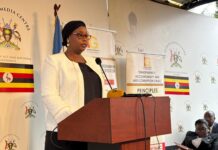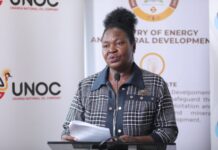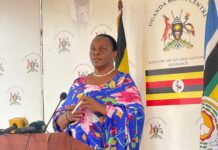

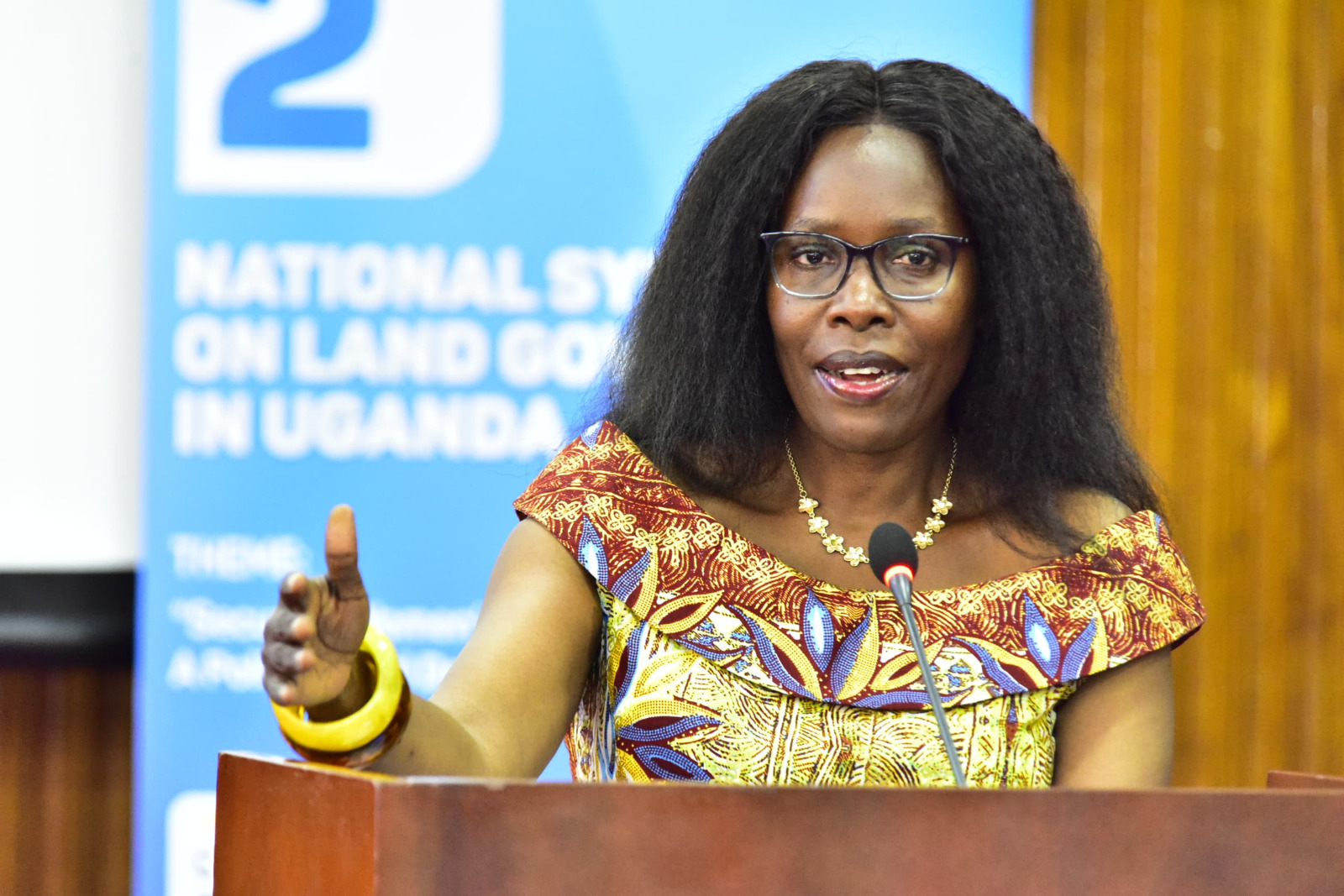
The Minister for Lands, Housing, and Urban Development, Hon Judith Nabakooba, has emphasized that empowering women to own agricultural land is not an act of charity but a smart, strategic investment in Uganda’s development.
Speaking on behalf of the Prime Minister at the 2nd National Symposium on Land Governance held on June 27, 2025, Nabakooba highlighted that land in Uganda is more than a physical asset; it is a source of identity, livelihood, and security, especially for women.
“Women who have secure rights to land are more likely to embrace climate-smart agricultural practices, diversify their sources of income, and invest in their children’s education,” she noted.
’’Therefore ensuring women’s access to and ownership of agricultural land is not an act of charity; it is a strategic investment in Uganda’s present and future.’’
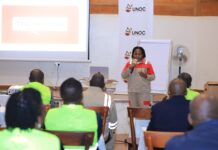
Held under the theme “Securing Women’s Agricultural Land Ownership: A Political and Development Imperative,” the symposium was hosted by Parliament and convened key stakeholders in land management, policy, and advocacy to address persistent gender disparities in land ownership.
Nabakooba noted that while the government has made progress through investments in land registration systems and community awareness programs, significant challenges remain, particularly in overcoming cultural norms and implementation gaps.
“Government has taken concrete steps investing in registration systems and sensitization campaigns, but we still face deep-rooted cultural barriers,” she added. “It is time for leaders, institutions, and communities to unite in dismantling the invisible walls that deny women their rightful stake in the land they till.”
Unlike the inaugural 2024 symposium, which focused on land tenure for food security and climate resilience, this year’s event placed women’s land rights at the center of rural transformation and development.
Oxfam Uganda’s Country Director, Shanty Francis, highlighted the stark gender gap in land ownership despite women’s central role in agriculture.
“Women make up 70% of Uganda’s agricultural workforce, yet only a small fraction own land,” he said. “These disparities not only limit gender equality but also weaken agricultural productivity and resilience.”
Francis further stressed the importance of secure land tenure in the context of climate change.
“Climate-smart agriculture can only thrive when land tenure is secure. This is especially critical for women and youth, whose livelihoods depend on access to land,” he stated.
Hon Christine Kaaya, Chairperson of the Uganda Parliamentarians Land Management Forum, echoed the call for action, urging Parliament and policymakers to accelerate reforms.
“We must intensify discussions on land governance and clear the backlog on land-related advocacy and dispute resolution,” she urged.
Uganda’s legal framework, including the Constitution and the Land Act, clearly guarantees equal land rights for men and women. Article 21 of the Constitution prohibits discrimination based on gender. However, implementation remains weak, and customary practices continue to undermine women’s ability to own or inherit land, participants noted.
“The law is clear, but deeply rooted cultural practices still block many women from owning land,” one participant noted.
Further complicating the issue is the fact that only a small portion of land in Uganda is formally titled, making it especially difficult for women to assert legal ownership.
As the discussions concluded, one message was clear: securing women’s rights to agricultural land is not optional; it is essential for sustainable development, climate resilience, and economic transformation in Uganda.