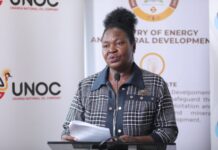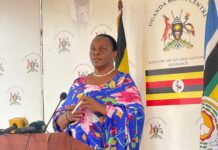
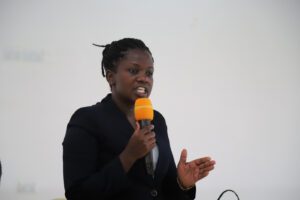
The newly deployed Resident City Commissioner (RCC) of Fort Portal City, Asumin Nasike, has cautioned the public and local leaders against the misuse of media platforms, urging them to embrace responsible communication that promotes peace, development, and national unity.
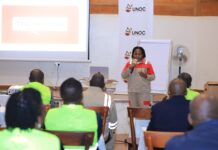
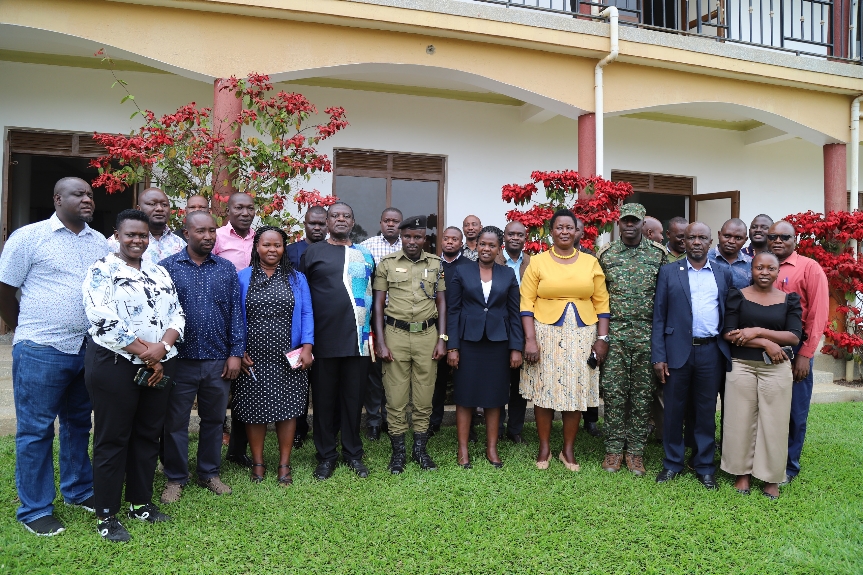
Speaking during a two-day retreat for district communication officers from the Rwenzori region, held on Thursday, August 7, 2025, Nasike emphasized that misinformation, especially on social media, poses a serious threat to national stability.
“Media, when misused, becomes a weapon against national unity. We saw what happened when false news spread on social media about the President’s death. It nearly caused a national crisis,” she said.
The retreat was organized by the Internal Security Organisation (ISO) in partnership with the Ministry of ICT and National Guidance and the Government Citizen Interaction Centre (GCIC).
The RCC, who previously served in Mbale, used the platform to commend professional civil servants—particularly health workers and communication officers—for their continued use of official government airtime to sensitize the public on key issues such as health, security, and government programs. However, she criticized certain officials for hijacking the same airtime to push personal or political agendas.
“We cannot keep quiet when social media is being used to spread panic, confusion, and misinformation. Our leaders must take charge and promote responsible messaging,” she added.
She reaffirmed her commitment to support government communication officers in executing their mandate and strengthening information dissemination across the region.
Speaking at the same retreat, Maj Edmund Turyatunga, Director of Media at ISO, echoed Nasike’s submission, urging local leaders to recognize the critical role government communicators play in governance, security, and national branding.
“The problem is that many leaders don’t understand what communicators are meant to do. We must cooperate, open up communication, and build institutions through collaboration,” said Maj Turyatunga.
He further emphasized the link between effective communication and national security, noting that clear, coordinated messaging not only improves public service delivery but also attracts tourism and investment.
District communication officers, in turn, voiced concerns about operating in environments where their work is undervalued. Many reported being sidelined by supervisors and not being included in key government activities that require public awareness.
“It is difficult to execute our function when our supervisors constantly exclude us from activities that are meant to be communicated,” the officers said in a joint submission.
Maj Turyatunga revealed that there are ongoing efforts, in partnership with the Ministry of ICT and National Guidance, to streamline communication structures and address these gaps at district level. He also pledged to escalate the concerns to the Director General of ISO and to the President.
The Fort Portal retreat is part of a wider campaign led by ISO, the Ministry of ICT & National Guidance, and GCIC through the Government Communicators Forum (GCOF) to revamp and professionalize government communication from the grassroots. Similar engagements have already been held in Karamoja, Teso, West Nile, Mbarara, Masaka, Mpigi, and the Wamala-Savana region.
The overall goal, according to organizers, is to strengthen communication for development, increase public awareness of government programs, and position Uganda as a preferred investment and tourism destination.