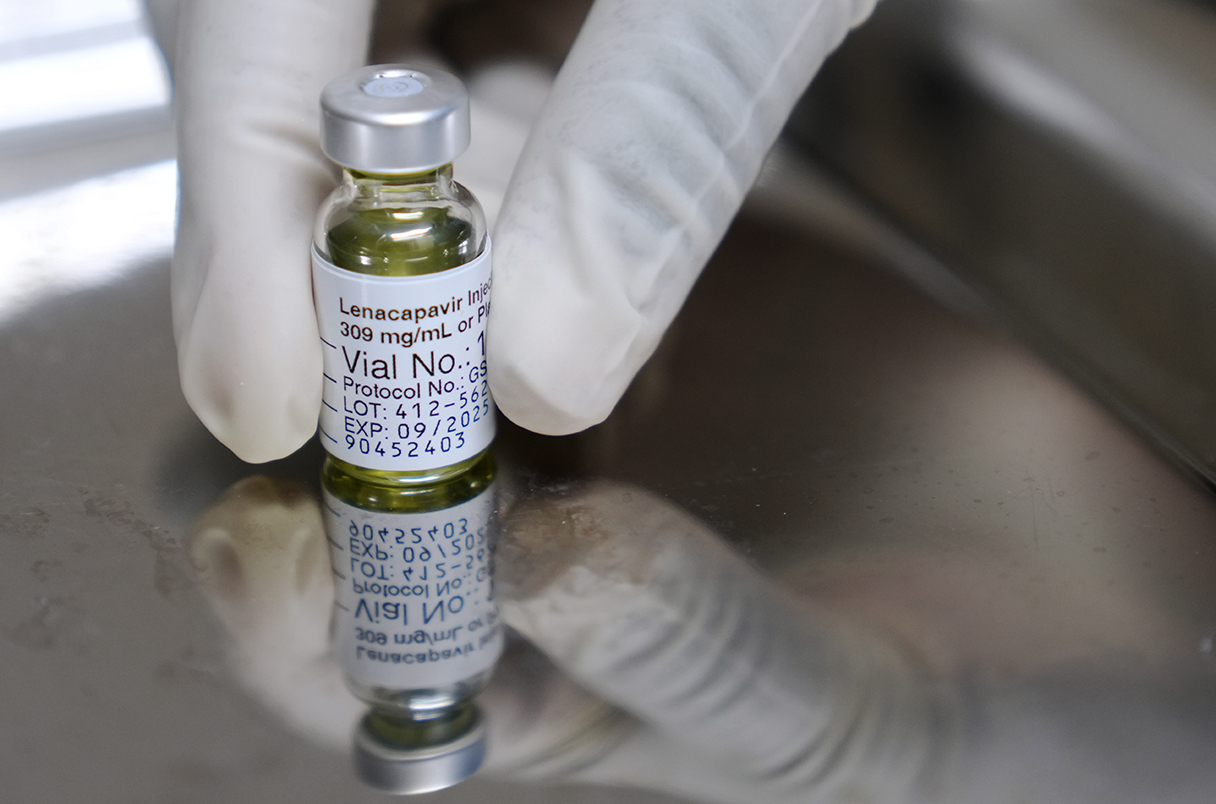
The United States Food and Drug Administration (FDA) has approved lenacapavir, a long-acting injectable medication for HIV prevention.
Branded as Yeztugo, the drug is administered just twice a year and represents a revolutionary shift in prevention options for millions at risk of HIV worldwide.
Developed by Gilead Sciences, Yeztugo is the first HIV prevention drug in its class; a capsid inhibitor, targeting the protein shell of the virus’s genetic material.
The drug is injected under the skin of the abdomen, where it slowly releases over six months. Experts say this delivery method could help overcome a major barrier to prevention: the challenge of adhering to daily pill regimens.
“This is a historic day in the decades-long fight against HIV,” said Gilead CEO Daniel O’Day. “Yeztugo is one of the most important scientific breakthroughs of our time and offers a very real opportunity to help end the HIV epidemic.”
Public health experts have hailed the approval as a critical development. Mitchell Warren, Executive Director of AVAC, called lenacapavir a “remarkable opportunity” to reignite progress against the epidemic, which has plateaued at approximately 1.3 million new infections globally each year, down from a 1995 peak of 3.3 million.
However, the excitement has been met with serious concerns over accessibility.
UNAIDS Executive Director Winnie Byanyima welcomed the scientific milestone but condemned Gilead’s proposed price tag of $28,000 per person per year roughly 101 million Ugandan shillings as “unjustifiable and inaccessible.”
“This is a breakthrough moment. But millions of poor girls and young women in Africa those most at risk will not get this 100% protection because Gilead wants to maximise profits. Not acceptable,” Byanyima said.
Byanyima, also a United Nations Undersecretary-General, took to social media to underscore the disparity, noting that independent research shows the drug could be produced for as little as $25 per year.
Read Also: UNAIDS Demands Swift Global Response to Rising HIV Infection Rates
“Complete protection against HIV with two injections a year but @GileadSciences is going to charge more than 1,000 times that!” she wrote.
In a June 19 interview, she emphasized that young women in Africa particularly those who lack sexual autonomy or work in high-risk environments such as sex work stand to benefit most from the injection.
“They do not have a way to protect themselves, but this injection is a solution for them. It will be the best solution for sex workers who sleep with 8 men in a day. It will reduce infection and spread,” she said.
UNAIDS has urged Gilead to drop the price, expand production, and ensure global access, warning that without equitable pricing, even a revolutionary drug like lenacapavir will fail to change the course of the epidemic.
“If this game-changing medicine remains unaffordable, it will change nothing,” Byanyima stressed.
As the world marks this milestone in medical science, the conversation is rapidly shifting from scientific achievement to social justice placing pressure on pharmaceutical giants to balance innovation with inclusivity in the global fight to end AIDS.