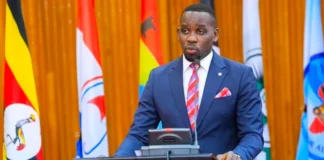

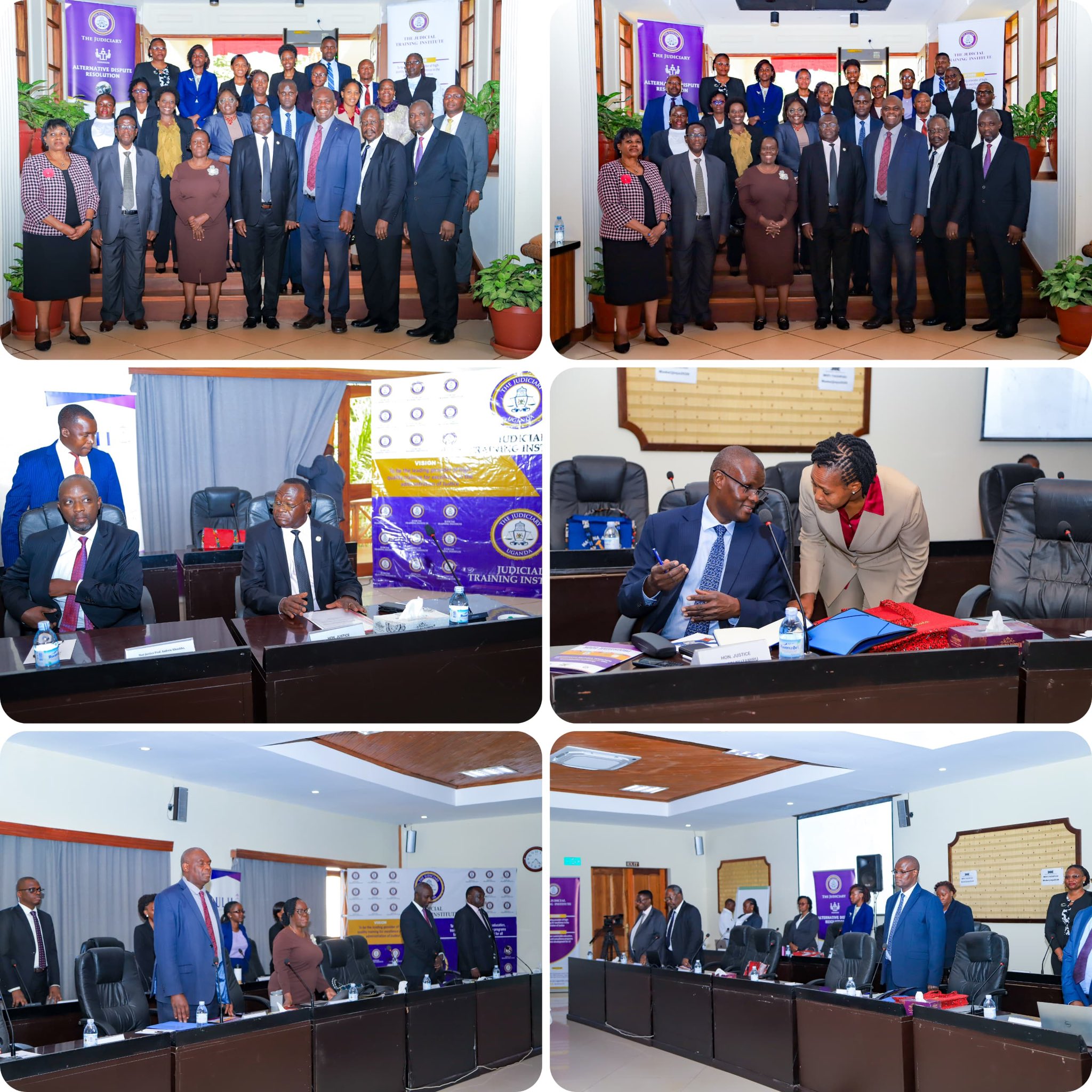
The Chief Justice of Uganda, Alfonse Chigamoy Owiny-Dollo, on Tuesday 09 December, 2025, launched a four-day judicial retreat for Supreme Court justices focused on managing electoral disputes, as the Judiciary prepares for the 2026 general elections.
The workshop, organized by the Judicial Training Institute (JTI) at Nile Resort Hotel in Jinja, aims to equip justices with the legal, procedural, and technical knowledge needed to handle presidential and parliamentary election petitions within the constitutional timelines.
In his opening address, Chief Justice Owiny-Dollo highlighted the unique role of the Supreme Court under Article 104 of the Constitution, which gives it exclusive authority to hear and decide presidential election petitions. He emphasized that such cases test the Court’s integrity and require independence, impartiality, and a strong commitment to justice.
The Chief Justice also spoke about the complex nature of election disputes, which involve not only procedural review but also ensuring that the electoral process reflects the will of the people. He praised the training program’s structure, the involvement of international experts, and the scenario-based approach, urging justices to critically compare their methods within the framework of the Ugandan Constitution.
Justice Mike Chibita, Chairperson of the JTI Governing Council, explained that the initiative was developed in collaboration with the Supreme Court leadership. Justice Prof. Andrew Khaukha, Executive Director of JTI, thanked regional partners for contributing to the diversity of the training.
Mr. Felix O. Owuor, CEO of the Electoral Law and Governance Institute for Africa, commended Uganda’s approach to presidential petitions, noting that the country serves as a model in the region for resolving electoral disputes.
The first day of training covered several key topics, including ECCMIS support for case management presented by Joseph Ssinabulya, registry preparedness for presidential petitions delivered by HW Ayebare Tumwebaze, financial administration of petitions presented virtually by Dr. Pius Bigirimana, and legal research and jurisprudence development facilitated by Justice Fredrick Egonda-Ntende and HW Joel Wegoye, highlighting the role of the Uganda Legal Information Institute (ULII).
The training reflects the Judiciary’s commitment to institutional readiness, transparency, and public confidence as the country approaches the January 2026 elections, where a high number of complex electoral disputes is anticipated.