
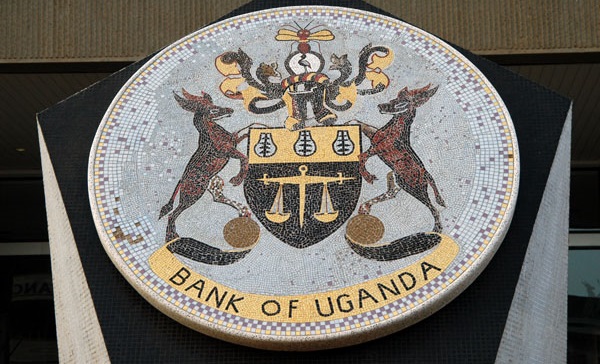
The Bank of Uganda’s Monetary Policy Committee announced that it will maintain the Central Bank Rate at 9.75% for the current period.
The decision comes as the country’s inflation rate continues to stay below the central bank’s medium-term target of 5%, providing policymakers room to support economic growth while managing potential risks.
Releasing the Monetary Policy Statement on February 9th, 2026, Bank of Uganda Governor Michael Atingi-Ego reported that headline inflation had edged up marginally, reaching 3.2% in January 2026 from 3.1% in December 2025. Core inflation, which excludes volatile food and energy prices, increased modestly to 3.3% from 3.1%, largely driven by higher services costs including passenger air transport.
Over the past twelve months to January 2026, annual headline inflation has averaged 3.5%, while core inflation has averaged 3.8% both comfortably below the 5% target.
“The inflation outlook has been revised slightly downward relative to our November 2025 forecast round. This reflects the effects of a modest exchange rate appreciation and lower international oil and food prices,” Atingi-Ego stated.
A notable contributor to stable inflation has been the moderation in food prices. Annual food crop inflation declined to 3.0% in January 2026 from 4.4% in December 2025, supported by favorable weather conditions that have boosted agricultural production. This has helped offset some upward pressure from other sectors of the economy.
Energy, Fuel, and Utilities (EFU) inflation rose only slightly to 1.7% from 1.4%, with the increase attributed mainly to modest rises in firewood prices rather than petroleum products.
The decision to maintain the current monetary policy stance comes against a backdrop of steady economic performance.
During the first three quarters of 2025, the economy grew at an average of 6.3%, largely driven by final consumption expenditure which expanded by 14.7%. Government consumption was particularly strong at 22.8%, while household consumption grew by 14.2%.
“Despite a moderation in growth in the two quarters to September 2025, high-frequency indicators and forecasts point to higher economic activity in the quarter to December 2025 and in the second half of the financial year,” Governor Atingi-Ego noted.
The central bank projects economic growth for FY2025/26 in the range of 6.5% to 7.0%, with medium-term expectations even stronger at around 8% on average.
While the current economic indicators appear favorable, the Bank of Uganda emphasized that risks remain elevated on both sides of the inflation and growth outlook.
Upside risks to inflation include stronger-than-expected domestic demand driven by expansionary fiscal policy, potential exchange rate depreciation, escalating geopolitical tensions that could disrupt global supply chains, and adverse weather conditions that might reduce agricultural output.
On the downside, risks include a sharper-than-projected slowdown in domestic economic activity, a deceleration in global growth from trade-related shocks, and declining commodity prices with disinflationary effects.
“The economic environment continues to be characterised by heightened uncertainty, necessitating a cautious monetary policy stance. Against the backdrop of recent economic developments and the balance of risks to inflation and growth, the MPC kept the Central Bank Rate unchanged at 9.75%,” the Governor stated.
The CBR band remains at ±2 percentage points, with the rediscount rate and bank rate set at 3 and 4 percentage points above the CBR respectively. This results in a rediscount rate of 12.75% and a bank rate of 13.75%.
Governor Atingi-Ego emphasized that the MPC considers this decision consistent with its strategy of guiding inflation toward the target over the medium term.
“Without compromising its primary objective of price stability, the policy stance also supports smoothing economic fluctuations and fostering socio-economic transformation,” he added.
Looking ahead, the central bank indicated that future policy decisions will remain data-dependent, informed by continuous assessments of domestic and global risks.
The Bank of Uganda will continue to monitor the inflation trajectory, exchange rate movements, global commodity prices, and domestic economic activity to determine the appropriate timing for any policy adjustments.