Economists and policy analysts have raised concerns that Uganda’s strong macroeconomic performance may not be translating into meaningful improvements in the lives of ordinary citizens, despite projections that the economy will continue expanding toward 2026.
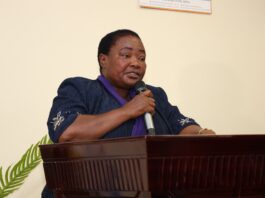
During a policy discussion on the country’s economic outlook held on March 12, 2026, Jane Nalunga, Executive Director of the Southern and Eastern Africa Trade Information and Negotiations Institute (SEATINI) Uganda, argued that headline economic indicators such as Gross Domestic Product (GDP) growth do not necessarily reflect the welfare of households.
Nalunga explained that while GDP measures the total value of goods and services produced in an economy, it does not automatically translate into employment opportunities, higher incomes, or improved living standards for citizens.
She emphasized that Uganda could report strong economic growth while many households continue to struggle with poverty and limited income opportunities.
“The economy can be booming, but the key question is how much of that growth is creating jobs and putting money in people’s pockets,” Nalunga noted.
She stressed the need to bridge the gap between macroeconomic growth and improvements at the household level.
Nalunga also called for a more transparent and honest national conversation about Uganda’s rising public debt.
While acknowledging the government’s efforts to maintain currency stability, she warned that the country’s borrowing levels could become unsustainable if not carefully managed.
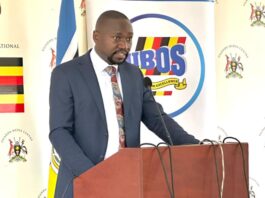
However, Patrick Olowo, Manager of Macroeconomic Planning at the National Planning Authority, defended the country’s economic outlook, describing Uganda’s economic fundamentals as resilient and robust.
Olowo pointed to natural resources and agriculture as key drivers of the economy, noting that more than 40 percent of Uganda’s industries are agro-based and depend largely on locally sourced inputs.
He also highlighted government initiatives such as the Parish Development Model (PDM), which he said is helping stimulate grassroots production and support the livelihoods of ordinary citizens.
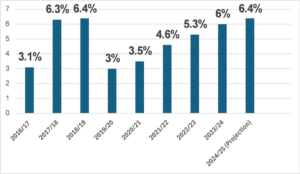
Uganda’s economy grew by approximately 6.3 percent in the 2024/2025 financial year, with GDP projected to reach about $66 billion by 2026, making it one of the fastest-growing economies in East Africa.
However, unemployment remains at 12.3 percent, and about 41 percent of Ugandans still live below the international poverty line, raising concerns about whether economic growth is sufficiently inclusive to improve the livelihoods of the broader population.