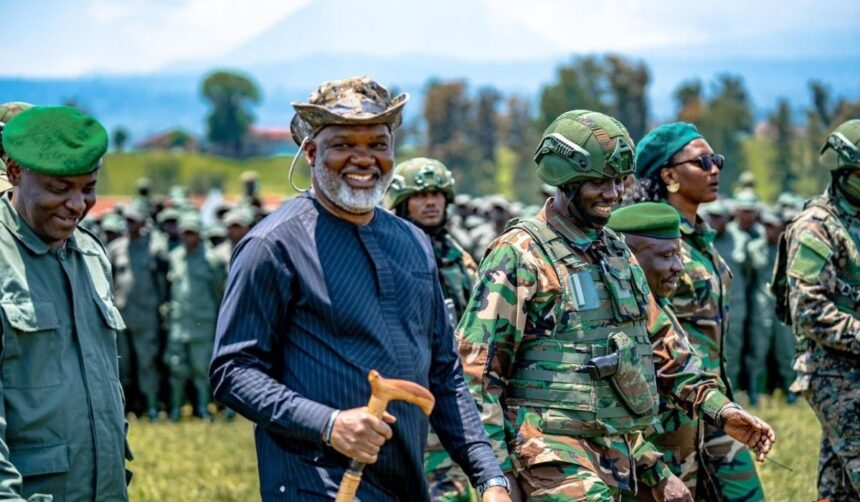
The Alliance Fleuve Congo (AFC/M23) militant group, has announced a unilateral withdrawal of its forces from the strategic city of Uvira.
In a statement released on 15th December, 2025, the coalition said the withdrawal was made at the request of United States mediators and is intended to build confidence in the Doha peace talks, which seek to reduce tensions and ease the conflict in eastern Democratic Republic of Congo (DRC).
Corneille Nangaa Yobeluo the political coordinator of AFC/M23 said that this decision is a trust-building measure designed to give the Doha peace process the maximum chance to succeed.
“This is equally a test of the international guarantors’ ability to safeguard security, protect civilians, and prevent any violations following our withdrawal,” Nangaa stated.
This withdrawal comes amid wider diplomatic initiatives, notably the Washington Accords signed earlier this month by Presidents Félix Tshisekedi of the DRC and Paul Kagame of Rwanda, which seek to coordinate regional actors on ceasefire and troop disengagement.
Uvira occupies a critical position near the Burundi border and Lake Tanganyika, serving as a gateway for trade, movement, and regional interaction between eastern Congo and neighboring states.
Its recent capture by AFC/M23 forces, following intense fighting with the Congolese army (FARDC) and allied militias, had cut off Burundi’s direct access to parts of eastern Congo, heightening diplomatic unease in the region.
In its statement, AFC/M23 sought to reassure neighboring countries, particularly Burundi, that it would not tolerate cross-border armed activity originating from areas under its control.
“We emphasize that we will not allow armed groups hostile to the Government of Burundi or any neighboring country to use liberated areas as rear bases. Maintaining good-neighborly relations is essential,” Nangaa emphasized.
However, the coalition also expressed deep concern about past experiences in which previous withdrawals were followed by advances from FARDC and allied militias, leading to renewed fighting and civilian suffering.
The group called on guarantors of the Doha process to ensure the demilitarization of Uvira, the protection of civilians, and the deployment of a neutral force to monitor the ceasefire.
By the time of publication, the Congolese government and FARDC had not issued an official response.
The situation in Uvira remains a critical test for the Doha peace process, as regional actors and international guarantors work to ensure that the withdrawal leads to lasting stability.
How effectively security is maintained, civilians are protected, and cross-border tensions are managed will determine whether diplomacy can finally bring enduring peace to eastern Congo and strengthen trust among neighboring states.