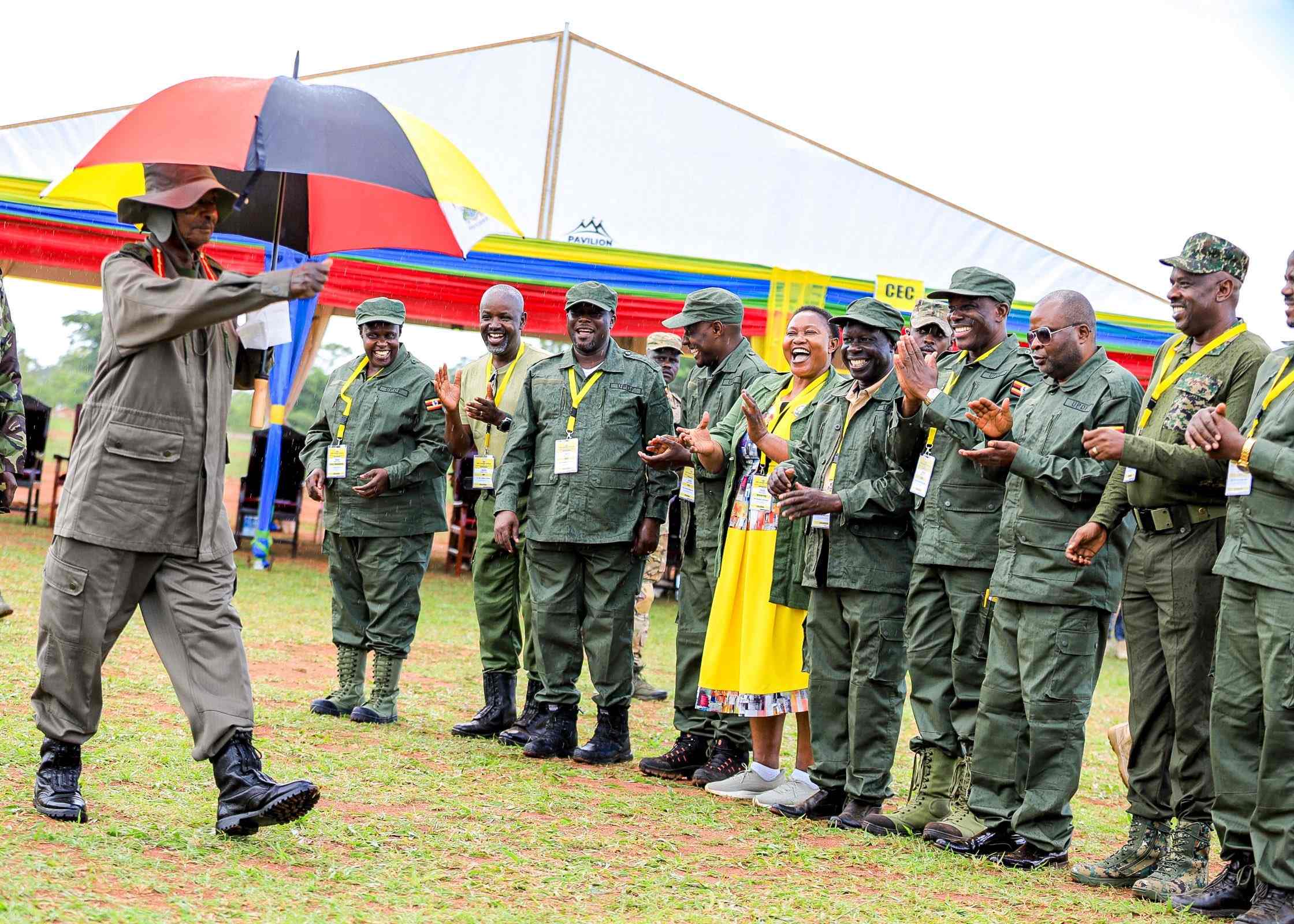
President Yoweri Museveni has called on newly elected Members of Parliament aligned to the ruling National Resistance Movement (NRM) to ground their leadership in the Movement’s three core pillars including ideology, philosophy, and strategy describing them as essential for effective governance and national transformation.
Speaking during the opening of the NRM leaders’ retreat at the National Leadership Institute Kyankwanzi, Museveni emphasized that ideological clarity remains central to the party’s historical mission and future political direction.
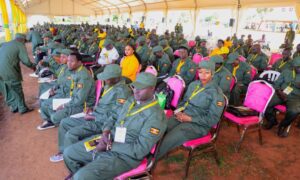
He described MPs as custodians of the Movement’s values, tasked with guiding citizens and translating policy into practical development outcomes. Analysts view as a strategic effort to reinforce party cohesion and sharpen legislative focus ahead of the next phase of government implementation.
Museveni congratulated the legislators on their electoral victories but stressed that leadership within the Movement carries heightened responsibility to safeguard public trust and advance national transformation priorities.
He framed the three pillars as essential tools for diagnosing national challenges, understanding social dynamics, and executing effective policy interventions.
The emphasis signals the party leadership’s intention to maintain ideological consistency within its parliamentary ranks at a time when political competition and public expectations remain high.
Museveni also singled out corruption as a persistent threat to service delivery and institutional credibility, warning that unethical conduct among leaders undermines both development programmes and citizens’ confidence in government.
His remarks reflect ongoing concern within the ruling establishment about governance gaps that continue to shape political debate across the country.
Closely linked to this was his call for discipline among legislators, arguing that even well-designed policies cannot succeed without leaders who demonstrate personal responsibility and commitment to national duty.
Observers interpret the message as part of a broader attempt to strengthen internal accountability within the ruling party as it prepares to implement key socio-economic programmes.
On the economic front, Museveni reiterated the NRM’s long-standing strategy of promoting wealth creation through agriculture, small-scale industries, services, and information and communication technology.
By urging MPs to champion these sectors in their constituencies, the President positioned Parliament as a critical bridge between national policy direction and grassroots transformation.
The President also warned against sectarian politics based on tribe or religion, cautioning that identity-driven mobilization historically weakened state institutions and threatened national unity.
The warning highlights continued concern within government about preserving political stability in a changing electoral environment.
In a notable political development, NRM Secretary General Richard Todwong informed the retreat that 49 Independent MPs had agreed to work with the ruling party, a move likely to strengthen legislative coordination and reinforce the party’s influence in Parliament.
The retreat was attended by senior leaders including Vice President Jessica Alupo, Speaker of Parliament Anita Among, Deputy Speaker Thomas Tayebwa, Prime Minister Robinah Nabbanja, and Norbert Mao.
Taken together, Museveni’s remarks point to a calculated effort by the NRM leadership to reinforce discipline, consolidate parliamentary alignment, and position newly elected MPs as key drivers of the party’s governance agenda amid continued scrutiny over corruption, service delivery, and national cohesion.