
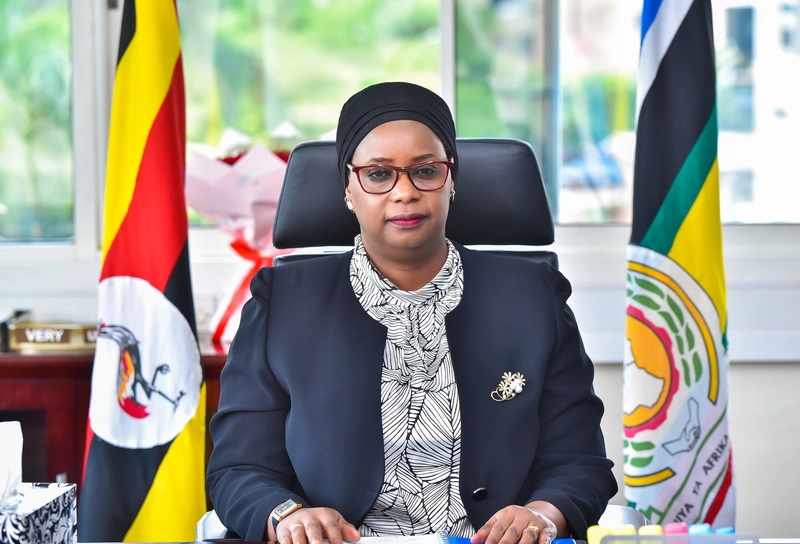
The Inspector General of Government (IGG), Aisha Naluzze, has unveiled three key institutional documents aimed at strengthening transparency, accountability, and service delivery across Uganda’s public sector.
These documents include the Strategic Plan for Financial Years 2025/26–2029/30, the Human Resource Policy and Procedures Manual 2026, and the Client Charter.
The launch took place today, 17th February, 2026 at Hotel Africana in Kampala during a press briefing.
Addressing journalists, Naluzze emphasized that the documents are designed to enhance governance, prevent misuse of public office, and promote integrity across government institutions.
“The three documents launched today will serve as key tools to enhance transparency and accountability in public institutions nationwide,” the IGG stated.
She explained that the development of these documents was conducted through a comprehensive and consultative approach to ensure inclusiveness, ownership, and alignment with Uganda’s national development priorities, as well as regional and international anti-corruption standards.
According to Farouk Kayondo, Supervisor of Strategic Partnerships and Public Relations, under the new Client Charter, the IGG office will prioritize investigating complaints of corruption and other matters, including providing legal advice, among other services.
“We are committed to effective complaint management, preventing, detecting, and investigating corruption, providing legal advice, and pursuing prosecutions,” Kayondo said.
“Our focus will be on recovering illicitly acquired assets, enforcing the Leadership Code Act, and ensuring transparency and accountability in the implementation of government-funded projects,” he added.
Other priorities include addressing administrative injustices, improving service delivery, engaging stakeholders and the public in anti-corruption initiatives, promoting ethics and integrity among IGG staff, and ensuring efficient client feedback mechanisms.
The launch of these three documents is part of Naluzze’s proactive approach, a hands-on style she has consistently demonstrated since taking up the IGG position.
Recent examples include investigating idle equipment and alleged illegal charges at Mbarara Regional Referral Hospital, as well as directing the Uganda Revenue Authority (URA) to recover approximately Shs40 billion from gold exporters.
These actions signal a shift toward proactive oversight, aggressive revenue recovery, and strict enforcement of accountability standards.
The documents provide a framework for a more transparent and accountable public sector, aligning Uganda’s governance practices with international best practices while giving citizens clear channels to hold institutions accountable.
For Naluzze, the launch represents a concrete step toward her vision of a corruption-free Uganda where public resources are managed responsibly, and service delivery is efficient, fair, and transparent.