
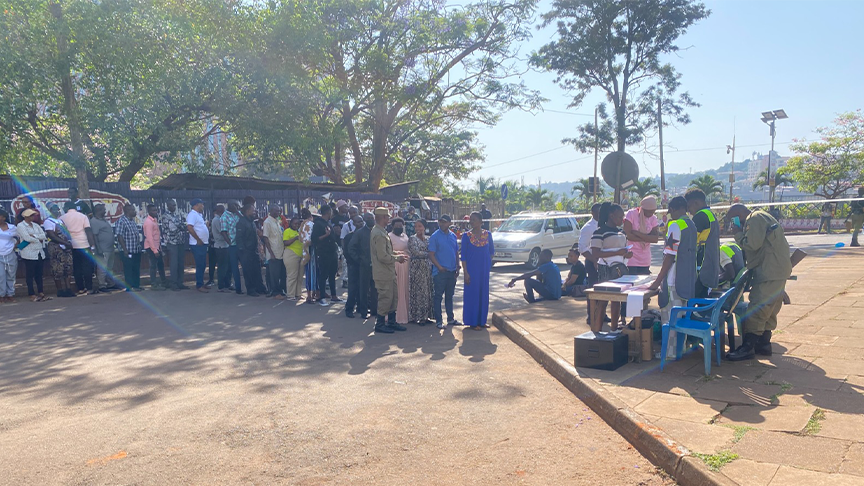
Elections are decided by numbers, not noise or social media speculation and Uganda’s 2026 presidential results show a clear and nationwide decision by voters.
Compared to the 2021 polls, President Yoweri Kaguta Museveni’s vote share increased across almost every region of the country, including areas that had previously shown declining or highly competitive support.
This was not a narrow rebound confined to traditional strongholds. It was a broad and consistent recovery, cutting across geography, history, and voting attitudes.
.The 2021 election marked the lowest electoral performance for the ruling party in several regions most notably Central Uganda, major urban centers, and parts of Northern Uganda. Five years later, in the 2026 presidential election, those setbacks have not only reduced but, in many areas, decisively reversed.
Central Uganda, long regarded as the epicenter of opposition strength, recorded notable gains for the ruling party.
In Luweero District, support rose from 27.94% in 2021 to 37.83% in 2026. Kayunga increased from 35.00% to 43.70%, while Masaka District moved from 32.37% to 43.66%. Mityana also posted gains, rising from 33.89% to 42.34%.
While Central Uganda remains competitive, every major district registered an improvement compared to 2021. This pattern reflects recovery, not collapse, and indicates a gradual recalibration of voter sentiment rather than an erosion of legitimacy.
Even in urban centers traditionally dominated by opposition politics, the numbers shifted upward.
In Kampala City, the ruling party’s vote share rose from 23.92% to 32.67%. Wakiso increased from 21.82% to 28.21%, while Mukono climbed from 25.71% to 33.09%.
These figures do not suggest urban dominance for the ruling party, but they clearly demonstrate that opposition momentum stalled rather than expanded, a critical distinction in electoral analysis.
The most dramatic shift occurred in Northern Uganda, a region once emblematic of opposition strength.
Gulu District surged from 50.39% in 2021 to 84.60% in 2026. Amuru rose from 53.52% to 80.44%, while Kitgum increased from 52.73% to 79.93%.
Lira District moved from 60.90% to 82.25%, and Pader climbed from 63.61% to 86.64%. These gains ranging between 20% and 35% signal a significant voter reassessment driven by governance outcomes, stability considerations, and future expectations.
Eastern Uganda followed a similar trend. Soroti rose from 55.50% to 80.49%, Serere from 51.22% to 77.29%, and Kumi from 56.74% to 83.58%. Bukedea recorded one of the strongest results, increasing from 64.17% to 94.67%.
These margins point to consolidation rather than fragmentation, suggesting closer alignment between local leadership priorities, development goals, and national political direction.
In Western and South Western Uganda, where support was already high, it became even stronger and more unified.
Districts such as Kamwenge, Kiruhura, Isingiro, Mbarara, and Ntungamo recorded even higher support, strengthening the case for a united national mandate.
Karamoja and West Nile also showed strong and rising support, showing voters’ trust in stability and continuity in regions affected by cross-border insecurity.
Democracy allows disagreement, but it also demands honesty. A president whose vote share rises in Northern, Eastern, Western, West Nile, Karamoja, and even Central Uganda has received a renewed and expanded mandate.
Calls for protests in the face of such data risk undermining livelihoods, disrupting businesses, and destabilizing communities that have clearly expressed their choice through the ballot.
Ugandans voted with their ballots, not by their emotions. The results are broad, consistent, and spread across the country. The president’s support did not decline, it expanded.
The responsible path forward is to respect the choice of the voters, maintain peace, and move forward together as one nation.