
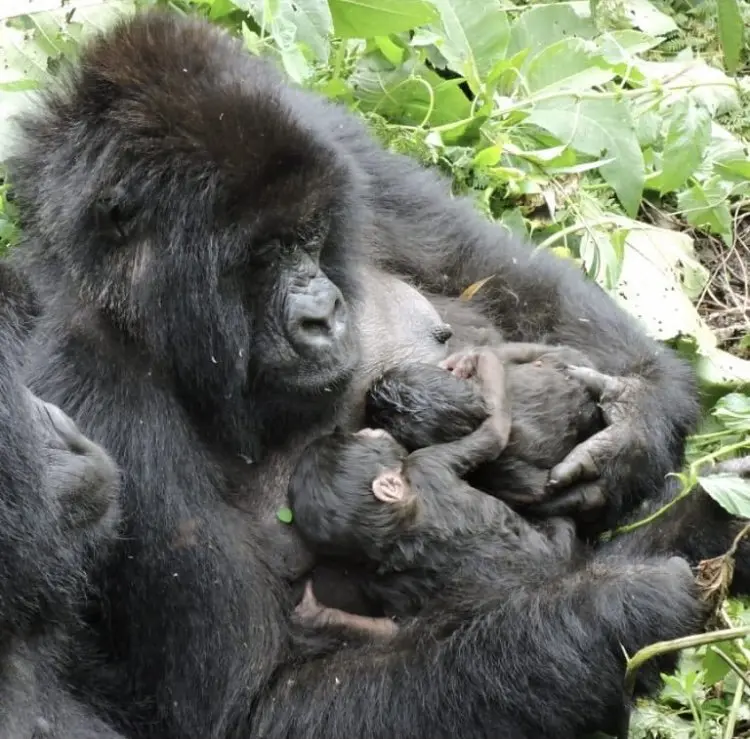
Conservationists at Virunga National Park in Democratic Republic of Congo are celebrating a major milestone after the Bageni family of mountain gorillas grew to 59 members following the birth of rare male twins, marking the park’s first recorded gorilla births of 2026 and a significant boost to conservation efforts.
The twins were discovered by community trackers on 7th January 2026, in Eastern Congo, during routine health monitoring patrols, which later confirmed that the infants were born to adult female Mafuko and were in good health at the time of observation.
According to Olivier Mukisya, spokesperson for Virunga National Park, the births represent a critical demographic gain for one of the park’s largest and most closely monitored gorilla groups.
“The growth of the Bageni family to 59 mountain gorillas is a notable achievement. Each healthy birth contributes to the long-term stability of the population and strengthens the conservation gains made over the years,” Mukisya said.
Twin births among mountain gorillas are rare and often pose added challenges, particularly during the early months when infants depend entirely on their mother for survival.
Park authorities have therefore intensified monitoring to closely track the twins’ development during this delicate period.
Mukisya noted that enhanced surveillance and veterinary oversight have been put in place to improve the twins’ chances of survival.
Mafuko, the twins’ mother, is 22 years old and was born into the Kabirizi family in 2003 before joining the Bageni family following a group split in 2013.
She has now given birth to seven infants, including a previous set of twins in 2016 that sadly did not survive beyond the first week.
Mountain gorillas are found in the forested regions of the Democratic Republic of Congo, Uganda, and Rwanda, and their global population currently stands at approximately 1,000 individuals, a remarkable recovery from fewer than 400 in the 1980s, largely attributed to sustained conservation efforts.
Conservationists say the successful birth of the twins offers renewed hope for the species, highlighting the importance of continued protection, monitoring, and community involvement in safeguarding one of the world’s most endangered wildlife species.