

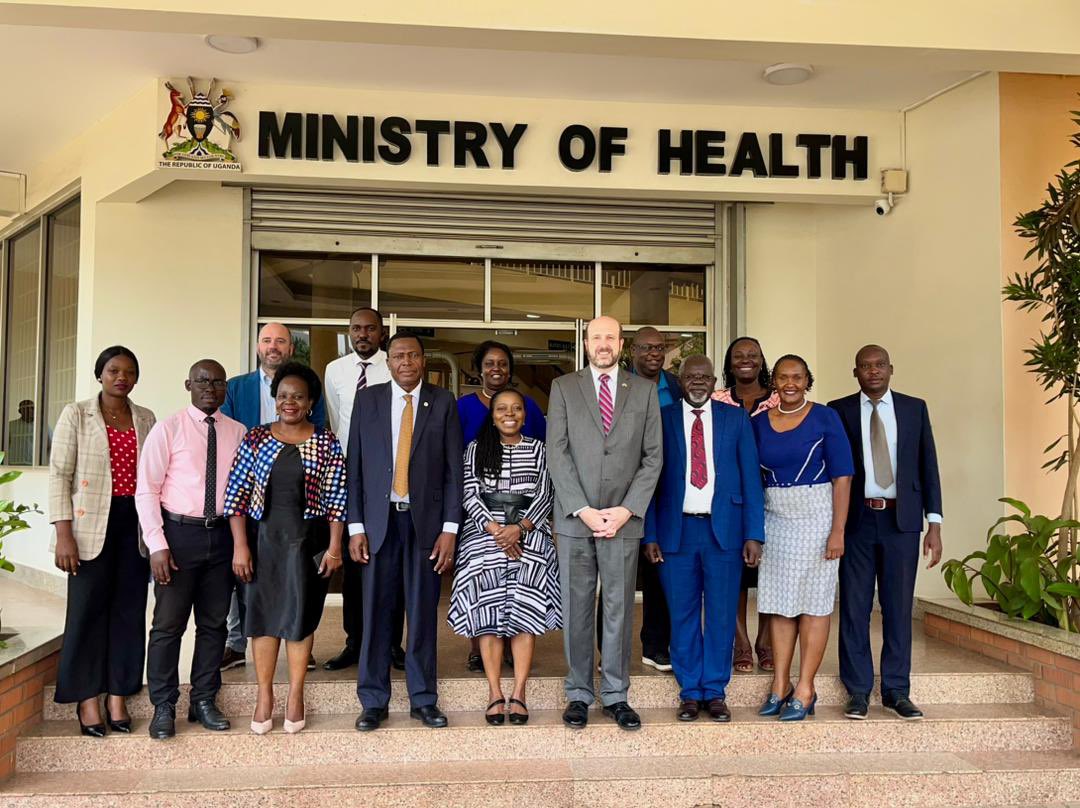
Ministry of Health (MoH) has launched Uganda Suprahub, a groundbreaking national innovation aimed at transforming how health workers learn, train, and receive expert guidance, strengthening the country’s health workforce and improving service delivery across Uganda.
Developed by the Ministry’s Human Resources Development Department with support from the U.S. Government, the Suprahub builds on a successful five-year virtual, case-based tele-mentoring model.
The platform links front-line health workers to national-level experts, enabling continuous learning without the need for travel or time away from patients.
According to the Ministry, 425 health facilities and 17 Regional Referral Hospital hubs are now integrated into the network, along with six national-level hubs in specialized programs, including the AIDS Control Program, Butabika National Referral Mental Hospital, the School of Public Health, and the Pharmacy Department.
Professional councils have also adopted the system to support ongoing professional development.
Speaking to journalists, Dr. Charles Olaro, the MoH Director General of Health Services, highlighted the platform’s transformative impact on clinical practice:
“By using virtual platforms, we are continuously engaging with health workers across the country as we integrate HIV and TB services into primary health care,” Dr. Olaro said.
“Since October, more than 5,000 health workers have joined our weekly national sessions,” he added.
Despite upgrades in digital infrastructure, Dr. Olaro noted that many health workers continue to participate in sessions using their personal phones and laptops, demonstrating their strong commitment to learning and improving skills.
The low-cost approach has also impressed development partners like the U.S. Ambassador William Pop who said that the system makes specialist knowledge available where it is needed most.
“Suprahub connects expert clinicians with front-line health workers, optimizes scarce resources, and spreads specialist skills across the entire health system,” the U.S. Ambassador stated.
“It reduces delays and ensures communities benefit from timely, informed care,” he added.
Looking ahead, the Ministry envisions Suprahub becoming the pillar of health worker training, strengthening service delivery at all levels and improving health outcomes for millions of Ugandans.