
Thirty years after the 1995 Constitution came into force, Uganda finds itself at a moment of reflection—looking back at what has been achieved and forward to what still must be done.
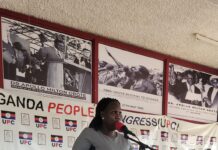
This November 19-20, 2025, Makerere University became the centre of this national conversation as it hosted a two-day World Philosophy Day Conference under the theme, “30 Years of the 1995 Constitution: Gains, Pitfalls and Prospects.”
The event, organized by the Department of Philosophy in partnership with the Law School, the United Nations Educational, Scientific and Cultural Organization (UNESCO), and Konrad Adenauer Stiftung (KAS), gathered scholars, citizens, and policymakers to examine the Constitution’s journey with honesty and clarity.
Hon Nobert Mao, the Minister for Justice and Constitutional Affairs, opened the discussion by calling on Uganda and other African states to “adopt governance systems that firmly entrench accountability and civil liberties for its people at all levels of leadership.”
His message captured the spirit in which the Constitution was drafted in 1995, full of ambition and hope. Yet the gap between these ideals and political reality remains wide, a theme echoed throughout the conference.
Prof Helen Nambalirwa Nkabala described the Department of Philosophy as a “beehive,” noting its active role in shaping vital debates on governance, ethics, and social cohesion.
She acknowledged UNESCO and KAS for supporting conversations that blend philosophy, humanities, and policy-making; fields that often diagnose a society’s deeper challenges.
Reading the Vice Chancellor’s remarks, Prof Nkabala emphasized Makerere’s historical influence on the Constitution itself.
“Several of our academics played pivotal roles in drafting the 1995 Constitution, including the late Dan Mudoola, Mwambusya, Prof Ndebesa, and Dr Kigongo James. Their contribution stands as a testament to the central role this university plays in national development and political thought,” Prof Barnabas Nawangwe noted.
This reminder highlighted both the pride of contribution and the responsibility to keep scrutinizing the document as the country evolves.
But the celebration of history did not overshadow the hard truths. Dr Zahara Nampewo warned that constitutions are “ideological and political texts, only as strong as the will of states to enforce their provisions.”
She expressed concern that amendments over the years have shifted the balance of power, weakening protections meant to uphold equality, democracy, and social justice.
Her remarks, however, pointed to a Constitution that is revered in theory but challenged in practice.
Public voices echoed this discomfort. Dr Jimmy Spire Ssentongo reflected online (on his X handle) on the contrast between the idealism of President Museveni’s 1992 speeches and the governance patterns of later decades.
His observation captures a national dilemma: how to reconcile the promises of the past with the realities of the present.
However, does it mean that the Executive and Legislature, which are in charge of policy-making, run their duties outside the Constitution, or do they make amendments to fit their personal interests?
If so, does that mean that they misrepresent the people that voted them into power to represent them? Literally, before any amendments are done in the Constitution, Members of Parliament (MPs) make consultations in their several constituencies, and what the citizens suggest is what is brought before the floor of Parliament for scrutiny and resolutions.
In other words, if people are misrepresented, they have the liberty to oppose what has been passed. But that was not seen whenever amendments are done in the Constitution or any law.
Besides, even those that drafted Uganda’s 1995 Constitution on September 22, 1995, first carried out consultations, and that is what is stipulated in there. The reason why in the preamble, it states, “WE THE PEOPLE OF UGANDA…NOTING that a Constituent Assembly was established to represent us and to debate the Draft Constitution prepared by the Uganda Constitutional Commission and to adopt and enact a Constitution for Uganda…”
Additionally, chapter one 1(1) states, “All power belongs to the people who shall exercise their sovereignty in accordance with this Constitution.” As a result, if the Constitution was unlawfully amended or its observance interrupted contrary to its provisions by the ruling government or those in authority, the law would have caught up with them by people filing their petitions and lawsuits as stipulated in chapter one 2(1), 3(1)(2)(3), and (4)(a)(b) of the 1995 Constitution of Uganda as amended.
If we make a flashback to the amendment of presidential term limits in 2005, apart from a few people taking to social media platforms and influencing the citizens to demonstrate, was there any other serious lawful procedure done to object to the amendment? Whether that sect was representing the people of Uganda or it was their individual decision is for you to ponder.
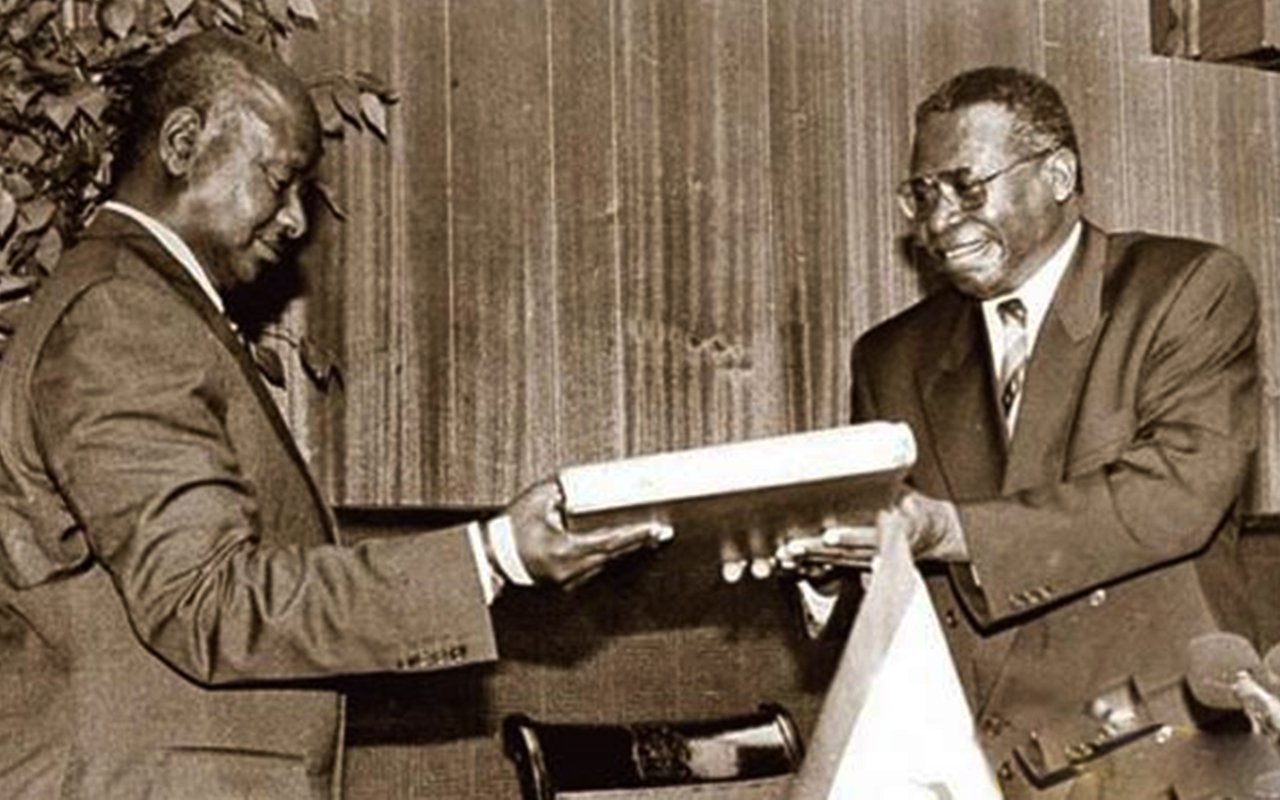
Recalling back to President Milton Obote’s time, when he abrogated the Constitution in 1966, it was later objected to, and it caught up with him. What actions have Ugandans taken if they feel constitutional amendments are done unlawfully, apart from lamenting?
All in all, the Makerere conference served as more than an anniversary; it was a reminder that a constitution lives only if citizens defend it.
As Uganda moves forward, one question stands out: will the nation summon the will to renew and protect the promises that the 1995 Constitution set in motion?